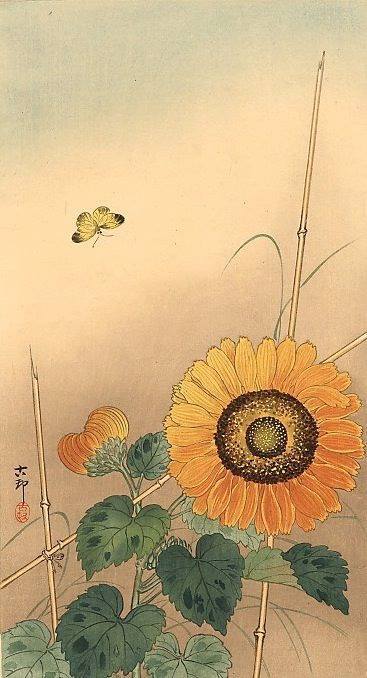
Ohara Koson (1877-1945), “Small butterfly and sunflower”
Mudita is word from Sanskrit and Pali that has no counterpart in English. It means sympathetic or unselfish joy, or joy in the good fortune of others. In Buddhism, mudita is significant as one of the Four Immeasurables. (Brama Vihara)
Defining mudita, we might consider its opposites. One of those is jealousy. Another is schadenfreude, a word frequently borrowed from German that means taking pleasure in the misfortune of others. Obviously, both of these emotions are marked by selfishness and malice. Cultivating mudita is the antidote to both.
Mudita also is said to be an antidote to indifference and boredom. Psychologists define boredom as an inability to connect with an activity. This may be because we're being forced to do something we don't want to do or because, for some reason, we can't seem to keep our attention focused on what we're supposed to be doing. And plugging away at this onerous task makes us feel sluggish and depressed.
Looked at this way, boredom is the opposite of absorption. Through mudita comes a sense of energized concern that sweeps away the fog of boredom.
In developing mudita, we come to appreciate other people as complete and complex beings, not as characters in our personal play.
How to cultivate mudita? Begin with a cheerful person who is a good friend. Contemplate this cheerfulness with appreciation and let it fill you. When this state of sympathetic joy is strong, then direct it toward a dearly loved person, a "neutral" person, and a person who causes difficulty.

No comments:
Post a Comment