
Ok

There are a few things I'm proud of

Between stimulus and response there is a space. In that space is our power to choose our response. Viktor Frankl
(what is there in this space?)
***
This makes me think of the "super power" that Jon Kabat-Zinn speaks about.
 |
| image link |
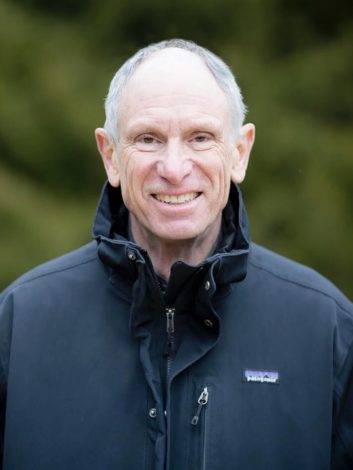
I listened to four of Joseph Goldstein's guided meditations on Insight Timer and learned...
We often take emotions to be who we are... but in "I am angry," the "I" is extra. You can watch watch emotions like clouds - forming, moving, dissolving. Be open to all, but relating to them in a way to experience them and allow them to change.
Relax eyes, jaw, shoulder, belly; settle into awareness; sit and know you are sitting; become aware of body breathing; sensations of body breathing in; body breathing out; look for tension.
You might find thoughts, emotions arising; thoughts might trigger emotions; open to the feeling, let that become the object of the meditation: joy feels like this; anger feels like this. It's helpful to mentally note what the emotion is; return to feelings of body breath; reconnect with breath and begin again; it's not a breathing exercise... any way is fine...
Emotions arise out of conditions, it recedes when conditions change.
To Work skillfully with emotions, like you would treat a child with same emotions, just be there with acceptance and a certain kind of space... openness and tenderness.
Jennie saw a sign in the bathroom mirror at Kick Coffee in Sturgeon Bay - “Intentions are Everything.” She liked that. Earlier on a hike we took in Door County, she said that she wanted 2021 to be a year of peace, calm, and positive energy. Those are good intentions, rather than resolutions, for next year.
I shared with Jennie what I knew about “intentions” in Buddhism and meditation practice - how Tara Brach and Thubten Chodron start all meditations with a brief calling to mind of intentions.
A few days ago I noted a Gottman Institute message about sharing positive impressions about your partner in order to combat creeping annoyances. They note that this is an intentional mental practice.
You just can’t go thru the motions to make this exercise work - you can’t just say “oh there are many things I like about her. I noted them in April. They’re on a pad of paper in my desk drawer.” Instead it’s the act of thinking again why you love this person or what specifically you appreciate. This is the work, the rewiring , the practice.
When you express these things there are emotional benefits to both sides.
Pema Chodron says that in Buddhism it’s not what you do, it’s why you do it. And you should always be checking your intentions. Often out intentions are masked from ourselves.
Doing things intentionally is part, I think, of “right living” - at least my version of it.
***
I'm also thinking now of "emotional intelligence" and how it's a skill (probably "intentionally practiced"!) of being able to intuit other people's "intentions"... and/or to skillfully ask about them when you don't know.
The Paris Review published a short and playful article titled “The Six Books We Could and Should All Write” that provides examples of six historic books that fit six different TYPES of books.
What types? “One should compose (1) a book about oneself, (2) a book about others, (3) an anthology of favorites, (4) a book about words, and now I’m adding (5) a book of lists.” The author adds a sixth, which is supposed to be scandalous and debouching. Most of the examples he gives are, he notes, better as ideas than actual books.
I can add another type of writable book that is also maybe better in concept than it actually is. Tal Ben-Shahar’s “Choose the Life You Want. the Mindful Way to Happiness” has 101 1- or 2-page chapters. Each one has a single footnote. The Notes page at the back of the book is a simple listing of 100 different books.
So, in essence, the book represents the single most powerful ideas from 101 books he read about the topic of making your life happier.
We should read extractively, pulling out at least a single idea from each book we read. Then we should write a book about what we’ve learned about life from them.
I love "cover" versions of classical music. Here are some:
Duke Ellington's take on the Nutcracker Suite. Especially this part where the original and Ellington-esque intermingle.
Flying Pictures at an Exhibition updated and wild version of Mussgorsky's Pictures at an Exhibition
This Chamber Orchestration of Mahler's symphony
Glenn Gould's rendition of the Liszt's piano transcription of Beethoven's "Pastoral" Symphony #6 that I pasted at the top of this post. All of these versions I love in themselves and love because they send me back to the originals and help me hear things I wouldn't have heard in the originals.
Stravinsky's own transcription of "The Firebird" for the piano.
John Kimura Parker playing Stravinksy's "Rite of Spring" on piano.
One of my absolute favorites: The Bad Plus doing "The Rite of Spring"

Buddhist nun Thubten Chodron talks with Dan Harris on the 10% Happier Podcast #215 about the challenge of knowing what success looks and feels like. Harris asks Chodron, "What is enough? How do we know what is enough?" Chodron laughs and says:
There is never enough. Whatever you have, it's never enough. We don't have enough love. We don’t have enough money. We don’t have enough appreciation. We don't have enough fame.
This is easier to understand in terms of money and outward measures of success. In our normal way of life, with the normal measures, in the normal patterns of life in modern consumer society, there is never a finish line, never a "stop" button. There is always another level up. There is always other lanes of consumption and accumulation. A better car, better winter coat, a better wine to buy, more improvements to make on the house. More and better.
How do you get out of this cycle? Chodron says:
My philosophy is you make what you have enough. Then you have enough.
But it’s not just about money or consumer goods. It’s not just what you have materially. It’s about the general life of pursuit and acquisition and accomplishment, including our pursuit of love and esteem, of honors and reputation.
We have a choice to challenge the normal way of pursuit of accomplishments and accumulation of stuff. It begins with this basic realization.
We all do what we are capable of doing and that is good enough.
Chodron remembers a mentor telling her:
Who you are is good enough. What you have is good enough. What you do is good enough.
https://podcasts.apple.com/us/podcast/215-whats-your-motivation-thubten-chodron/id1087147821?i=1000457992635
I often find useful and wise ideas in the Gottman Marriage Minute. Earlier I wrote about the big ideas I’d learned this year (link). This idea, which details a normal and expected hazard of any long term relationship, is great in it’s practical advice.
Negative Sentiment Override is a relationship downer. In healthy relationships, it’s the nagging perspective that your otherwise supportive partner can’t seem to do anything right. You find yourself critical of their every move. When left unchecked, it leads to bitterness and contempt on both sides.
How can you shift the outlook on your partnership to a positive one? To begin, take a cue from the sentiment of the holiday season.
Instead of a naughty list, write down everything nice about your partner. You can be broad (“I love how you make me laugh”) or specific (“It meant a lot when you washed the dishes after that messy meal yesterday”). The goal is to come up with as many nice attributes about your partner as you can. This is a mental exercise of “Sharing Fondness and Admiration,” which is also an essential level of the Sound Relationship House.
The more intentional you are about looking for the good in your partner, the more good you will see
From the Gottman Marriage Minute
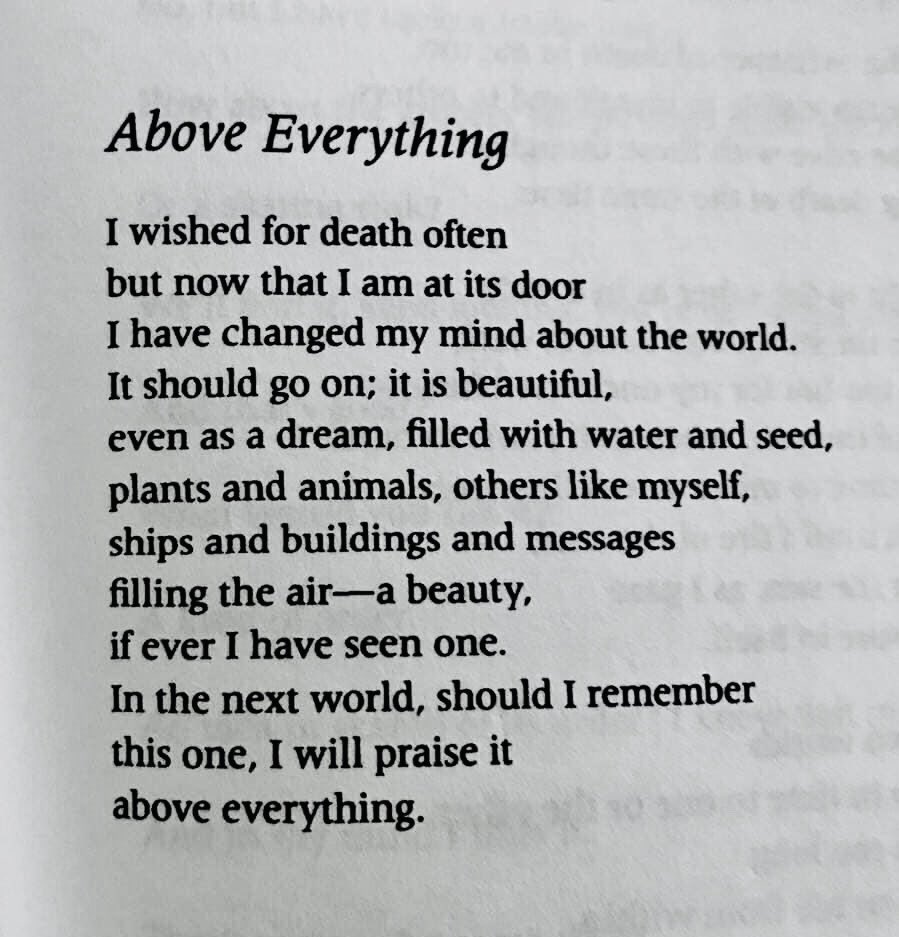
Above Everything
I wished for death often
but now that I am at its door
I have changed my mind about the world.
It should go on; it is beautiful,
even as a dream, filled with water and seed,
plants and animals, others like myself,
ships and buildings and messages
filling the air -- a beauty,
if ever I have seen one.
In the next world, should I remember
this one, I will praise it
above everything.
by David Ignatow from Whisper to the Earth: New Poems, 1981
Link to YouTube video of Google Talk titled "Creating Habits for Happiness."
Here are some of my notes:

In this bare season, ice glazes still-green grass, stately oaks show themselves, red berries jewel trees on suburban lots, and you can see the amazing form-fitting branches wrap around other trees' trunks in order to reach the light of the walking path.
Here, a hawk pulls some red stringy thing from a recent kill. Again - suburban nature.

 |
| Image credit - LA Times article and image |
The artist would generally get up with the sun, sometimes as early as 5 a.m. in the summer, and draw on his iPad. It took about a day and a half to do each painting, he said, “and I worked every day of the year. I’d go out and look for something to draw here, which I always found.”

“I began with drawing the bare trees in March, and in April the first blossoms came out, and I drew that,” he said. “Then there were more blossoms, and the leaves began to grow. Then the blossoms would fall off, and you’d have just the leaves. Eventually, the leaves would fall off and it would be autumn.
Hockney has no television, but he always has read a great deal. He has books sent to him, and he’s currently reading “For the Love of Music: A Conductor’s Guide to the Art of Listening,” by John Mauceri. Besides rereading Marcel Proust, he’s recently read Gustave Flaubert’s novel “Sentimental Education,” George Eliot’s novel “Middlemarch” and stories by Guy de Maupassant. (“Look up his marvelous story ‘Moonlight,’” Hockney urged.)
This spring he sent this image to Art Newspaper along with the message: "Do Remember They Can't Cancel Spring."

This year I've found a lot of great new music. I found out about Vikingur Olafsson, I think, from a New Yorker article. This piece, though, has been maybe my best find all year long -- a beautiful and haunting part of my regular listening schedule.
When I created a "Spotify Radio" of this song, I discovered a great deal of other music by Rameau, Scarlatti, and Bach that caught my ear and ended up in my "New Finds 2020" playlist. All of these songs fit my current mood/season.
I had similar success with finding a bunch of soul songs by starting a playlist earlier this year that created another series of "new finds" by Lou Rawls and Etta James and Bill Withers and Aretha Franklin.

While looking for an online version of David Ignatow's "Above Everything, " I stumbled across the website "A Year of Being Here," where Phyllis Cole-Dai posted a mindfulness poem, usually by a contemporary poet, every day of the year from January 1, 2013 to January 1, 2016.
After 3 years of the project, it became a book "Poetry of Presence: an Anthology of Mindfulness Poems." What a labor of love it is! Three years
Here's a description of the project and a description of what "mindfulness poetry" is.
 |
| image from APA - A Blend of Buddhism and Psychology |
let breath resume its natural cycle; lungs like balloons; feel sensations... what its like to be here now; realize degree of presence.. maybe you are more awkae
sense state of heart... how is my heart? open? closed? tender? numb? fearful? soft?
set intention: what bring you here tonight? what's your aspiration? listen for inner fire.. what's your pure intention? (presence? open heart? deeper understanding? touching peace?)
inner atmosphere of befriending/receptivity; intimate attention
relax into tension, start with your brow, eyes; smile into heart, shoulders go back and down; untangle, loosen, dissolve, make room in the chest
feel the whole body, sitting here breathing.
scan the body, let go, soften, loosen
soften hands, feel life from the inside out; have a receptive presence
relax belly, receive next breath with softening belly;
sense aliveness deep in torso
sense opennes in chest, softening in belly,
sense length, volume of legs, feel feet from the inside out
Sense whole body as field of sensation;
not opposing, not controlling, just interested, open attention.
let everything happen... notice experience when you don't oppose anything... letting life live through you; relax with what's happening; surendiering presence;
include sounds, sound ppearing disappearing, attentionveness to changin river of phenomenon; let sounds wash thru you
see how fully you can say yes... letting everything happen;
re-relax and open body; feel dance of sensations; relax and open the heart; receptive to changing emotions and moods, the weather system; exploring what it means to truly say yes to the life that's here
listen to and feel the whole moment; rest in openness, wakefulness
our practice is to ntoice when we've drifted into a 'virtual reality' and relax back right here
sense and rest with movement of breaths
to know that you're here, right now.
sense awakeness in "that which knows" that's always been here; rest in alerness, awakeness, wholeness of being;
realize the contraction of mind into future, past... realize and come back with curiosity, rediscover what's right here.
These are notes from some guided meditation sessions, including "Letting Life Live Through You" and "Coming Home to Being" and "Know that You're Here"
 |
| image link |
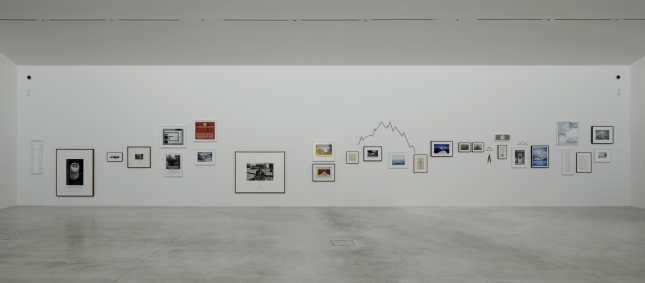
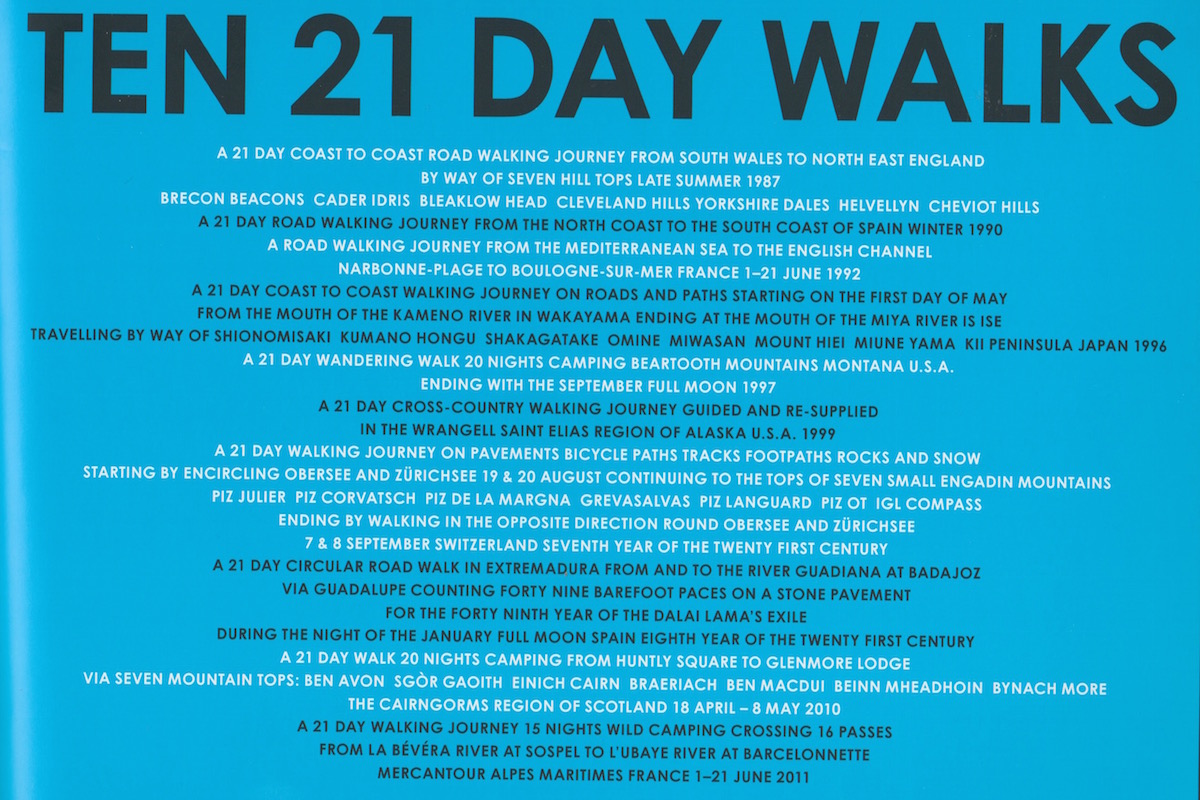
I learned about Hamish Fulton from Rob Walker's The Art of Noticing. He's credited for creating a dry, mundane itinerary titled "Hitchihiking Times from London to Andorra, 1967." When I began to learn more about him, like this Tate Gallery exhibition and this Walking Art website (who knew?)
The more I read about him, the more interesting he seems to me.
Hamish Fulton (born 1946) is an English walking artist. Since 1972 he has only made works based on the experience of walks
 |
| link |
 |
| https://twitter.com/danalevinpoet/status/1293541438643408898?s=20 |
For years I couldn’t sleep.
Most nights I’d throw off the covers
and take long runs through the dark.
Nothing helped.
My sisters.
When sleepless nights come
to tear you into little pieces,
rise to meet the day
as a tree rises to meet the axe—
as a scalp bows to meet the blade—
as sparks from a dying fire
reach out to meet the darkness—
as all of our bones
someday fall softly down
to meet earth.
When you stand,
send your roots down between the stones.
When you walk,
walk like a skeleton walking to its grave.
When you lie down,
lie down like a blown-out candle
being put back in a drawer.
When you sit,
sit very
very
still.
My sisters, sit like you are dead already.
How could this world possibly
give you what you’re looking for
when it’s so busy
falling apart—
just
like
you?
Look closely.
Don’t move until you see it.
(from https://www.shambhala.com/featured-poems-from-first-free-women/)
 |
| Shinzen Young (photo link) |
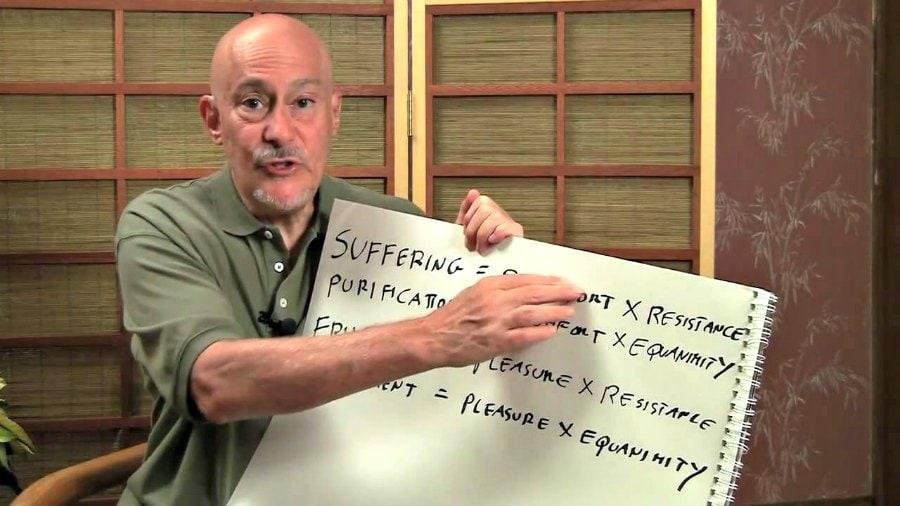
The names of his sessions are "training positivity," "physical sensations," "thoughts and emotions," "noticing I and II," "labeling 1 & 2"

I’ve been listening to Shinzen Young’s meditation instructions this week. He says while noticing Or labeling thoughts or sounds “if you happen to notice that you’re thinking, label it. If not, enjoy the peace” at the end of one session he says “enjoy the sound of the bell” and then I’ll be back to give some final thoughts.
I recall a thich Nhat Hahn’s story about doing dishes. With mindfulness you turn a chore that you rush through into a pleasure: hands in warm water. Maybe the pleasant smell of soap.
It’s not like a magic trick. The pleasure - the little pleasure - was always there. But you just didn’t notice it because your mind was casting forward, looking to end the chore so that you could go watch TV.
Waitresses tell us to enjoy our meal when they serve us. Colleagues tell us to enjoy our weekends on Fridays.but I think usually that means a wish that the weekend is filled with good things. The instruction to enjoy the bell feels more microscopic and precise, more like be careful with that hot cup.
The command to enjoy feels strange now to me in those broad settings. It feels to me like the word should mean to take pleasure in. A meditation guide is right to ask us to take pleasure in some thing.
Many people tell us that we should be grateful for things. Keep a gratitude list. Others tell us to keep a list of things that we’re looking forward to today. But I wonder if there could be another list that keeps track of things that you actively take pleasure in each day.

Even in December, the buds of spring are on the naked branches. And some days the sky is so blue. And the moon whetting smaller by the day (this photo looks like a Japanese woodblock) And the woods (Fullersberg) are in many shades of khaki
And geese are overhead now often I saw them in small groups over the courtyard at work
 |
| photo link |
I took a road trip to the west coast with a girlfriend in 1998 or so. While we were hiking on a pretty busy trail in the Columbia River Gorge. (I think it was Multnomah Falls). I had the idea of
"digital" versus "analog" experience. Digital represented walking along the path,
along with dozens/hundreds of other folks. "Analog" represented the
idea that we could step off the trail at any point, and walk
perpendicular to the trail... and find endless wonders. Each step of the trip could be "expanded" by walking perpendicular to the trail.
I don't
think the metaphor is apt so much anymore. I think it referred to the
idea that each "moment" of a digital recording is a single "digit" of
music...a pointillist moment that, added together, represents the song. (I'm not sure why I think that the analog "song" was richer/deeper than
that... maybe because it's "closer" to the actual room where the musician's played? maybe because you could hear the coffee maker in the
background in the studio in an analog recording (could you? and if so,
wouldn't that be in the digital recording, too?) In any case, I have this idea of the "digital" and "analog" in my head for awhile.
On the one hand this idea is simple: it represents that there are always moments to stop and go in a new direction. The new directions will be less-trod, but still interesting and rewarding.
On the other hand, I keep feeling like it represents something more profound: that our normal way of going about the world is ignorant of the "perpendicular paths" (the richness of every moment) that exists not just theoretically, but in actuality, in each moment when people inhabit the same space we do, and when the seasons move slowly surely. Being in a forest helps us see this, because there is a path, and there is a "not path" that you can still see. It's not like there are multiple realities, multiple directions that we can go; it's more like there is an unbelievable richness and depth to each moment.
Our experience is linear, along a path. We play our line of music. How do become more aware of the other musicians? How do we experience not the harmonies, but the multiply-lived space?
As we walk along a path, how do we become more aware of the things along the side of the path? And things that are 2 yards off the path, and 20 yards off the path?
"Acceptance,” writes the meditation teacher Jon Kabat-Zinn in Full Catastrophe Living, “does not mean passive resignation. Not at all. It means taking a reading of a situation, feeling it and embracing it as completely as one can manage, however challenging or horrible it may be, and recognizing that things are as they are, independent of our liking or disliking and wanting it to be different.” (my emphasis) Only then, writes Kabat-Zinn, can we take the appropriate action to improve our condition. “A desire for things to be other than the way they actually are is simply wishful thinking,” he writes. “It is not a very effective way of bringing about real change.”
I've thought a little about the "desire for things to be other than the way they actually are" and the quality of the energy of "wanting things to be different" which is more subtle than I take Kabat-Zinn's "wishful thinking." It's a unhappy irritant of a feeling. It's a non-harmonius feeling. And, it's an energy.
The Kabat-Zinn quotation is from Brad Stulberg's article, "It's okay to be good and not great."
https://thegrowtheq.com/its-okay-to-be-good-and-not-great/
I've been making notes on The Art of Noticing by Rob Walker. I just recalled that I've been doing these kinds of noticing exercises for a long time!
In 2012 the family took a camping trip to Maine. On one of the hikes, I set up a game: set my phone timer for 5 minutes. When the 5 minutes are done, stop. Look around. There is something extraordinary there. Take a picture. Repeat. I just looked at my photos from that time and saw that no photos from that experiment remain... just family snapshots.
When I was in Vermont a couple summers ago, I did something similar with writing. Set the timer for 15 minutes. Stop and write about where I am NOW.
Both of these techniques interrupt the "flow" of time and indicate: "something is happening important right now. Get out of your head and notice it."
Also, it makes me think of a road trip I took with a girlfriend once. We were hiking near the Columbia River. I had the idea of "digital" versus "analog." Digital represented walking along the path, along with dozens/hundreds of other folks. "Analog" represented the idea that we could step off the trail at any point, and walk perpendicular to the trail and find endless wonders.
I don't think the metaphor is apt so much anymore. I think it referred to the idea that each "moment" of a digital recording is a single "digit" of music...a pointilist moment that, added together, represents the song. (I'm not sure why I think that the analog "song" was richer/deeper than that... maybe because it's "closer" to the actual room where the musican's played? maybe because you could hear the coffee maker in the background in the studio in an analog recording (could you? and if so, wouldn't that be in the digital recording, too?)
On Twitter, Philip Mott @PhilipMott1 asks:
What questions do you wish friends would ask you when you talk to each other?
This should be a question you actually are likely to take the time to answer.
For me it would normally have to do with something that shows me they think of me when we're apart.
They either remember something we talked about last time or they knew something had happened since last time that they wanted to chat about.
This is a type of “skillful speech”. This is related to recent posts about texting to check in.
 |
| Chart Link |
I have created a spreadsheet with the data from this chart here by looking at the average low and high temperatures on each 1st, 11th, and 21st of each month. Those correspond to the middle seasons.
On this spreadsheet, I added a couple columns to show how the high and low temperatures CHANGE from middle season to middle season. That's the "delta" on the graph. It's represented by the angle of incline or decline on the blue or red lines.
Sometimes, temperatures don't change much from one middle season to the next. But other times, the temperature change is radical-- 5, 6, or even 7 degrees change in just ten days. October and November see huge changes. Also interesting is that it always changes (with a very few number of instances.) Spring and Fall are times of rapid change. At the same time, the middle of summer and the late winter are times of small change -- doldrums of temperatures at least.


