Sunday, March 30, 2025

Spend a little time each day working on it

NYT review of recent David Hockney exhibit.  link

From James Clear.  I might alter the idea a little bit.  Instead of "highest leverage activity"... maybe it's "something you love" or "something you're curious about."

The 2-step process for exceptional results:

  1. Spend a little time each day thinking about the highest leverage activity available to you.
  2. Spend a little time each day working on it.

Saturday, March 29, 2025

Under special obligation to make good use of it

NYT article on new Paris David Hockney show link

Novelist Marilynne Robinson:

“I can only make sense of my unaccountable good fortune by assuming that it means I am under special obligation to make good use of it.”

Source: The Paris Review Interviews: Volume IV 

(from James Clear)

Friday, March 28, 2025

Magnolias open on March 28 this year

 This has been a slowly developing spring.  But today, earlier this week the tiny swelling, but still closed, buds on the lilacs behind school have started emitting a candy-sweet smell. Green leaves starting emerging from the bush on the side of the driveway.  And over the past couple days magnolias have been paused in an "almost open" stage.


Thursday, March 27, 2025

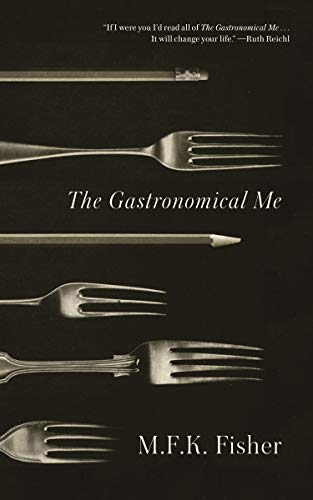
Among the important ones of my life


"The Gastronomical Me" by MFK Fisher begins with a quotation by philosopher George Santayana, and it begins with her first remember taste sensation:

The first thing I remember tasting and then wanting to taste again is the grayish-pink fuzz my grandmother skimmed from a spitting kettle of strawberry jam.  I suppose I was about four. (3)

In a chapter recounting her early marriage spent in Paris, she recounts the first proper French restaurant she and her her husband visit on their one-month anniversary.   

The first meal we had was a shy stupid one, but even if we had never gone back and never learned gradually how to order fodd and wine, it would still be among the important ones of my life. (57)

The Santayana quotation:

To be happy you must have taken the measure of your powers, tasted the fruits of your passion, and learned your place in the world.

Several chapters that I've read so far are titled "The measure of your powers." Each chapter title also includes a date: 1912, 1929-1930 (Paris)

Some other sentences that I admire:

Instead, I said that my university work took all of my time, and without her knowing it I learned much more from her, perhaps, than she could ever have told me.  I learned about omelets and salads and roasts of meat, as well as sauces both natural and concocted and a few human foibles, both despicable and fine. (81)

and.

We grew to know, but always humbly, what wines of Burgundy and which years were regal, and how to suit the vintage to the hour. (Much of what I learned then I've forgotten. I feel it is a pity, but perhpas like any fish I shall remember how to swim if I am thrown back in the water before it is too late. (89)

and, as a last paragraph of an essay/chapter:

We toasted many things, and at first the guests and some of the old judges and officers busied themselves being important. But gradually, over the measured progress of the courses and the impressive changing beauty of the wines, snobberies and even politics dwindled in our hearts, and the wit and the laughing awareness that is France made all of us alive. (95)


Wednesday, March 26, 2025

Recycled notebooks


Resketch notebooks - 

Although recycling paper uses less water than manufacturing the material from wood pulp, the process still requires significant energy and resources. The team behind Resketch has found a way to skip that step altogether.

Founded by Chicago-based artist Shawn Smith and now helmed by Skaaren Design, the company makes notebooks and sketchpads of unused architectural diagrams, maps, logs, sheet music, and more. The resulting designs offer users the opportunity to creatively engage with the original markings and add their own additions to the printed pages. Flipping through a notebook also becomes an act of discovery as old calendars or bureaucratic forms are tucked between graphs and lines.

“Through partnerships with the creative community and local and national businesses, we rescue 8 to 10 tons of high-quality, unused paper every year that would otherwise prematurely enter the waste stream,” Resketch says. The company currently collaborates with schools, businesses, architectural firms, and creatives across the U.S. to source materials with just enough blank space for a doodle or to-do list.

Shop notebooks and pads in Resketch’s store, and keep an eye on Instagram for their latest products. (via Core77)

Tuesday, March 25, 2025

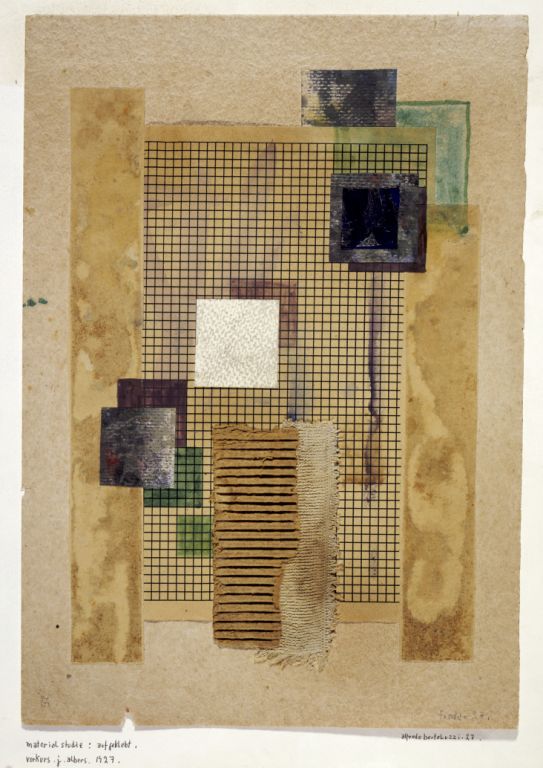
The Bauhaus "Preliminary Course"

Material study from the preliminary course of Josef Albers, Bauhaus Dessau,
author: Alfredo Bortoluzzi, 1927.


Johannes Itten, the Swiss painter who designed the mandatory “preliminary course

Here's a Bauhaus website that provides info about the 3 different directors of the course: 

After Johannes Itten’s departure, Walter Gropius commissioned Josef Albers and the Hungarian artist László Moholy-Nagy to teach the preliminary course together. When the latter left the Bauhaus with Walter Gropius in 1928, Albers became the official head of the preliminary course. Albers taught material studies during the first semester, which he extended to up to 18 hours per week in the preliminary course workshop. In his classes, he had the students use simple tools to explore the properties of various materials such as metal, wood and paper. The focus was on the development of spatial structures where the correlation of material, construction, function and production technology was to lead to optimal performance with a minimum input of material, energy and time: a school of invention.

Monday, March 24, 2025

He rises and falls like quicksilver in the thermometer

Matsumoto Hoji


March 24, 1859 in Thoreau's journal

Can you ever be sure that you have heard the very first wood frog in the township croak?  Ah! how weather-wise must he be! There is no guessing at the weather with him. . . . The weather, what is it but the temperament of the earth? and he is wholly of the earth, sensitive as its skin win which he lives and of which he is a part. His life relaxes with the thawing ground. He pitches and tunes his voice to chord with the rustling leaves which the March winds have dried . . . His is the very voice of the weather. He rises and falls like quicksilver in the thermometer.


Sunday, March 23, 2025

Unless it is inteded as part of a larger whole


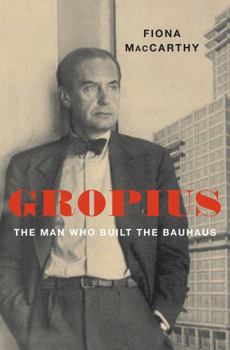
Walter Gropius:

For my part, I'm increasingly interested in the big questions of urban planning.  I'm just not interested anymore in whether this or that building is balanced within itself, unless, that is, it is intended as part of a larger whole.

Author Fiona McCarthy continues: "Teamwork was the new mantra.  Team was the great principle that motivated TAC" (Gropius' later life architecture collective.)

NYer review: Later in his life, bantering with Frank Lloyd Wright about the importance of collaboration, Gropius was asked by Wright, ever the solo operator, whether he would enlist a neighbor’s help in making a baby. Gropius, channelling both sides of his nature, answered that he might, if his neighbor was a woman.

Similar idea about the point of total architecture (from NYER) 

In 1924, a new provincial government threatened to cut off the school’s subsidies. Nazi factions in the region supposed that all those foreign-looking students were Jews or Jewish sympathizers. The following year, Gropius moved the school to Dessau, an engineering and manufacturing center, southwest of Berlin. There, for the first time, the Bauhaus built itself a campus. Gropius, now one of the most famous architects in the country, oversaw the design of the main buildings and the masters’ houses. The workshops, which he also designed, provided everything: textiles, fittings, door handles, murals, and tableware. The furniture was produced in the joinery of Marcel Breuer, one of the first and youngest students at the Bauhaus.

ddf

The evolution of a single design gives a sense of how the Bauhaus grew. For his Model B3 chair—also called the Wassily chair, in honor of Kandinsky, who expressed admiration for its prototype—Breuer took inspiration from the elegant handlebars of a milkman’s bicycle, made of seamless tubular steel, a new material. He created an industrial-age club chair that, reduced to its metal frame, seemed to levitate in space. You could see through it to other, equally beautiful Bauhaus objects in the background. Like all the furniture Breuer designed for the school, it was also a collaboration: the school’s textile workshop contributed the seats, woven from Eisengarn, a strong cotton thread. And, as with many great Bauhaus designs, it is an example of materialized reasoning. It solves the formal problem of creating a substantial piece of furniture that is both there and not there. It is interesting from every angle, and especially beautiful from the back.

dsa

Saturday, March 22, 2025

Descriptive, prescriptive, comprehensive, encyclopedic and exhaustive


Dr. Hessayon’s first book, “Be Your Own Gardening Expert” (1959), went on to sell almost six million copies.    Credit...Pan Brittanica

NYT obituaries often surprise with excellent writing.  This one about D.G Hessayon, has lots to like, including the great book cover above.

D.G. Hessayon is widely recognized as the world’s best-selling gardening writer, although many people outside Britain may not recognize his name. At home, however, he was the Agatha Christie of the genre.

Like Christie’s whodunits, Dr. Hessayon’s books followed a strict formula; and, like Christie, he shunned the limelight.

“I’m far too round, far too short and far too fat, for a start,” he told the British newspaper The Guardian in 1999. “I didn’t want people coming up to me asking for an autograph or a photograph or a donation.”

Beginning with “Be Your Own Gardening Expert” (1959), Dr. Hessayon (pronounced HESS-a-yon) published about 60 books, not including revised editions. They marched determinedly through single topics: roses, orchids, potatoes, bulbs, vegetables, flowers, fruit, houseplants, lawns, trees and shrubs, greenhouses and container gardens. There were books on pests and weeds, and one devoted to cereal diseases.

His work was descriptive, prescriptive, comprehensive, encyclopedic and exhaustive, written in a no-nonsense tone that some called bossy. The Guardian once said that the look of his books, which he designed himself, “could be best characterized as ‘1980 East German tourist brochure,’ but without the exuberance.”

Yet he was, in his own unvarnished way, a star, the guru of suburban gardeners. Margaret Thatcher was a fan.

When he had an idea for a gardening manual in the late 1950s, he asked his company to publish it, promising that if it didn’t sell he would pay the costs. A first printing of 100,000 copies of “Be Your Own Gardening Expert,” the cover quaintly illustrated with a stolid example of ’50s manhood, hoe in hand and pipe clenched in his lantern jaw, quickly sold out. The book would go on to sell nearly six million copies.

“Be Your Own House Plant Expert” (1960), his second book, was said to be the best-selling reference book of all time, after the Bible — a claim, much reported, that would nonetheless seem to be apocryphal.


But for beginning gardeners and completists, his hortatory manner, detailed illustrations and crisp style — best summed up as “do this, not that” — were a godsend. A sampling of advice, from a section in “The New Flower Expert” (1999) on how to dig, includes: “Wear stout shoes”; “Drive in the spade vertically. Press (do not kick) down on the blade”; and “For most people 30 minutes digging is quite enough for the first day.”

“The real secret of my work is that people feel at ease” with his books, he said. “I’m writing for the man in the semidetached.” 

Dr. Hessayon died on Jan. 16 at 96 at a hospital in southeast England, near his home in Essex, a Georgian house on 20 acres landscaped with most of the thousands of plant varieties he had written about.

...

When he had an idea for a gardening manual in the late 1950s, he asked his company to publish it, promising that if it didn’t sell he would pay the costs. A first printing of 100,000 copies of “Be Your Own Gardening Expert,” the cover quaintly illustrated with a stolid example of ’50s manhood, hoe in hand and pipe clenched in his lantern jaw, quickly sold out. The book would go on to sell nearly six million copies.

“Be Your Own House Plant Expert” (1960), his second book, was said to be the best-selling reference book of all time, after the Bible — a claim, much reported, that would nonetheless seem to be apocryphal.

Friday, March 21, 2025

The Late Wisconsin Spring by John Koethe

 The Late Wisconsin Spring

Snow melts into the earth and a gentle breeze   
Loosens the damp gum wrappers, the stale leaves   
Left over from autumn, and the dead brown grass.   
The sky shakes itself out. And the invisible birds   
Winter put away somewhere return, the air relaxes,   
People start to circulate again in twos and threes.   
The dominant feelings are the blue sky, and the year.   
—Memories of other seasons and the billowing wind;   
The light gradually altering from difficult to clear
As a page melts and a photograph develops in the backyard.   
When some men came to tear down the garage across the way   
The light was still clear, but the salt intoxication   
Was already dissipating into the atmosphere of constant day   
April brings, between the isolation and the flowers.   
Now the clouds are lighter, the branches are frosted green,   
And suddenly the season that had seemed so tentative before   
Becomes immediate, so clear the heart breaks and the vibrant   
Air is laced with crystal wires leading back from hell.   
Only the distraction, and the exaggerated sense of care   
Here at the heart of spring—all year long these feelings
Alternately wither and bloom, while a dense abstraction   
Hides them. But now the mental dance of solitude resumes,   
And life seems smaller, placed against the background   
Of this story with the empty, moral quality of an expansive   
Gesture made up out of trees and clouds and air.

The loneliness comes and goes, but the blue holds,   
Permeating the early leaves that flutter in the sunlight   
As the air dances up and down the street. Some kids yell.   
A white dog rolls over on the grass and barks once. And   
Although the incidents vary and the principal figures change,   
Once established, the essential tone and character of a season   
Stays inwardly the same day after day, like a person’s.   
The clouds are frantic. Shadows sweep across the lawn   
And up the side of the house. A dappled sky, a mild blue   
Watercolor light that floats the tense particulars away   
As the distraction starts. Spring here is at first so wary,   
And then so spare that even the birds act like strangers,   
Trying out the strange air with a hesitant chirp or two,   
And then subsiding. But the season intensifies by degrees,   
Imperceptibly, while the colors deepen out of memory,   
The flowers bloom and the thick leaves gleam in the sunlight   
Of another city, in a past which has almost faded into heaven.   
And even though memory always gives back so much more of   
What was there than the mind initially thought it could hold,   
Where will the separation and the ache between the isolated   
Moments go when summer comes and turns this all into a garden?   
Spring here is too subdued: the air is clear with anticipation,   
But its real strength lies in the quiet tension of isolation   
And living patiently, without atonement or regret,
In the eternity of the plain moments, the nest of care   
—Until suddenly, all alone, the mind is lifted upward into   
Light and air and the nothingness of the sky,   
Held there in that vacant, circumstantial blue until,
In the vehemence of a landscape where all the colors disappear,   
The quiet absolution of the spirit quickens into fact,   
And then, into death. But the wind is cool.   
The buds are starting to open on the trees.
Somewhere up in the sky an airplane drones.

Copyright Credit: John Koethe, “The Late Wisconsin Spring” from North Point North: New and Selected Poems. Copyright © 2002