Monday, June 30, 2025

Mr. Christmas* Backyard BBQ* Wise Books*


Mr. Christmas*

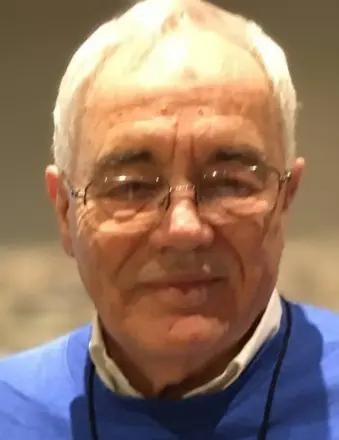
Not too long ago, Jeff sent me a link to the obituary of a teacher we shared in high school, Mr. Paul Christmas.  Here's a bit from his obituary.

Paul was a dedicated math teacher for many years in District 214, where he taught at Elk Grove, Hersey, and Buffalo Grove High Schools. His passion for teaching was matched only by his love for helping others, as he often tutored students in his free time, leaving a lasting impact on countless lives. He was also an active member of the Metropolitan Math Club, where he shared his expertise and enthusiasm for mathematics with others.

In addition to his professional life, Paul was a long-time and devoted member of Winnetka Covenant Church. He took great joy in being part of the church choir, offering his voice and spirit to the congregation for many years. Outside of his work and faith, Paul had a deep love for music and was a lifelong fan of the Chicago Symphony Orchestra, attending performances whenever he could.

Paul's personal life was filled with fond memories, particularly his many trips to Hawaii with his partner Mike, where they enjoyed the beauty and tranquility of the islands. He also had a zest for life that shone through in everything he did, from his friendships to his passions.

I have a personal story about Mr. Christmas.  Sometime during my sophomore year, he invited me and Paul Gauvereau (sp?) to a evening field trip, just the two of us.  He took us to The Berghof, which was fanciest restaurant I had -- at that point -- gone to.  I tried escargot for the first time.  Then he took us to Symphony Hall to see the CSO.  Again, the first time that I stepped into that room.

I don't recall what music we saw.  And, until recently, the story about going with Mr. Christmas was told as a "funny story" about how I was fortunate to not get hit on by Mr. Christmas, who was obviously gay, though no one really spoke much about that in 1985 or 1986.  The highlight of the story was always the moment that my parents dropped me off and I stepped into his townhouse, to see wall-to-wall white shag carpet and a white baby-grand piano.  The audience of the story often says, "I can't believe your parents let you go!"  That's mostly just a terrible thought suggesting that all gay men are predators.

There's lots to admire about Mr. Christmas from his obituary -- his lasting impact as a teacher and tutor, the zest for life, his sharing of his expertise and enthusiasm, the great joy he took as being part of the choir (offering his voice and spirit!).  But there's also something really important about what he did for me.  Jeff's text came to me in the same week that I renewed my tickets to the CSO, which I've renewed for the past 27 years or so.  Classical music is one of my favorite things.  For the first time, I wondered exactly what impact Mr. Christmas had on me just in terms of classical music:  he opened that door for me.  

I have been thinking that Mr. Christmas, far from grooming me, was gently opening a door for me, and for Paul, and, my guess is, a different set of two young men several times through the CSO season.  It makes me think about how we typically open doors for young men, and what those rooms have on display.  Not football and Coors Light, not golf and real estate... but fine food and fine music.

That was about forty years ago.  I have never thought about how my love for classical music began.  In reality

Backyard BBQ*

I set off to do a 10K walk recently, inspired by Craig Mod's idea of doing longer journeys.  This was hardly a long journey, but I wanted to see how far it would feel to do 10K in one walk.  I listened to an audiobook for a bit, and noticed nothing.  When I took my headphones off, I began noticing a lot of things - one or two per K, which I'd scribble in my Field Notes notebook.  I noticed: a huge number of large and small dots of white bird poo on the asphalt path right below one big oak limb, two younger kids riding old school motorcyles on a small lane, tempted to cut loose on the walking/biking path, the smell of trees in the forest with the distinct smell of laundtry detergent, milkweed plants, large, blooming, along with a single monarch, 2 small fawns in a sunny opening by Salt Creek, ripening blackberries (yum!) in the sun, and my favorite: a man in a backyard that borders a section of the forest preserve trail, doing some Sunday meat smoking, standing under a tent he'd erected over his patio, listening to some loud metal, maybe SlipKnot?  

Wise Books*

When I'm reading a book, I write down page numbers that I want to review later to reread, take notes on, think about in a blog entry.  Some books have a really large number of page markings.  One example is Carl Rogers' book of essays called X, which I read chunks of on a recent vacation.  These are wise books.  There should be some way to measure "wise" and "super wise" books just by the number of pages I've marked.  Sometimes page numbers have special markings to indicate multiple wise things on the page. Here are a few that have seemed especially wise to me:

  1. Carl Rogers' On Becoming a Person
  2. Jenny Odell's How to Do Nothing
  3. Jenny Odell's Saving Time
  4. Macfarlane
  5. David George Haskell - The Forest Unseen
  6. David George Haskell - Sounds Wild and Unbroken

Middle Seasons #18 - 2025


Sunday, June 29, 2025

Inland Pizza* 7 Stages of Becoming* Fermentation*


Inland Pizza*

On my bike ride back from Tuft's Point, I noticed the clean lines of Inland, an interesting sourdough pizza place in Bailey's Harbor.  Also attracted to the simple design.  I asked if it was a woodcut; the owner told me that it was completed on the computer.  It was definitely the culinary highlight of the trip.  It was unusual in a number of ways, especially in the context of most Door County food, which slants heavily towards burgers, chicken salad, rubens.   A few things that provide it's character:  short hours (11-5).  Simple menu at a quite high price point ($30/pizza, $20 salad). One side of the place looks like a pizza take-out joint - a cash register across from an open kitchen, featuring a three-racked pizza oven.  The dining area, which featured a 14 (?) seat large table, where they seated people family style, and a 8-10 2-4 tops.  There's a wait staff to serve food and bus tables, but you order at the front desk from the "hostess," who also introduces you to the large bar, gives quick advice for ordering (13" sourdough pizzas) and the three types of water, self-served - cold, sparkling, room temperature.  Simple menu - about 4 named pizzas and 4 salads or appetizers.  We had a delicious kale caesar (which left me just about licking the bowl), a simple margharita pizza and a gluten-free crust house-made fennel sausage pizza.  The gluten-free crust was really good for GF.  The crust of the sourdough pizza probably the most delicious I've had.   The wine list was curated with examples from Spain, France, Italy, and US West Coast.  The bathrooms super clean.  Altogether, I admired the whole nature of the place.  It was like the owners were saying: we're going to do this thing right -- no compromises -- and people will come.

7 Stages of Becoming*

Carl Rogers writes about his experience with how clients who engage in the kind of "absolute positive regard" therapy that he designed progress.  His essay X highlights what he considers 7 stages of progress.  It's from a static, self-protective state that doesn't take responsibility for current situation to a dynamic, open organism in a state of becoming.  The essay is filled with quotations from client sessions, so each stage, which is broken down into kinds of attributes, is illustrated with concrete examples of how a client at such stage would talk about things.   What I find interesting about it is that it's based on actual quotations.  It feels like he was separating student papers into piles on the floor:  this is how beginning students to X, this is how they do Y.  I also think it's interesting that it's a "theory" that totally built on clinical experience.  One of the core ideas is that the "end point" is not an "end" at all.  Instead, it's a new, open, dynamic, self-aware, and self-trusting, and self-appreciating personality.  It's not like "OK, it's fixed now!" (It's not like "you've taken your pill (undergone surgery) now it's better.  The "end state" reminds me a lot of things I've gathered from Joseph Goldstein, Jon Kabat-Zinn and others.  

Fermentation*

On the morning we left for the Black River Falls wedding and DC trip, my purple cabbage sauerkraut overflowed all over the marble counter top, staining it.  I moved the kraut to the basement and set it on two plates to catch the overflow. But when I got home, I didn't see any overflow.  According to Zero Waste Chef (How and Why to Make Sauerkraut and Kimchi), this might be because it has moved on to another phase of it's fermentation.  Past the burping stage. In any case, I tried the  young kraut yesterday, lifting the cabbage leaf I had used to jam in the top of the mason jar to keep floaters down, examining closely the kraut on my fork, seeing a little blackness (was this there when I put it in? possibly... I wasn't very particular when I did it), discarded a couple strands, and tasted a couple bites.  I was relieved that it tasted like: sauerkraut.  I immediately began thinking about how to add it to my "house maintenance schedule" in a way that there will always be one in the fridge, one at the beginning of a ferment, one nearing the end of the ferment.  The first step will be to figure out how long I want mine to ferment.  I started mine on June 14th. It's the 28th now.  

From the website: 
After two to three days (again, depending on your kitchen), the microbes will have already transformed your cabbage into a young sauerkraut. Taste it at this point. If you like the mild taste, move your jar to the refrigerator to retard the fermentation. I like my ferments strong and sour, so I let mine ferment on the kitchen counter for longer—a month or more. Taste yours weekly until it has reached the flavor you want.

On This Day (06/29):

Saturday, June 28, 2025

Foot Strengthening


Daily Foot & Ankle Strengthening Checklist

📅 Weeks 1–2: Foundation Phase

Focus: Wake up your feet and build a habit

☐ 1-Minute Balance on Right Foot (while brushing teeth)
☐ 1-Minute Balance on Left Foot (while using mouthwash)
☐ Toe Yoga
 ☐ Lift big toe, keep others down – 10x each foot
 ☐ Lift four toes, keep big toe down – 10x each foot

Short Foot Exercise (pull ball of foot toward heel)

 ☐ 5–10 sec hold, repeat 10x per foot


📅 Weeks 3–4: Strengthening Phase

Keep previous habits + add:

☐ Towel Scrunches OR Marble Pickups (2 rounds per foot)
☐ Calf Raises (10–15 reps)
 ☐ Focus on lifting inner arches


📅 Weeks 5–6: Balance & Proprioception Phase

Keep previous habits + add:

☐ Single-Leg Calf Raises (8–10 per leg)
☐ Balance on Soft Surface (pillow or pad) – 30–60 sec per foot
☐ Heel-to-Toe Rocking (10–15 slow reps)


📅 Weeks 7+: Integration Phase

Keep what works + add:

☐ Modified Warrior III (with wall or chair) – 15–30 sec per leg
☐ Short Foot Exercise (pull ball of foot toward heel)
 ☐ 5–10 sec hold, repeat 10x per foot

A playful bookshelf* Thoreau’s journal process* Microclimates


A playful bookshelf* 

Stopped by Al Johnson's Swedish Restaurant in Sister Bay, Wisconsin.  There are three shops surrounding the restaurant, packed with Swedish tchotchkes and Swedish-flag emblazoned items.  Amidst the typical tourist-trap stuff, there were a few things that caught my eye -- women's footwear, beautiful plates and mugs, women's socks, several non-digital kids' toys, like the "Domino Race" game in the photo at the right. But my favorite item was this clever bookshelf made with (what I'm guessing is) a 1"x6" board.  Maybe even 3/4".  The "shelves" get bigger as you move upwards.  The boards are held in place simply with screws from the reverse.  The box frame is part of it.

Thoreau’s journal process* 

Nov 16, 1850:  (Journal, vol. 2, November 16, 1850)

My Journal should be the record of my love. I would write in it only of the things I love, my affection for any aspect of the world, what I love to think of. I have no more distinctness or pointedness in my yearnings than an expanding bud, which does indeed point to flower and fruit, to summer and autumn, but is aware of the warm sun and spring influence only. I feel ripe for something, yet do nothing, can't discover what that thing is. I feel fertile merely. It is seedtime with me.  I have lain fallow long enough.


Thoreau’s writing went through several stages and many drafts before it became the works that you read today. A basic flowchart of his writing would start with field notes, which were then recorded as journal entries, next transformed into a lecture, afterwards an essay, and eventually part of a book. Though we often think of journals as recording our immediate experience, in Henry’s case the journal was a more deliberate creation. He took his field notes with him on walks in nature but typically did not record his experiences as journal entries until that night or even a few days later. The thoughtfulness and quality of his journal writings enabled him to reuse entire passages from it in his lectures and published writings. In his early years, Thoreau would literally cut out pages or excerpts from the journal and paste them onto another page as he created his essays.

Microclimates* 

The tempature was 91* in the middle of the Door County peninsula.  A couple miles closer to Lake Michigan, when we arrived at Whitefish Bay State park beach, it was 63*.   Locals say that it's always about 10* cooler "on the lake side" rather than the interior or the Green Bay side of the Peninsula.  That's one example of a microclimate

I took a short walk at Toft Point while I was in Door County. The path was lovely, featuring a steadily-changing landscape through forest, then along a marsh, then along the lake shore.   The DNR description does a much better job at showing the changes along this 1-mile walk.

Toft Point contains several outstanding native plant communities concentrated on a 1-mile-wide peninsula along Door County's Lake Michigan coast. The natural area is bordered on the north by Moonlight Bay, and on the south by Baileys Harbor. There are more than two miles of Lake Michigan shoreline, with areas of wave-cut dolomite cliffs. Stretches of limestone cobble beach, mixed with marly soil, are exposed during periods of low lake levels.

The vegetation of the eastern shoreline, influenced by the cooling effects of Lake Michigan, consists of a narrow strip of relict boreal forest dominated by balsam fir and white spruce. The majority of the peninsula is wooded with a mesic forest of sugar maple, yellow birch, hemlock, balsam fir, and scattered white pine.

To the north, along Moonlight Bay, is an extensive calcareous sedge meadow that grades into shrub-carr and wet-mesic forest dominated by white cedar with occasional paper birch and black ash. Pockets of tamarack swamp and alder thicket are embedded in the wetland.

Extensive stands of hard-stemmed bulrush grow offshore in 1 to 4 feet of water offering cover and spawning sites for a variety of fish. The natural area provides a habitat for more than 440 vascular plant species and is one of the most diverse bryophyte (mosses and liverworts) floras in the state. Toft Point, along with the adjacent Ridges Sanctuary, contains many area-sensitive bird species including seventeen species of nesting warblers. 

Friday, June 27, 2025

A beautiful library* Friluftsliv* Cherry markets


A beautiful public library* 

On my bike ride from Bailey's Harbor to Egg Harbor, I stumbled upon a the Egg Harbor library - a beautiful space that has an "event space" on the second floor.  The second floor also has this wrap around deck that overlooks the town and the bay in the background.


Friluftsliv* 

At Al Johnson's restaurant's first boutique/giftshop, there was a book that caught my attention that was about this Swedish concept.  Here's a BBC article about it: 
It’s minus two degrees celsius. Frost-tipped grass lines the hiking trails snaking through the forest in Ursvik, a Stockholm suburb on the edge of the Swedish capital’s technology and science hub, Kista.

Yet, despite the frigid temperature, there’s a steady footfall of walkers and joggers out and about during their lunch break.

“We do it all year round. You get so much energy from it,” says Tina Holm, a scientist at the Nordic headquarters of pharmaceutical and cosmetics firm Perrigo, who is here with her company’s running club. “We have a saying in Sweden ‘there’s no such thing as bad weather, only bad clothes’.”
“It’s a very big part of our lives, to be able to see the greenery and the water and the forests,” adds Bo Wahlund, a packaging developer who organises the group. “It strengthens our mental and physical abilities.”

Their passion for nature cuts to the heart of what Scandinavians call friluftsliv (pronounced free-loofts-liv). The expression literally translates as “open-air living” and was popularised in the 1850s by the Norwegian playwright and poet, Henrik Ibsen, who used the term to describe the value of spending time in remote locations for spiritual and physical wellbeing.

Today, the phrase is used more broadly by Swedes, Norwegians and Danes to explain anything from lunchtime runs in the forest, to commuting by bike (or on cross-country skis when the snow falls) to joining friends at a lakeside sauna (often followed by a chilly dip in the water) or simply relaxing in a mountain hut. The concept is also linked closely to allmansrätten, the right to roam. Scandinavian countries all have similar laws which allow people to walk or camp practically anywhere, as long as they show respect for the surrounding nature, wildlife and locals.

Many Scandinavian employers also incentivise staff to spend time outside during their working hours. The shiny activewear sported by pharmaceutical workers like Wahlund and Holme hint these are people who schedule exercise without any help from their bosses. But their club is able to meet every week thanks to a company policy that blocks 90 minutes out of employees’ calendars every Wednesday. No-one is forced to exercise, but a majority of staff choose to, with many making a beeline for the surrounding woodland.

Cherry markets*


Thursday, June 26, 2025

John Pelican * Ebert’s Appreciation * Fogged by pesticide

Farmers dust fruit trees with lead arsenate in a Door County orchard. link


John Pelican * 

Mumbling  dog tricky named after all creatures great and small  tall  sweatpants up above knees  dirty bare feet  

Ebert’s Appreciation * 

In Life Itself, Roger Ebert reflects on one of his primary influences, a UIUC English professor Curley  


I was to take every class Curley offered, including Fiction Writing› where one of the other students was Larry Woiwode, then obviously already the real thing. Curley read our stories aloud anonymously, to encourage open discussion. There was never any doubt who wrote Woi-wode's. Curley introduced me to many of the cornerstones of my life's reading: "The Love Song of J. Alfred Prufrock," Crime and Punishment, Madame Bovary, The Ambassadors, Nostromo, The Professor's House, The Great Gatsby, The Sound and the Fury. One day he handed out a mimeographed booklet of poems by E. E. Cummings, and told us to consider the typography as musical notations for reading the poems aloud. Cummings ever after was clear to me, and I know dozens of his poems by heart.

He approached these works with undisguised admiration. We discussed felicities of language, patterns of symbolism, motivation, revelation of character. This was appreciation, not the savagery of deconstruction, which approaches literature as pliers do a rose


Fogged by pesticide 

While I was cycling just east of Egg Harbor on my way back from the other side of the peninsula, I got fogged with pesticide by some machines in the cherry orchard. 

Article in Door County Pulse


Those were the days when thousands of workers migrated to Door County each season to harvest, Schuster said, well over 10,000 acres of cherry orchards, 2,000 acres of apples and scatterings of pears. 

“And all of these were sprayed with lead arsenate for years and years and years,” he said.

Orchard owners mixed lead-arsenate powder – lead and arsenic combined – with water and sprayed the soluble solution on apple and cherry trees to control pests. It was a licensed product and legal chemical, approved by the Environmental Protection Agency (EPA), prescribed by the University of Wisconsin-Extension, and widely used from the 1890s to the 1960s, according to the Wisconsin Department of Trade, Agriculture and Consumer Protection (DATCP). The EPA would ban the product in 1988 but in the meantime, pests grew resistant to the chemical cocktail, requiring the application of more and more lead arsenate. 

We’ve been using this quote of Maya Angelou’s for the last year: ‘Do the best you can until you know better. Then when you know better, do better,’” said Laurel Duffin Hauser, Crossroads former executive director and current development director.

Lead and arsenic naturally occur in soil, but that background level is generally lower than areas where the pesticides were used, according to DATCP. Even the former orchard land where the pesticides were sprayed typically don’t have concentrations high enough to cause “immediate negative health effects,” according to DATCP. 

Wednesday, June 25, 2025

Tuesday, June 24, 2025

Roadside Orchid * Bike Hike #2 * the basic goods of life


Roadside Orchid * 


Bike Hike #2 * 


the basics goods of life*

Read in Carl Rogers short book A Therapist’s View of Personal Goals that I found on Hoopla  

This greater openness to what goes on within is associated with a similar openness to experiences of external reality. Maslow might be speaking of clients I have known when he says, “self-actualized people have a wonderful capacity to appreciate again and again, freshly and naïvely, the basic goods of life with awe, pleasure, wonder, and even ecstasy, however stale these experiences may be for other people.”

Monday, June 23, 2025

Bird sightings checklist * Ruby Coffee Matcha Craft * Good fortune and memory*


Bird sightings checklist * 


Ruby Coffee Matcha Craft * 


Good fortune and memory*

Craig Mod’s Rules for walking

 Craig Mod sets up rules for his multi day walks  the walks are also related to a project - a daily newsletter, a book published at the end…

Sometimes he just lists the rules  for example


  • Walk whenever possible
  • Which means: Avoid transportation unless absolutely necessary
    • A lot of interesting things happens in the interstitial “boring” areas between “good” and “suboptimal” walking spaces, and these spaces are often “fast-forwarded” via transportation
  • No mental “teleporting:”
    • No podcasts
    • No social media
    • No news sites
    • Yes to many things:
      • Yes to being “present” (you know: there, aware, conversant)
      • Yes to entering as many funky looking cafes, diners, barbershops as possible
      • Yes to chatting up elderly farmers galore
    • With an almost religious fervency, perform the following creative acts every single day:
      • Take a portrait of someone before ten a.m.
      • Film five minutes of “nothing exciting” happening somewhere along the road
      • Record a five minute binaural audio snippet
      • Publish a newsletter

My rules for the walk were:

  1. No general media (newspapers, articles, podcasts)
  2. No social media (Twitter, Instagram)
  3. Consolidate data every day (walk notes, photos, GPS data, audio)
  4. Push an SMS message out every night (for the first 25 days)
  5. Record and publish ~15 mins of audio each day
  6. Shoot a portrait before 10am


He glosses this in ridge lines 134

I went on my first “big” walk — that is, a walk longer than ten days — in 2019. Until then I had had no rules. But for that walk, based on work I had done at writing fellowships and retreats, and recognizing the absolute power of disconnecting from the internet, I began to “play” with various walking rules. That first big, disconnected walk was a revelation. Everything since has built atop that experience. Layers of rules, added and peeled away.

I particularly dig the media creation rules — the forcing of my hand each day to make something, to look more closely and closer still at the sometimes nothingness of it all, record that so-called nothingness, and push it out into the world. A farmer’s face. The silent sea between Hokkaido and Honshu. A drunken fisherman psyched about squid. Like little ablutions


He creates “cornerstone activities”


photography will be a cornerstone activity. As will be Ridgeline and Roden (and On Margins) dispatches from the field.


Early in one of his newsletters he hatches the idea of the long walk and sets up guiding rules

He will send out a daily photo each day: 

I see this as a forcing function embedded within the rhythm of the day. I arrive at the inn. Am forced to collate the day’s images. Cull. Cut. Pick one. Push it out. But push it out to a system that doesn’t pull: sms. Unadorned. No stream. No stories. 


He will send out a daily audio recording:

I’m also measuring in sound. Fifteen minutes of audio a day, every day, recorded at 9:45 am. Wherever I may be. I stop, move to the side of the path or road, and then hit record on my binaural mics. The audio is then uploaded in the evening.

Sunday, June 22, 2025

Life Itself by Roger Ebert booknotes

 Roger Ebert. Life Itself

On Shakespeare

The autumn of 1966 was a conscious leave-taking from the univer-sit: Many of my friends were gone. My graduate courses in English had a nevseriousness and could no longer be finessed without actual work.

I had the good fortune to enroll in a class on Shakespeare's tragedies, taught by G. Blakemore Evans, who was a legendary Shakespearean. It was then that Shakespeare took hold of me, and it became clear he was the nearest we have come to a voice for what it means to be human.

I confessed to Wasson that I hadn't read most of Shakespeare, and he observed that the plays were not terribly long. If you read a play every Sunday morning it would take thirty-eight weeks. I started, and after I went to Cape Town I plunged in deeply, in reading that was a form of prayer.


On teacher of literature

I was to take every class Curley offered, including Fiction Writing› where one of the other students was Larry Woiwode, then obviously already the real thing. Curley read our stories aloud anonymously, to encourage open discussion. There was never any doubt who wrote Woi-wode's. Curley introduced me to many of the cornerstones of my life's reading: "The Love Song of J. Alfred Prufrock," Crime and Punishment, Madame Bovary, The Ambassadors, Nostromo, The Professor's House, The Great Gatsby, The Sound and the Fury. One day he handed out a mimeographed booklet of poems by E. E. Cummings, and told us to consider the typography as musical notations for reading the poems aloud. Cummings ever after was clear to me, and I know dozens of his poems by heart.

He approached these works with undisguised admiration. We discussed felicities of language, patterns of symbolism, motivation, revelation of character. This was appreciation, not the savagery of deconstruction, which approaches literature as pliers do a rose.


On mortification 

My early role models were my father and Dan Curley. He appeared in my life almost precisely when my father died, and it occurs to me that he must have known that. Did he understand the need he began to fill? He spoke to us once of the "first-rate second-rate writer," someone who was good but not quite that good: John O'Hara or Sinclair Lewis, perhaps. In my junior or senior year, filled with myself, infatuated with my weekly column in the Daily Illini, I reviewed his latest novel A Stone Man, Yes and described him as a first-rate second-rate writer. How could I have done this? How could I have been so cruel to a man who had been so kind? I had been his student for twenty-six credit hours. He was my friend. I did not possess the right to publish such a thing. Sherman Paul, another professor I idolized, stood next to me at the coffeepot in the English Seminar Room and drily observed, "That must have taken some nerve."


On Werner Herzog

It was clear to him what his his mission was. It was to film the world through personalities of exalted eccentrics who defied all ordinary categories and sought a transcendent vision. Every one of his films has followed that same mission. 


By then I'd seen The Enigma of Kaspar Hauser in the Chicago International Film Festival, and I felt a connection with Herzog's work that went beyond critic and film. We shared an obsession. He engaged with the infuriating relationship between the human will and the intractable universe. Each film, in a new way, dealt with the fundamental dilemma of consciousness: We know we are here, we know what we see, we learn what we can, we try to do more than is possible, we fail, but we have glimpsed a vision of the infinite. That sounds goofy and New Age, but there is no more grounded filmmaker than Herzog. He founds his work on the everyday realities of people who, crazy or sane, real or fictional, are all equally alive to him.


In 1999, the Walker Art Center screened a month of Herzog's filme and then scheduled a Q & A for the final night. I think we were onstage two and a half hours. He's a spellbinding speaker. He speaks with a naked sincerity that is sort of entrancing. He says extraordinary things in a matter-of-fact way. That night he read out his "Minnesota Declara-tion," which he had written for the occasion. Subtitled "Lessons of Dark-ness" after one of his films, it consisted of twelve points, some of which were funny. ("The moon is dull. Mother Nature doesn't call, doesn't speak to you, although a glacier eventually farts. And don't you listen to the Song of Life.") Some were bleak. ("We ought to be grateful that the Universe out there knows no smile.") The last one remorseless. ("Life in the oceans must be sheer hell. A vast, merciless hell of permanent and immediate danger. So much of a hell that during evolution some species-including man—crawled, fled onto some small continents of solid land, where the Lessons of Darkness continue.")

He said the point of the declaration was to define "ecstatic truth," by which he meant a truth above the mundane. Cinema verité, he said,

"confounds fact and truth, and thus plows only stones." He explained:

"There are deeper strata of truth in cinema, and there is such a thing as poetic, ecstatic truth. It is mysterious and elusive, and can be reached only through fabrication and imagination and stylization." This was consistent with his lifelong practice of ignoring the boundaries between his fiction films and documentaries.


P414


O'Rourke's had a photograph of Brendan Behan on the wall, and

under it this quotation, which I memorized:

I respect kindness in human beings first of all, and kindness to animals. I don't respect the law; I have a total irreverence for anything connected with society except that which makes the roads safer, the beer stronger, the food cheaper and the old men and old women warmer in the winter and happier in the

summer.

That does a pretty good job of summing it up. "Kindness" covers all of my political beliefs. No need to spell them out. I believe that if, at the end, according to our abilities, we have done something to make others a little happier, and something to make ourselves a little happier, that is about the best we can do. To make others less happy is a crime. To make ourselves unhappy is where all crime starts. We must try to contribute joy to the world. That is true no matter what our problems, our health, our circumstances. We must try. I didn't always know this and am happy I lived long enough to find it out.


Saturday, June 21, 2025

Player Piano by John Updike


Player Piano

My stick fingers click with a snicker
And, chuckling, they knuckle the keys;
Light-footed, my steel feelers flicker
And pluck from these keys melodies.
 
My paper can caper; abandon
Is broadcast by dint of my din,
And no man or band has a hand in
The tones I turn on from within.
 
At times I’m a jumble of rumbles,
At others I’m light like the moon,
But never my numb plunker fumbles,
Misstrums me, or tries a new tune.

Mobile Workbench


This past week I finished this woodworking project. Here are some details:

  1. The project initially was supposed to be a mobile chop saw table with extendable arms.  I came across a nice table on Reddit that served a similar purpose, but was just a nice table with a smaller table that laid on to of the left hand side which functioned as a board-support.  (see photo below) As I was thinking about how to keep that top board in place, I thought about using "dog holes."  After some research, and a visit to Harbor Frieght, which sells a workbench with dogs, I decided to go in that route.  I found the Bora Centipede table top (MDF board with both dogs and T-track) which is designed to fit their mobile base.  Then I sprouted the plan to build a mobile table around it.   At this point, the mobile chop saw station with extendable arms was almost completely gone! 
  2. I used a Bear-Mountatin Builds (YouTuber) design for the base because of the strength of the build -- T- joints?  -- the legs are two 2x4s laminated and screwed together; the cross piece supports 1/2 the leg -- it's not just hardware.  There are no screw holes on the front side.  The front-to-back pieces are pocket-holes.
  3. I bought a pocket hole jig for the project... some original plans had the top attached with pocket holes.
  4. I spent a good deal of time figuring out I wanted the top to fit on.  I wanted some overhang (for clamping).  I wanted to make some kind of frame to protect the edge of the MDF board. I didn't immediately figure out how I could support the top in a removable way to the frame.  I played around with routing a base or gluing a board all the way around.... I had to make sure I wasn't covering the dog holes.  I thought of constructing it upside down on a surface.  The top left picture shows this.  The pocket hole jig comes in handy here, as does the pipe clamps.  I decided to have the top fit on the base, like a baseball cap on a head.
  5. The finished project is 36"... which is the same as the radial arm saw (which is now next to it in the garage).  If I want to use it as a extra table for the table saw, I'll need to add wood to the top or put it on blocks (bc dad put my table saw on casters).  It currently fits UNDER the right hand extension of the table top of the table saw (otherwise it would have been too big).
  6. It's roughly 48x24.  The Bora board is just UNDER 48x24, the 2x4 frame wraps around that.
  7. I didn't buy any wood for it -- this was (almost all) leftover wood in the garage.  I had garbage picked some wood during garbage amnesty day (a broken 4x8 sheet of 1/2 playwood, a couple 3/4 plywood tops) but didn't use any of it... except the 4x4 sheet of plywood as a base for almost all of the project.  I bought the Bora tabletop for 1/2 price (~$100) from Amazon.  I bought two different dog/clamps from Amazon (total $50) to just see if I needed to make sure that the holes needed to be voids underneath.
  8. I learned about joinery, pocket holes, sanding the scrap wood before I used it, how to use clamps to make sure there are tight fits for screwing, especially with glue.  I learned about T-tracks (probably from this other Bear-Mountain Builds , overly complex, table)
  9. I used dad's old croner frame clamp to make sure that the top frame corners were square.
  10. I used my brain for putting together the entire plan and figuring out on my own how the top fits.
  11. While researching the project, I learned about this interesting Canadian/German engineer Matthias Wandel.  Wandel is kind of mad scientist.  Love his ethos.  He did a project/week for awhile it seems.  I was led to that by another YouTube guy who ended his video with "I was inspired by Matthias Wandel for the hardwood sliders for the drawers and Y for the idea for the frame" which I liked.  


Thursday, June 19, 2025

This is Your Mind on Plants booknotes

 It was late fall when I finally harvested my poppies. By now they had dried on their stalks, forming crinkled brown seedpods the size of walnuts.

According to James Duke, the retired USDA researcher I had spoken to, I had passed up a pharmacological opportunity by failing to harvest the seedpods while still fresh and full of sap, or opium. Duke suggested that alcohol would make a better solvent than hot water for extracting alkaloids from poppies, which made sense: laudanum is a name for just such a tincture of opium. "You can get the equivalent of a shot of heroin from a good green pod dissolved in a glass of vodka," Duke told me. I wondered why Hogshire's recipes focused on

poppy tea to the exclusion of alcohol-based preparations and then recalled something he'd told me: Hogshire was a Muslim, and so didn't drink alcohol.

Examining the pods in my garden, I could see that the tiny portals circling the anther at the top of each capsule had opened, releasing the poppy seeds to the wind. The seed portals looked exactly like the little observation windows circling the crown of the Statue of Liberty.

By now the seeds had probably been dispersed all over my garden, and would come up on their own, willy-nilly, next spring. If I didn't want opium poppies next season, I would have to sedulously weed every one of these volunteers.

I snapped a half dozen of the pods off their stalks and brought them into the kitchen. Though many of their seeds had been dis-persed, many more remained, and the pods made a rattling sound whenever they moved. Following Hogshire's recipe, I shook out the rest of the seeds (there were hundreds in each pod, ranging in color from beige to lavender to black) and crushed the pods in my fist. The shards I stuffed into the bowl of a coffee grinder, which in a few seconds noisily reduced them to a fine dun powder. I boiled a kettle of water and poured it over the dry tea in a mug, stirred the chestnut-colored mixture, and let it steep. The aroma was not at all unpleasant; it smelled of hay, not unlike a lapsang souchong tea. The whole procedure was so straightforward, so domestic in its particulars, that it felt no more controversial than making pesto or lemon balm tea, two

equally simple harvest operations I'd performed that week. I certainly didn't feel the lack of a Ph.D.

After fifteen minutes I poured the tea through a strainer, in the well of which it deposited a viscous brown slurry. With the back of a tablespoon I mashed this material against the mesh of the strainer,


pushing

through the last few ounces of liquid. The tea was ready

to drink.

Poppy tea tastes truly awful. It was nearly as bitter as raw opium and, after the novelty of the flavor wore off, slightly nauseating. I had asked James Duke why he thought poppies produced opium in the first place-what, in other words, was the evolutionary point? Alkaloids taste bad, he pointed out; it's conceivable that plants produce them as a defense against pests. "No animal's going to bother a plant that tastes that bad. So the plant with the worst taste is going to produce the most offspring."

It was a job getting a cup of the stuff down. The tea not only tasted terrible, but it was oddly filling too, and very soon made me queasy, a sensation much like a mild seasickness. I wondered if it was even possible to overdose on poppy tea; it seemed to me your stomach would rebel long before a significant amount could be ingested.

Within ten minutes or so, I began to feel... different. Not dramatically different, not "high," but not exactly the same self I was ten minutes before, either. Remembering what Jim Hogshire had told me about the tea's analgesic properties, I conducted an inventory of my everyday aches and pains and physical annoyances—a stiffness in the neck I'd woken with, the nasal and throat irritations of a particularly bad hay fever season, the usual dull pain in my knuckles after too many hours at the computer keyboard-and found that all these symptoms had, if not quite disappeared, then dropped beneath the threshold of my attention. They simply didn't matter. Then I decided it would be a good idea to inventory my mood, and concluded that it was very good indeed. Nothing I would describe as euphoric, but I was suffused body and mind with a distinct feeling of well-being—the words "warm" and

"aqueous" appear in my notes. I'm not sure whether it was the mode

of self-study l had logged onto, but the mental stance of standing just slightly apart from my self, coolly appraising my sensations and moods, suddenly seemed like the most natural thing in the world. I felt as though I was almost, but not quite, having an experience in the third

person.

Hogshire had said that the tea "can make sadness go away," and now I understood why he had employed that particular phrasing. For the poppy tea didn't seem to add anything new to consciousness, in the way that smoking marijuana can produce novel and unexpected sensations and emotions; by comparison, the tea seemed to subtract things: anxiety, melancholy, worry, grief. Like the opiate it is, or consists of, poppy tea is a pain killer in every sense. In my notes I wrote

"definitely lightens the existential load."

Fully expecting to be rendered useless by the tea—| have always been highly susceptible to drugs, and opiates are commonly thought to be soporific— had chosen an afternoon for my experiment on which there was little I needed to get done. And for the first hour, as I sat there at my desk assessing its effects, I did feel a powerful urge to close my eyes—not from any drowsiness, but from a radical and by no means unpleasant sense of passivity. I just didn't need to have all that visual information, thank you very much. My senses were functioning normally, yet I didn't particularly feel like acting on their data.

At one point I remember feeling chilled, but couldn't be bothered to close a window or put on a sweater. I'll just sit here awhile longer if that's okay. "Like sitting out on the front porch of one's conscious-ness, watching the world go by," I wrote, somewhat cryptically.

But I found I could think clearly-as long as I thought about one thing at a time. De Quincey had said he found reading a congenial activity while eating opium, and for a while I read a book with perfect

concentration. But during the second hour I noticed I was actually feeling energetic, even purposeful. Now I felt like stepping down from porch-consciousness and heading out into the garden to take

care of a few chores.

This was to be, I had decided beforehand, a one-time experiment, and I knew I had to rid my garden of poppies, the sooner the better. So I set to work pulling up the withered stalks. But I was unsure exactly what to do with this crop of dead flowers—-this evidence. I had read that the police no longer needed a search warrant to search my garbage (another juridical fruit of the drug war), so throwing them out with the trash was out of the question. I finally decided simply to compost them; by spring they'd be indistinguishable from the decomposing sunflower heads, broccoli plants, eggshells, and table scraps mounded up on the pile of compost in the corner of my vegetable garden.