
Sunday, March 31, 2024

Saturday, March 30, 2024

Friday, March 29, 2024
The Purpose of Addictions
Rothko

More from Hollis Finding Meaning in the Second Half of Life
The chief motive of any addiction is, of course, to help one not feel what in fact one has already been feeling. Breaking the tyranny of the addiction will require one to feel the pain that the addiction defends against.
The psyche is always speaking, and its urges will manifest first as ennui, then more conscious boredom, then inner resistance to our conscious scripts, and, as we continue to turn deaf ears, finally, an eruption of invasive feelings and behaviors: interrupted sleep or eating habits, the lure of an affair, troubling dreams, self-medicating addictions, and so on.
It may have been that a parent was repeatedly not there for us, perhaps caught in his or her relationship difficulties, his or her depression, distractions, addictions, or real-world pressures. Even insufficiencies outside parental influence, such as poverty, contribute to this sense of scarcity. At worst, we have the experience of literal abandonment.
Perhaps the two greatest addictions in our culture do not include street drugs, which make for easy scapegoating by politicians, but are television and food, both of which are readily available on a twenty-four-hour basis.
As we have seen, we live in a culture that breeds addictions, for our psychic roots are severed from a deep mythic ground. This mythological dislocation increases the steady harm of anxiety, always just beneath the surface of even our most mindless forms of escape. No one is free of addictions, for addictions or anxiety management techniques the purpose of which is to lower the level of psychic distress we feel at any given moment, whether we are conscious of the distress or not. In no person’s life are these anxiety reduction patterns absent. For one person stress is relieved by a cigarette, for another food, for another a phone call to a friend, for another work, for another some simple repetitive activity such as cleaning the house, for another compulsive prayer.
Thursday, March 28, 2024
Responses to Powerlessness
 |
| Rothko |
More from Hollis:
The Wound of Overwhelmment – The first category of inevitable existential, childhood wounding we may call overwhelmment, namely, the experience of our essential powerlessness in the face of our environment.
First, given the message that the world is larger, more powerful, we may logically try to evade its potential punitive effect upon us by retreating, avoiding, procrastinating, hiding out, denying, dissociating – the avoidant personality.
The second logical response to overwhelmment is found in our frequent efforts to seize control of the situation – sociopathic personality. In service to the core message, he or she internalized: “The world is hurtful and invasive. You must hurt or invade it first or be hurt and invaded instead.”
Most of us learned other, less extreme, coping mechanisms. We may pursue education as a means to understand, because to understand is to be in control . . . perhaps. At any rate, all of us have endeavored, with greater or lesser success, to get in control of our environment, lest it control us.
Many have sought overt power in life, from petty dictators to insecure, bullying spouses. Their urgent desire for power is a measure of their inner powerlessness.
Others, giving up on the notion of gaining power overtly, resort to what we commonly identify as passive/aggressive behaviors. Such a person appears to cooperate, even be congenial, but surreptitiously sabotages, turns up late, inserts the chilling, critical remark, fails to carry through, and thereby gains power through apparent powerlessness.
Thirdly, with the power of the world inordinately impressed upon us, there is another category of logical response, surely the most common: “Give them what they want!” Accommodation is a learned response,. Notice that there are so many polite words we have learned to accommodate our accommodation. We say someone is “sweet,” “personable,” “amiable,” “easygoing,” and most often, “nice.” When these labels repeatedly apply to someone’s behavior the consequences to the person’s inner life may in fact be ugly. We are conditioned to be nice, yet if we find ourselves repeatedly, reflexively being nice, we have not only lost integrity through reflexive responses, we have lost the power to conduct our own life. In recent years, this adaptive response has become so common as to earn its own pathologizing name, “codependence.” Codependence may or may not be a psychiatric category, but it is certainly an estrangement from our souls.
Three major categories of response to protect our fragile psyche:
- …The absence of the supportive other is internalized as “I am not met halfway because I am not worth being met.” Such a person has a tendency to hide out from life, diminish personal possibilities, avoid risk, and even make self-sabotaging choices. One takes the lesser opportunity as a confirmation of one’s apparent worth. One chooses the safe option, be it in work or relationship, rather than one that challenges and opens new possibilities… Sense of dispossession and the lifelong need to “arrive.” He has been climbing this mountain for a long time. His psyche tells him that he is over that hump, and he is then able to effortlessly gambol down the hillside.
- … Overcompensate and seek power, wealth, the right partner, fame, or some form of sovereignty over others…. What one lacks within one will seek in the outer world … The narcissist. Narcissists work very hard to conceal their inner poverty from recognition by others. They may boast, inflate their reputations, swagger and belittle others, or they may fall apart at the first hint of neglect and criticism, making others feel guilty for the alleged injury done to them. Such adult children typically either run off and marry the person they love and suffer the guilt and loss of their parent’s approval or accede to their parent’s desire and live depressed and angry marriages. Some even fantasize waiting until the parent dies, so great is their inner anxiety.
- … The anxious, obsessive need to seek the reassurance of others. Every therapist will attest to receiving many clients who complain about their relationships. They think all the good men are gone, or there are no woman without disturbed agendas. They meet and mate with someone and quickly begin to hector them and demand continuous reassurance from them. In time they grow weary of the other person, for the other can never fill the vast void within them. They are quick to find fault and they bitterly blame their partners for being so inadequately present. Even in normal marriages this sort of disappointment arises, for each of us has a lifelong need for fulfillment that no other person can ever meet. For the more mature, this insufficiency is perceived as the nature of life itself, and not the fault of their partner. For those whose history is especially charged with insufficiency, this intractable wound is larger than consciousness, and leads to a familiar, heartbreaking round of repeated disappointment, frustration, anger, disillusionment, and the desire to cast off in a new direction in hope of better results through the “magical other” over the next hill
Wednesday, March 27, 2024
Goals that are not totally self-centered
On Greg Krech's Thirty-thousand Days site, there's a posting titled: "Setting Goals for the Year that Aren't Totally Self-Centered."
Start with Self-Reflection
Before you grab a pen and paper and start listing goals for the year, take some time to reflect on your life. This not only gives you some perspective on your situation, but it allows you to identify goals that may go beyond your own self-interest. If our goals are purely self-centered, they are unlikely to be very satisfying in the long run. But goals which serve some purpose beyond our own happiness and welfare create meaning in our lives. They help us to feel useful and give us a sense of worthwhile purpose.
Write down your goals
Writing is a wonderful process for helping to crystalize your thoughts. So write down some goals and use the pages of notes from your self-reflection time as a resource. One idea that I have found useful is to identify key people who have been supportive and, after I have done Naikan on those individuals, to identify something I would like to do or give to each of those people.
For example, Steve, a colleague, went out of his way to loan me his car the week my car was in the shop. He also let me use his woodworking tools to make my daughter’s bed and gave me a dozen tomato plants for our garden. I’d like to schedule a weekend to have his daughter stay with us so he and his wife can go to Boston.
I try to limit my list to no more than seven people to make this a realistic goal. Once I have completed my list and have an idea for each person I have my first goal: to give those gifts or services to each person I identified.
Also on this page is Krech's Naikan:
I recommend a method of self-reflection called Naikan. Naikan originated in Japan and was developed by Ishin Yoshimoto. His method asks us to consider three questions:
1. What have I received from _____?
2. What have I given to _______?
3. What troubles and difficulties have I caused ______?
Tuesday, March 26, 2024
What's your frequency?

Recently I wrote about Gregg Krech's end-of-year retreats where he asks participants to reflect on 3 biggest accomplishments of the year only to hear "survival" or "just getting through the year."
Today I'm thinking about an image I saw (on the internet) of a college-aged girl filling up a wooden door in her dorm room with post-its... each one with something she's grateful for.
Here's a version of it that a family put together during COVID:

I'm also thinking of Alastair Humphreys and his sense of excitement, possibility, gratefulness... It's all about the ATTITUDE with which you start the day. Are you tuned? (like a radio, tuned in exactly, or kind of staticy?). What's your frequency?
Morning intentions can be seen as making sure that you're tuned in, that you're getting the right signals.
I could add curiosity, positive intention.
Monday, March 25, 2024
On just getting through the year
 | |
| William Turner, The Scarlet Sunset |
On Greg Krech's Thirty-thousand Days site, there's a posting titled: "Setting Goals for the Year that Aren't Totally Self-Centered." Earlier I've posted about the goal-setting technique.
In many of the workshops I conduct we begin by having people introduce themselves to someone else and as part of that introduction share the three most important things they’ve accomplished during the past year. For some people this turns out to be a very depressing inquiry. They scan the past months searching for something important they’ve done but find that they have little to show for the past year beyond “survival.” Indeed, some participants will actually say that “getting through the year” was a major accomplishment. Most of us would like to finish the year with some sense, in concrete terms, that we’re further along the “road to a meaningful life” than we were last January. But what does that road look like and where is it headed? If we don’t give some thought to that question at the beginning of the trip, we’re likely to end up at some random destination (including one which is not very far from where we started) and then, after the fact, find ourselves dissatisfied with the direction we’ve taken.
Sunday, March 24, 2024
No drama
 |
| Perro De Luna (Moon Dog) - Rufino |
Meditating Every Day When You Don't Want To - Greg Krech in Tricycle magazine
The article talks about making life easy: buy a bag of carrots, not cookies; set up the meditation cushion the night before. Article talks about being OK with fresh starts. And "no drama"
There’s one more element to a skillful fresh start, and this is really the sign of a master: no drama.
When we get back up, we often add something to the effort—a bit of drama. That drama usually takes the form of complaining and telling the story of our fall with great gusto. But if we leave out the drama, what do we have left? We fall. We get back up. We do the next thing.
This is why the fresh start practice is so hard. When we give up the drama, we give up our plea for sympathy and attention. We give up self-pity.
Remember, if you miss a day or two, your cushions will forgive you. They are ready to get back to work as soon as you get back on track.
Saturday, March 23, 2024
What do you not bring forth with destroy you
 |
| Wassily Kandinsky, Black Increasing, 1927. |
James Hollis, Find Meaning in the Second Half of Life notes from this blog.
As Jesus is reported to have said in the Gnostic Gospel of Thomas, “If you bring forth what is within you, what you bring forth will save you. If you do not bring forth what is within you, what you do not bring forth will destroy you.” This is the essence of what Jung means by individuation.Rather than ask, what does my tribe demand of me, what will win me collective approval, what will please my parents, we ask, what do the gods intend through me? It is a quite different question, and the answers will vary with the stage of life, and from one person to another. The necessary choices will never prove easy, but asking this question, and suffering it honestly, leads through the vicissitudes of life to larger places of meaning and purpose. One finds so much richness of experience, so much growth of consciousness, so much enlargement of one’s vision that the work proves well worth it. The false gods of our culture, power, materialism, hedonism, and narcissism, those upon which we have projected our longing for transcendence, only narrow and diminish. Of each critical juncture of choice, one may usefully ask: “Does this path enlarge or diminish me?” Usually, we know the answer to that question. We know it intuitively, instinctively, in the gut. Choosing the path that enlarges is always going to mean choosing the path of individuation. The gods want us to grow up, to step up to that high calling that each soul carries as its destiny
As Shakespeare observed in Twelfth Night, no prisons are more confining than those we know not we are in.
we are now able to ask: “Who am I apart from the roles I have been playing—some of them good, productive, and consistent with my inner values, and some not?” Or we may wonder, “Since I have served the expectations of my culture, reproduced my species, become a socially productive citizen and taxpayer, what now?”
Magical thinking results from an insufficient ability to differentiate self and world. The child concludes that “The world is an encoded message to me, a statement about me, about how I am valued, and how I am to comport myself.” Another way of putting this is: “I am what happens, or happened, to me.”
When the ego gets conscious enough and strong enough, or battered enough, it will begin to say: “What new thing do I have to learn about myself in the world?” “Since I can no longer manage all this perplexity by my former understanding, what does the soul ask me to do in the face of this overthrow?”
We all have a tendency to confuse fate and destiny, between what life presents us and what we are meant to become.
The chief disorders of our time are the fear of loneliness and the fear of growing up.
Growing up means taking psychological responsibility for ourselves, and not just economic and social responsibility—that is the easy part. Growing up means that we take spiritual responsibility for ourselves. No other can define our values, become our authority, or protect us from necessary choices. Until we accept this responsibility for ourselves, we are asking others to be a shelter for our homeless soul.
Friday, March 22, 2024
The Dodge
 |
| An ugly 1986 Dodge Omni |
There's "The incompetence dodge" where... "American policymakers and pundits routinely try to rescue the reputation of bad ideas by attributing their failure to poor execution. At the time, they were writing about the liberal hawks who were blaming the catastrophe of the Iraq war on the Bush administration’s maladministration rather than rethinking the enterprise in its totality."
Recently at work, a co-worker, who was trying to -- as another colleague said -- "cover her ass" -- was talking to me, her boss. "I was just looking over the stall at the student because I knew that she was smoking marijuana." Then she looked at me and said, "because it's our responsibility to protect kids when we suspect something, right?" And I realized that this was a dodge, a tactic, whereby she would then go one to a higher boss, who had called a disciplinary meeting, and was going to say, "and my boss agreed with me" (if I had agreed with the "because it's our..." When I did not give her assent. (I should have said: "it really depends on how seriously we think the kid is likely hurting herself in the moment). And she insisted, "isn't it? isn't it?"
Later, at the more serious meeting, with union representation, she starts the meeting jovially, admitted that she's shown real growth in "taking attendance" and she used to be bad and now she's good. Later at the meeting, she insists that she' cares so much about a student and that's why she was providing a 1:1 aide for a kid who was humiliated by it and was never supposed to have one. She also said that the kid had a "scribe" for his broken arm in Septmeber, so that's why he continued (without a broken arm) to need one months later, and there was a phrase in the kid's IEP about the kid who needed "constant observation" (or some off-hand remark) to confuse the term with a 1:1 aide, and then (in a third instance of discipline) said that she was speaking "enthusiastically and passionately" to a kid and not, like the dean said, "letting loose on the kid." These were the dodges she made to avoid taking responsibility and getting "a letter in her file." At the end of the meeting, this boss said, "she was trying to cover her ass."
Because of this situation and another one I dealt with for another teacher this week, I asked ChatGPT to develop a list of "dodging moves" people take.
Here are ten common dodging moves people might make to avoid taking responsibility:
Blaming others: Pointing fingers at someone else or external factors to deflect attention from one's own actions or decisions.
Making excuses: Providing reasons or justifications to rationalize why they couldn't or didn't fulfill their responsibilities.
Minimizing the situation: Downplaying the significance or impact of their actions to make it seem less serious.
Denying involvement: Flat-out denying any role or responsibility in the situation, even when evidence suggests otherwise.
Shifting focus: Redirecting the conversation away from their actions by bringing up unrelated topics or issues.
Playing the victim: Casting themselves as the victim of circumstances to garner sympathy and avoid accountability.
Using ambiguity: Being intentionally vague or unclear to evade direct questions or accusations.
Delaying tactics: Procrastinating or stalling to avoid addressing the issue or taking action.
Offering false apologies: Apologizing insincerely or without genuine remorse to appease others without accepting responsibility.
Gaslighting: Manipulating others into questioning their own perceptions or memory of events to avoid accountability.
Thursday, March 21, 2024
At Arby's At Noon by Ted Kooser
At Arby's at Noon
by Ted Kooser
Some of us were arriving, hungry
impatient, while others had eaten
and were leaving, bidding goodbye
to our friends, and among us
stood a pretty woman, blind,
her perfect fingers interwoven
about the top of her cane,
and she was bending forward,
open eyed, to find the knotted lips
of a man whose disfigured face
had been assembled out of scars
and who was leaving, hurrying off,
and though their kiss was brief
and askew and awkwardly pursed,
we all received it with a kind of
wonder, and kept it on our lips
through the afternoon.
From Kooser's 2014 collection Splitting an Order.
There's a line from another poem ("In a Gift Shop") that goes "women/like these, each helping another/ do something for someone not there." In this example, the two women are helping one pick out a greeting card for another ("someone not there"). In the "Arby's" poem, there's a small, important interaction between the two people kissing -- and there's an additional interaction (another kind of kiss) with those who view it and take it with them.
There are many poems that involve a couple in the collection, starting from the first, involving two men (one old wone with a cane) who are getting a car fixed, another one where the speaker interacts with two men old man and his father, in a parking garage staircase. Another one where the speaker watches the interaction between a roller blader and an old couple with a dog (which causes a reaction in memory of the old people) and another where a single person receives "Bad News" but the other person is on the other end of the telephone line... and a third person is the subject of the bad news.
The title bpoem
Wednesday, March 20, 2024

Tuesday, March 19, 2024
Leap Year Spring Equinox
 |
| March 19 2024 - early spring, early bloom, early rust |
First day of spring. From CBS:
Tuesday, March 19 at 11:06 p.m. EDT marked the vernal equinox for the Northern Hemisphere, when the sun was directly over the equator and its energy was in balance between the Northern and Southern Hemispheres.... Most years, the season typically changes on March 20th or 21st.
This has been a year of early spring in many senses - very warm temps, early blooming of trees, early leafing of bushes.
Today on my ride to work I noticed that the cold has created an early whithering of magnolias.
Monday, March 18, 2024
Usually it's the fifth idea

Kevin Kelly is continuing to write these -grams. Here's the text in case the link goes away:
Occasionally your first idea is best, but usually it's the fifth idea. You need to get all of the obvious ideas out of the way. Try to surprise yourself.
Sunday, March 17, 2024
The Real Luxuries

Because links are fragile, here are the "real luxuries" named by this graphic:
- colorful sunsets
- ability to express yourself
- day naps
- a good conversation
- listening to birds singing
- long walks
- a favorite home-cooked meal
- long walks
- a good night's sleep
- slow mornings
- freedom to choose
- time for fun and play
Saturday, March 16, 2024
10 Things Now

After two runs this week, I sat on a bench and recorded 10 things that I noticed.
Monday, Spring rock at 4:45
Daffodils 8 or 9 inches in west facing bed.
Lenten roses blooming.
Kite flying dad with 2 primary colored kids.
- Hey high in sky tracing due east with twin contrails. Fading parallel lines to south
- Sun warmth on neck
- Robins patrol across the grass
- American flagged wrapped around the pole.
- Pine cones twenty feet up
- What’s left of the hydrangea blossoms shake listlessly
- Scaling squirrels on the trunk
- The wind wanes
- Yesterday a couple on a blanket in Bemis field. I’m picnic with warming blankets
Friday, Fullersburg Woods 4:58
- robin close to me on forest floor., patiently searching, head cocked Wingtips dropped
incredible Starling and blackbird symphony. Stops when I’m Near and minutes later after I’m immobile on log. Picked up again. Crescendo.
- lit up brown of remaining leaves on trees. (image above)
- In falling sunlight glint of aimless bugs fluttering winged bugs spider web filaments yards long
- The falling sun through forest somehow makes the forest seem hazy
- Green fuzz on forest floor
- Robin tossing leaves on forest floor like a cop tossing a jail cell mattress in a jail movie
- Alarmed Robin chi chi chi chi
- One brown leaf from above picked off from wind and falls down to forests floor
- Red wing blackbird trills
- Unknown birds fly across my field of vision and land on limbs
Friday, March 15, 2024
Countdown Clock
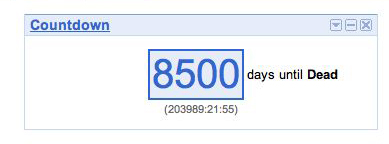
My own data: at 55, I will have 24.7 years left according to the "life table" that I found at this governmental website (scroll down). That's 9015 days. There are 504 days until my 55th birthday. So as of March 15, 2024, I have 9519 days left.
Kevin Kelly countdown clock - link
I decided to take the idea of number days seriously, and to revisit my earlier experience of counting down my remaining time on this lovely mortal plane. My hope was that a reckoning of my numbered days would help me account for how I spend each precious 24 hours, and to focus my attention and energy on those few tasks and projects I deem most important to me. Indeed, it might help me decide which ones are most important, which is the harder assignment.
What I wanted was a great big flashing sign that would show up on my computer and shout out to me how many days I had remaining. Then I would try to use my blog to record what how I spent the day to keep me honest. A wasted day would reveal its loss in the empty lower count the next day. I figured that mounting an automatic personal countdown sign should be pretty easy, and something that others might want to do as well.
I’ve been using this system for several months now and it has been very powerful. Day to day I am aware — and can rattle off if I am asked – how many days I have left. I decided to post my project today because on my clock it shows a handily rounded off sum. So here is the news: As of today I have 8,500 days left to live. That’s not much in my book. I can almost hear them ticking away as we speak. I look at my lifelist of current dreams and I realize that in only 8,500 days I won’t get to but a few of them. And what of any new dreams?
Futurama - link
I only recently became aware that the death clock was ridiculous enough to make it to one episode of Futurama. The final version was a table clock. You stick your finger into the hole on top and it reads out the exact time of your death. Apparently Professor Farnsworth invented the clock twice because of his senility. . . .
My own countdown death clock is a web app and desktop widget. It’s the first thing I see on my computer. I take it pretty seriously. Right now my clock reads 7,853 days left.
Thursday, March 14, 2024
Regrounding in the moment
 |
| Klimt Fir Forest |
From Rob Walker's Art of Noticing newsletter:
Briefly: I’ve always been a bit anxious, but in the pandemic era, that grew, and led to some problems that I really had to work on, and am still working on. That’s a story for another time, but at one point in the course of doing that work I was presented with a “grounding” exercise, and I was startled at how much it resembled a TAoN prompt!
The basic idea — and it’s very basic — is that one way to cope with or manage anxiety, traumatic flashbacks, addictive behavior, troubling urges, etc., is to ground yourself in the present moment, thus pulling your negative thoughts out of their problematic spiral. If you can get out of your head for 15 or even five minutes (the thinking goes), the troubling rumination (or urges) can pass.
Here, from the site Therapist Aid, is a summary of the 5-4-3-2-1 Technique for re-grounding in the moment. Focus on identifying:
5 things you can see. “Look for small details such as a pattern on the ceiling, the way light reflects off a surface, or an object you never noticed.”
4 things you can feel. “Notice the sensation of clothing on your body, the sun on your skin, or the feeling of the chair you are sitting in. Pick up an object and examine its weight, texture, and other physical qualities.”
3 things you can hear. “Pay special attention to the sounds your mind has tuned out, such as a ticking clock, distant traffic, or trees blowing in the wind.”
2 things you can smell. “Try to notice smells in the air around you, like an air freshener or freshly mowed grass. You may also look around for something that has a scent, such as a flower or an unlit candle.”
1 thing you can taste. The summary suggests you could chew gum or eat a snack and “focus your attention closely on the flavors,” but for this one I might substitute thinking back to a recently enjoyed taste, or looking for something in your environment that reminds you of a taste, etc.
Walker's prompt: the 5-4-3-2-1 exercise also works as a simple, do-anywhere noticing prompt. Try it next time next time you are — or aren’t! — feeling a bit of anxiety.
Wednesday, March 13, 2024
How much time do we have left?

I was reminded by Alastair Humprhreys of this series of graphics from Tim Urban ("The Tail End") representing how much time we have in our lives and how much time we have left. Related to the novel Under the Sheltering Sky and how many times will I see the full moon rise?
The graphic represents the number of ocean swims Urban is expected to do.
There's also Kevin Kelly's countdown clock.
Tuesday, March 12, 2024
Know your desires. Know your light
 |
| Alastair Humphreys' photo in a Tweety: Apricity: “the warmth of the sun in winter.” |
Leo Babauta on Developing a Sense of Self. The blog post addresses the symptoms and talks about how to grow it in yourself and with a partner.
Developing a strong sense of self is one of the most under-appreciated ways to be happy. To have healthy relationships, with others and with yourself.
It’s not often understood, and as a result, problems in this area cause problems in all areas of our lives.
Let me point out just some of the common symptoms of an under-developed sense of self:
- People pleasing
- Conflict avoidance
- Not being honest about how you feel
- Losing yourself in a relationship
- Distancing yourself from your partner when you’re afraid
- Hiding things, cheating on your partner
- Not being able to take care of your needs or emotions
- Being afraid of intimacy or relationships
- Not setting boundaries, feeling overrun or overburdened by others, resenting it
As you can see, the issues come up especially in relationship with others (with your partner, family, friends, coworkers, etc.) … but because of that, it affects almost everything in your life, even when you’re alone.
How to Start Developing a Stronger Sense of Self
The way to develop a strong sense of self is to start by knowing yourself better — not necessarily changing anything about yourself.
This means a willingness to have intimacy with yourself:
- Know your feelings: Start to bring awareness and presence to your fears, anxieties, sadness, loneliness, boredom, anger, resentment, guilt, shame, love, compassion, joy, and more. When they are happening, can you notice them and let yourself feel them? This creates a sense of trust in yourself that you can be with your feelings.
- Know your self-talk: Notice what you’re telling yourself when you avoid, criticize, complain, break promises to yourself, make mistakes. What kind of language do you use? What kind of tone? Understanding this is a way of understanding how you’ve learned to protect yourself.
- Take care of your feelings: When you’re feeling afraid, sad, lonely, emotionally exhausted … can you find a way to take care of these feelings? Soothe them, bring love to them, reassure them? If you could have a loved one give you exactly what you need, what would that be? Could you do that for yourself?
- Know your desires: We are often trained to not want anything. It might not feel OK to want things. But what if we could just own our desires, and start to notice what they are? And feel that it’s OK to have these desires? That doesn’t mean we always get to have whatever we want — that’s attachment. But just acknowledging your desires can be powerful.
- Know your light: We sometimes only relate to the parts of ourselves we don’t really like. But a good practice is to start to see the parts of yourself that are beautiful — your compassion, generosity, curiosity, playfulness, commitment, power, courage, love, joy, and more. These aren’t always obvious, but they’re always there. Start to notice them and acknowledge them more often. This is the essence of developing your sense of self.
If you practice these on a regular basis, your sense of self will get stronger with each practice.
Practicing in Relationship with Others
It’s best to develop your sense of self when you’re alone — even if you’re in a relationship, or have lots of family or friends around you, spend some time alone each day to practice knowing yourself.
That said, we deepen this work whenever we’re in relationship with anyone else. This can be a romantic partnership, a friendship, a relationship with your kids or siblings or parents, relationships with team members, business partners, etc.
Some ways to practice:
- Notice when you’re seeking validation from the other person. Practice validating yourself instead — acknowledge your light, celebrate your victories.
- Notice when you’re holding yourself back. You might not want to share your feelings with the other person, or perhaps you’re afraid of being honest. This is a withholding of yourself out of fear. When you notice this, attend to your fear. Then see if you can share yourself, at least in little bits. Through this practice, you’ll develop trust to share all of yourself.
- Set boundaries. Notice when you need alone time, and let them know. Notice when you’re saying Yes to things out of guilt, and practice saying No. Notice when you’re resentful about things, and look for a boundary that you can express that won’t make you resentful. Look for where your needs aren’t being honored, and speak up for them.
- Continue to practice your individuality. Just because you’re in relationship with someone else doesn’t mean you have to sacrifice who you are. Can you speak up for your opinions and desires? Can you have your own activities that are yours alone?
- Use conflicts to grow your sense of self. Every conflict with the other person can be a practice in opening your heart to them, without giving up who you are. And even if the conflict goes badly — let’s say they are shut down and mean to you — you can take some time alone and practice being with your feelings and taking care of your emotions. In this way, even difficult conflicts can be an opportunity to grow closer to yourself.
Be patient with yourself, because this isn’t easy stuff to practice, and you won’t “get it right” all the time. In fact, there isn’t a right way to do this, it’s an exploration, a journey of self-discovery.
Monday, March 11, 2024
The Botticellian Trees by William Carlos Williams
 |
| Primavera by Sandro Botticelli (1470-1480s?) |
The Botticellian Trees
The alphabet of
the trees
is fading in the
song of the leaves
the crossing
bars of the thin
letters that spelled
winter
and the cold
have been illumined
with
pointed green
by the rain and sun
the strict simple
principles of
straight branches
are being modified
by pinched out
ifs of color, devout
conditions
the smiles of love
. . . . . . . .
until the script
sentences
move as a woman’s
limbs under cloth
and praise from secrecy
quick with desire
love’s ascendancy
in summer–
In summer the song
sings itself
above the muffled words–
-William Carlos Williams (1930)
Sunday, March 10, 2024
Middle Season #7 - 2024

Saturday, March 9, 2024
I am grateful today that you are in my life

I started reading Norman Fischer's When You Greet Me I Bow (I think I learned of it from a Ruth Okezi interview). In the essay that the title comes from, he provides this anecdote about advice he gave to an older couple who came together after each had had a series of broken relationships.
Sit facing each other and say to one another, "I am grateful today that you are in my life.' Say the words, even if you find it difficult. If you don't believe them, say so. Say, "I just said that I was grateful that you are in my life, but I don't really feel that this morning, although I would like to feel it." ... The try again the next day, preparing yourself in advance by reminding yourself that you really are lucky to be alive, to be whole and healthy, and to have someone willing to share their life with you.
Later:
None of these things is automatic; none of them is permanent. To be alive with others -- nothing could be more basic, yet there is no greater spiritual practice.
Friday, March 8, 2024
Scrapbook for March and April 2024
 |
| link |
- List of books that inspired Alastair Humphries to write Local - link
- HTML Tables generator - link
- Using Your iPhone as a travel camera - link
- Bookpecker - NF books summarized in 5 bullets - link
- I begin a group of Ted Kooser poems in a google doc - link
- Buddha bowl recipes - Love and Lemons red cabbage, kale, sauerkraut, healthy vegan buddha bowl w peanut sauce, peanut sauce & broc, Buddha bowl tofu & peanut sauce, Tofu buddha bowl with oven baked chickpeas and tofu
- online synths - link
- My CEL proposal for Nov 2024 - link
- Rivbikes (Grant Peterson)- link
- KK Merino.tech tee shirts - long sleeved - $50 - link
- Root systems of trees and plants images - link
- Ted Kooser poems - link (my own Google doc of linked poems)
- Almond Granola (Cooks Illustrated) - link
- Daily/Weekly/Monthly/Seasonal/Annual House Cleaning Checklist - Martha Stewart - link
Quotations
“There is no failure in sports.” — Giannis Antetokounmpo
“Scarcity is the one thing you can never have enough of.” — Marc Randolph
Subscribe to:
Posts (Atom)