
I read 56 books in 2023.
My favorite books of 2023:
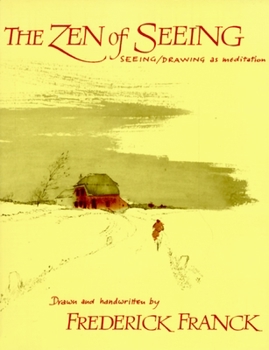
The Zen of Seeing: Seeing/Drawing as Meditation by Frederick Franck
The Instructions: I asked the participants to sit down somewhere on the lawn. . . leave at least six fix of space between one another. Don't talk, just sit and relax. Let your yes fall on whatever happens to be in front of you. It may be a plant or. a bush or a tree, or perhaps just some grass. Close your eyes for the next five minutes. Now open your eyes and focus on whatever you observed before -- that plant or leaf or dandelion. Look it in the eye, until you feel it looking back at you.Feel that you are alone with it on Earth! That is the most important thing in the universe, that it contains all the riddles of life and death. It does!
You are no longer looking, you are SEEING...
Now take your pencil loosely in your hand, and while you keep your eyes focused allowed the pencil to follow on the paper what the eye perceives. Feel as if with the point of your pencil you are caressing the contours, the whole circumference of that leaf, that spring of grass. Just let your hand move! Don't check what gets onto the paper, it does not matter at all. If your pencil runs off the paper, that's fine too! Only don't let your eye wander from what it is seeing and don't lift your pencil from your paper! And above all don't try too hard, don't "think" about what you are drawing, just let the hand follow what the eye sees. Let it caress. (xiv)
[one student said] "I have gown geraniums for thirty years, but, believe it or not, I never knew what a geranium looked like, how it was made, until I drew one today." (the drawing had very little resemblance to any geranium, past or presetn, but then we were not out to make "art" but to experiment with seeing.) (xix)
Looking and seeing both sart with sense perception, but there the similarity ends. When I 'look' at the world and label its phenomena, I make immediate choices in that appraisall - I like or I dislike, I accept or reject, what I look at, according to its usefulness to the "ME"... THIS ME THAT I IMAGINE MYSELF TO BE, and that I try to impose on others.
The purpose of 'looking' is to survive, to cope, to manipulate, to discern what is useful, agreeable, or threatening to the Me, what enhances or what diminishes the Me. This we are trained to do from our first day. (5)
When, on the other hand, I SEE -- sudeenly I am all eyes, I forget this Me, am liberated from it and dive into the reality of what confronts me, become part of it, participate in it. I no longer label, no longer choose.
It is in order to reaaly SEE, to SEE ever deeper, ever more intensely, hence to be fully aware and alive, that I draw what the Chinese call "The Ten Thousand Things" around me. Drawing is the discipline by which I constantly rediscover the world. (6)
I have learned that what I have not drawn I have never really seen, and that when I start drawing an ordinary thing I realize how extraordinary it is, sheer miracle: the branching of a tree, the structure of a dandelion's seed puff. "A mouse is a miracle enough to stagger sextillions of infidels," says Walt Whitman. I discover that among the The Ten Thousand Things there is no ordinary thing. All that is, is worthy of being seen, obf being drawn. (6)
What really happens when seeing and drawing become SEEING/DRAWING is that awareness and attention become constant and undivided, become contemplation. S?D is not a self-indulgence, a "pleasant hobby," but a discipline of awareness, of UNWAVERING ATTENTION to a world which is fully alive. It is not the pursuit of happiness, but stopping the pursuit and experiencing the awareness o, the happiness, of being ALL THERE It is a discipline that costs nothing, that needs no gadgets, All I carry is a pen in my pocket, a sketchbook under my arm. This is my lens. This eye is the lens of the heart, open to the world. My hand follows its seeing. (8)
Authentic personal experience is both aim and method of Zen. (13)
The Zen experience is the overcoming of the hallucination that the ME is the valid center of observation of the universe. It is a momentary, radical turn-about, A DIRECT PERCEPTION OF THE AND ISIGHT INTO THE PRESENCE, INTO THE TRANSIENCY, THE FINITUDE THAT I SHARE WITH ALL BEINGS. It is a fleetingness that makes this very moment infinitely precious. (14)
SEEING/DRAWING as a technique of contemplation is, I believe, a way particularly suited to that "Western temperament" which may be no more than a habitually overstimulated nervous system, an "overloaded switchboard." It is the discipline through which I extricate myself from the habitual, the mechanical, the predigested and acquisitive automatisms of our society. I stand face to face with a hill, a bird, a human face -- with myself, in unwavering attention. (16)
Chuang Tzu said, in the 4th century BC
The perfect man uses his mind as a mirror. It grasps nothing, it refuses nothing. It receives but does not keep.
12th century Baso: When tired I sleep, when hungry I eat.
Doesn't everybody do that?
No. When others eat they do not eat with their whole being. They talk, they plan, they think, while eating and they dream and worry while asleep.
Austin Kleon's post titled "And Then What?"...
inspired by this Alan Jacobs post, a sermon I desperately needed (which he told me he wrote, like almost all sermons, for himself) about outsourcing research, letting AI do your writing, watching YouTube videos at 2x speed, etc.
My question about all this is: And then? You rush through the writing, the researching, the watching, the listening, you’re done with it, you get it behind you — and what is in front of you? Well, death, for one thing. For the main thing.
But in the more immediate future: you’re zipping through all these experiences in order to do what, exactly? Listen to another song at double-speed? Produce a bullet-point outline of another post that AI can finish for you?
The whole attitude seems to be: Let me get through this thing I don’t especially enjoy so I can do another thing just like it, which I won’t enjoy either….
I say: If you’re trying to get through your work as quickly as you can, then maybe you should see if you can find a different line of work.
My habit is to start the day with listing three things that I'm grateful for. At some point, I began trying to list one item that is about a person, one item that is about a "thing," and one item that is about ME. In no particular order...
| Literary Fiction |
The Prime of Miss Jean Brodie (Muriel Spark) The Exhibitionist (Charlotte Mendelson) 10:04 (Ben Lerner) The Remains of the Day (Kazuo Ishiguro) Crook Manifesto (Colson Whitehead) I Married a Communist (Philip Roth) Hello Beautiful (Ann Napolitano) Stella Maris (Cormac McCarthy) Death Comes for the Archbishop (Willa Cather) Trust (Hernan Diaz) Shrines of Gaiety (Kate Atkinson) Waiting for Godot (Samuel Beckett) Rosencrantz and Guildenstern Are Dead (Tom Stoppard) The Underground Railroad (Colson Whitehead) The Vegetarian (Han Kang) Demon Copperhead (Barbara Kingsolver) Tracy Flick Can't Win (Tom Perrotta) An Unnecessary Woman (Rabih Alameddine) |
| Horror / Thriller / Mystery |
Mr. Mercedes (Stephen King) Fairy Tale (Stephen King) Holly (Stephen King) Billy Summers (Stephen King) The Only One Left (Riley Sager) The House Across the Lake (Riley Sager) One by One (Ruth Ware) The Twist of a Knife (Anthony Horowitz) Persuader (Lee Child) |
| Poetry |
Come, Thief (Jane Hirshfield) The Beauty (Jane Hirshfield) Ledger (Jane Hirshfield) Given Sugar, Given Salt (Jane Hirshfield) Weaving Sundown in a Scarlet Light (Joy Harjo) Special Orders (Edward Hirsch) Above Ground (Clint Smith) Wound Is the Origin of Wonder (Maya C. Popa) |
| Memoir / Biography |
World Within a Song (Jeff Tweedy) Tom Stoppard: A Life (Hermione Lee) Dickens and Prince (Nick Hornby) Left Bank (Agnès Poirier) Building (Mark Ellison) The Empathy Diaries (Sherry Turkle) |
| Philosophy / Spirituality / Wisdom |
The Zen of Seeing (Frederick Franck) How to Live (Sarah Bakewell) The Pocket Pema Chodron (Pema Chödrön) The Pocket Thich Nhat Hanh (Thich Nhat Hanh) Jung's Map of the Soul (Murray Stein) Falling Upward (Richard Rohr) |
| Social Science / Nonfiction |
Sapiens (Yuval Noah Harari) Behave (Robert Sapolsky) The Voltage Effect (John A. List) Sounds Wild and Broken (David George Haskell) Poverty, by America (Matthew Desmond) How to Do Nothing (Jenny Odell) Wildland (Evan Osnos) If Nietzsche Were a Narwhal (Justin Gregg) An Immense World (Ed Yong) Imaginable (Jane McGonigal) |
 |
| Saw this perfectly created nest in the dugout in Field Park. The next day, after rain, it was disintegrating |
Maybe “happy” means being aware that “important things are happening to me.”
Maybe happy relationships are the same, but “happening to us”
from Seth Godin. Reminds me of Thoreau.
…of course, if you’re lost on purpose, you’re not lost.
Lost is only possible if you are fixed on getting somewhere specific.
from Seth Godin:
Friendly doesn’t mean saying ‘yes’ all the time, or changing every policy, or giving up our principles.
Friendly is how it feels, not what it does.
From Seth Godin blog. It makes me think about what other things are a skill. Finding gaps in the day. Being peaceful. Not erupting.
Focusing attention is a skill
Where we choose to direct our gaze determines not only what we learn or believe, but how we choose to see the world.
Typing is a skill. Juggling is a skill. So is project management.
It’s easy to overlook the fact that we can get better at what we think about, create and consume. [my italics]
If we’re not happy with how external forces are stealing and redirecting our attention, we can change it.
From Tim Ferriss- annual year review
Grab a notepad and create two columns: POSITIVE and NEGATIVE.
Go through your calendar from the last year, looking at every week.
For each week, jot down on the pad any people or activities or commitments that triggered peak positive or negative emotions for that month. Put them in their respective columns.
Once you’ve gone through the past year, look at your notepad list and ask, “What 20% of each column produced the most reliable or powerful peaks?”
Based on the answers, take your “positive” leaders and schedule more of them in the new year. Get them on the calendar now! Book things with friends and prepay for activities/events/commitments that you know work. It’s not real until it’s in the calendar. That’s step one.
Step two is to take your “negative” leaders, put “NOT-TO-DO LIST” at the top, and put them somewhere you can see them each morning for the first few weeks of 2024.
These are the people and things you *know* make you miserable, so don’t put them on your calendar out of obligation, guilt, FOMO, or other nonsense.
And just remember: it’s not enough to remove the negative. That simply creates a void. Get the positive things on the calendar ASAP, lest they get crowded out by the bullshit and noise that will otherwise fill your days.
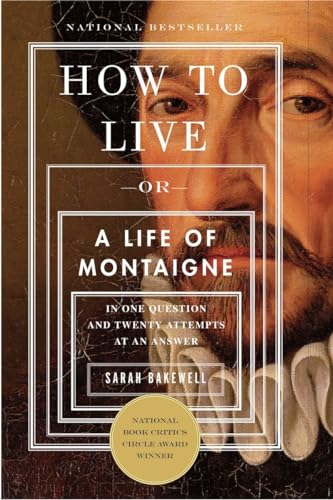
M.'s roof beans were painted with the following quotations:
Only one thing is certain: that nothing is certain And nothing is more wretched or arrogant than man. (Pliny the Elder)
How can you think yourslef a great man, when the first accident that comes along can wipe you out completely? (Euripides)
There is no more beautiful life than that of a carefree man; Lack of care is truly painless evil. (Sophocles)
2 Pay Attention
"The great Stoic Seneca repeatedly urged his fellow Romans to retire in order to 'find themselves,' as we might put it. In the Renaissance, as in ancient Rome, it was part of the well-managed life. You had your period of civic business, then you withdrew to discover what life was really about and to begin the long process of preparing for death. Montaigne developed reservation about the second part of this, but there is no doubt about his interest in contemplating life. He wrote: 'Let us cut loose from all ties that bind us to others; let us win from ourselves the power to live really alone and to live that way at our ease.'" (29)
In "Tranquility of Mind," he wrote that idelness and isolation could bring to the fore all the consequences of hanving lived life in the wrong wayk consequences that people usualy avoided by keeping busy -- that is, by continuing to live life in the wrong way. The symptoms could include dissatisfaction, self-loathing, fear, indecisiveness, lethargy, and melancholy. (30)
Seneca would have approved. If you become depressed or bored in your retirement, he advised, just look around you and interst yourself in the variety and sublimity of things. Salvation lies in paying full attention to nature. Montaigne tried to do this, but he took "nature" primarily to mean the natural phenomenon that lay closest to hand: himself. He began watching and questinoing his own experience, and writing down what he observed. (31)
His local river, the Dordogne, carved out its banks as a carpenter chisels grooves in wood. He had been astonished by the shifting sand dunes of Medoc, near where one of his brothers lived: they roamed the land and devoured it. If we could see the world at a different speed, he reflected, we would se everything like this, as "a perpetual multiplication and vicissitude of forms." Matter existed in an endless branloire: a word deriving from the sixteenth-century peasant dance branle, which meant something like "the shake." The world was a cosmic wobble: a shimmy. (34)
Other 16th-c writers shared M's fascination with the unstable. What was unusual in him was his instinct that the observer is as unreliable as the observed. The tow kinds of movement interact like variables in a complex mathematical equation, with the result that one can find no secure point from which to measure anything. To try to understand the world is like grasping a cloud of gas, or a liquid, using hand that are themselves made of gas or water, so that they dissolve as you close them.
This is why M's book flows as it does: it follows its author's stream of consciousness without attempting to pause or dam it. (35)
"If my mind could gain a firm footing, I would not make essays, I would make decisions; but it is always in apprenticeship and on trial." (36)
"I do not portray being. I portray passing. Not the passing from one age to another.... but from day to day, from minute to minute."
As Seneca put it, life does not pause to remind you that it is running one.... The trick is to maintain a kind of naive amazement at each instant of experience -- but, as Montaigne learned, one of the best techniques for doing this is to write about everything. Simply describing an object on your table, or the view from your window, opens your eyes to how marvelous such oridanry things are. To look inside yourself is to open up an even more fantastical realm. The philosopher Maurice Merlaeau-Ponty called Montaigne a writer who put " a consciousness astounded at itself at the core of human existence." (37)
4. Read a lot, forget most of what you read, and be slow-witted
He loved the way Plutarch assembled his work by stuffing in fistfuls of images, conversations, people, animals, objects of all kinds, rather than by coldly arranging abstractions and arguments. His writing is full of things Montaigne pointed out. Montaigne also loved the strong sense of Plutarch's own personality that comes across in his work: "I think I know him even into his soul." This is what Montaigne looked for in a book, just as people later looked for it in him: the feeling of meeting a real person across the centuries..... It does not matter, he wrote, whether a person one loves has been dead for fifteen hundred years, or, like his own father at the time, eighteen years. Both are equally remote; both are equally close. (67)
Montaigne's merging of favorite authors with his own father says a lot about how he read: he took up books as if they were people, and welcomed them into his family.
His rule in reading remained the one he had learned from Ovid: pursue pleasure. "If I encounter difficulties in readying," he wrote, "I do not gnaw my nails over them; I leave them there. I do nothing without gaiety."
Pierre taught him that everything should be approached in "gentleness and freedom, without rigor and constraint." Of this, Montaigne made a whole principle of living. (69)
Calvinism is a minority religion today, but its ideology remains impressively powerful. It takes as its starting point a principle known as "total depravity," which asserts that humans have no virtues of their own and are dependent on God's grace for everything.... Little personal responsibility is required, for everything is preordained, and no compromise is possible. The only possible attitude to such a God is one of perfect submission. In exchange, God grants His followers invincible strength: you give up your personal will, but receive the entire weight of God's universe behind you. [goes on to say that Calvinism required political engagement] (79)
6. Use Little Tricks
ABOUT ACADEMIC PHILOSOPHERS, Montaigne was usually dismissive: he disliked their pedantries and abstractions. But he showed an endless fascination for another tradition in philosophy: that of the great pragmatic schools which explored such questions as how to cope with a friend's death, how to work up courage, how to act well in morally difficult situations, and how to make the most of life. These were the philosophies he turned to in times of grief or fear, as well as for guidance in dealing with more minor everyday irritations.
The three most famous such systems of thought were Stoicism, Epicureanism, and Skepticism: the philosophies collectively known as Hellenistic because they had their origins in the era when Greek thought and culture spread to Rome and other Mediterranean regions, from the third century Bc onwards. They differed in details, but were so close in essentials as to be hard to distinguish much of the time. Like everyone else, Montaigne mixed and matched them according to his needs.
All the schools had the same aim: to achieve a way of living known in the original Greek as eudaimonia, often translated as "happiness," "joy," or"human flourishing." This meant living well in every sense: thriving, relishing life, being a good person. They also agreed that the best path to eudaimonia was ataraxia, which might be rendered as "imperturbability" or
"freedom from anxiety." Ataraxia means equilibrium: the art of maintaining an even keel, so that you neither exult when things go well nor plunge into despair when they go awry. To attain it is to have control over your motions, so that you are not battered and dragged about by them like a bone fought over by a pack of dogs.(109)
Stoics and Epicureans ... thought that the ability to enjoy life is thwarted by two big weaknesses: lack of control over emotions, and a tendency to pay too little attention to the present. If one oculd only get these two things right - controlling and paying attention -- most other problems would take care of themselves. The catch is that both are almost impossible to do...
Stoic and Epicurean thinkers spent much time devising techniques and thought experiments. For example: imagine that today is the last day of your life. Are you ready to face death? Imagine, even that thisvery moment -- now! -- is the last moment of your existence. What are you feeling? Do you have regrets? Are there things you wish you had done differently? Are you really alive at this instant, or are you consumed with panic, denial, and remorse? This experiment opens your eyes to what is important ot you, and reminds you of how time runs constantly through your fingers.
---
Such tricks of the imagination can be used in mundane situations as well as extreme ones; they are effective even against mild feelings of boredom or depression. If you feel tired of everything youpossess, suggests Plutarch, pretend that you have lost all these things and are missing them desperately. Whether the object is a favorite plate, a frind, a mistress, or the good fortune of living in a time of peace and in good health, this exercise magically makes it seem worth having after all. The principle is the same as when brooding on death: faced with the idea of losing something now, you realize its value.
The key is to cultivate mindfulness; prosoche, another key Greek term. Mindful attention is the trick that underlies many of the other trics. It is a call to attend to the inner world -- and thus also to the outer world, for uncontrolled emotions blur reality as tears blur a view. Anyone who clears their vision and lives in full awareness of the world as it is, Seneca says, can never be bored with life.
A person who does not sleepwalk through the world, moreover, is freed to respond to situations in the right way, without hesitation -- as if they were questions asked all of a sudden, as Epictetus puts it. A violent attack, a quarrel, the loss of a friend: all these are demands barked at you by life, as by a schoolteacher trying to catch you not paying attention in class. Even a moment of bored is such a question. Whatever happens, howerver unforeseen it is, you should be able to respond in a precisely suitable way. This is why, for Montaigne, learning to live "appropriately" (a propos) is the "great and glorious masterpiece" of human life. (111)
Seneca: "place before your mind's eye the vast spread of time's abyss, and consider the universe; and then contrast our so-called human life with infinity."
(similar though experiment to the eternal recurrence). amor fati, or love of fate:
Epictetus: Do not seek to have everything that happens happen as you wish, but wish for everything to happen as it actually does happen, and your life will be serene.
Montaigne: If I had to live over again, I would live as I have lived.
Around 1567, he [M's father Pierre] had given his son a very challenging literary commission indeed, which had alos done its part in turning him into a writer. This early request seems to have been Pierre's attempt to shake his son out of a continuing tendency to idelenss; it was another of those "tricks," inflicted for its victim's benefit. Even in his mid-thirties, Montaigne still had something of the sulky teenager about him. He was dissatisfied with his career as magistrate, disinclined to the life of a courtier, snooty about the law, and indifferent ot builidng and property development. ... Pierre probably felt that Montainge needed preparing for the responsibilities that would osn descend on him. He needed a challenge. M wanted to write: very well, let him write! Pierre handed him a 500-page folio ovlume, written by a Catalan theologian over a century earlier, in stilted Latin, and said, "Translate this into French for me when you get a moment, will, you, son?" (119/120)
7. Question Everything
Pyrrhonians according deal with all the problems life can throw at them by means of a single word which acts as shorthand for this maneuver: in Greek, epokhe. It means "I suspend judgment." Or, in a different rendition given in French by Montaigne himself, je soutiens: "I hold back." This phrase conquers all enemies; it unoes them, so that they disintegrate into atoms before your eyes.
To borrow an example from Alan Bailey, a historian of Skepticism, if someone declares that the number of grains of sand in the Sahara is an even number and demands to know your opinion, you natural response might be, "I don't have one," or "How should I know?" Or, if you want to sound more philosophical, "I suspend judgment" -- epokhe.
For a Pyrrhonian, this remains true even when the questions get more difficult. Is it all right to lie to someone to make them feel better? Epokhe. Is my cat better-looking than your cat? Am I kinder than you? Does love make one happy? Is there such a thing as a just war? Epokhe. (125)
...
Skepticism guided him at work, in his home life, and in his writing. The Essays are suffused with it: he filled his pages with words such as "perhaps," "to some extent," "I think," "It seems to me," and so on -- words which, as Montaigne said himself, "soften and moderate the rashness of our propositions," and which embody what the critic Hugo Friedrich has called his philosophy of "unassumingness." They are not extra flourishes; they are Montaigne's thought, at its purest. He never tired of such thinking, or of boggling his own mind by contemplating the millions of lives that had been lived through history and the impossibility of knowing the truth about htem. "Even if all that has come down to us by report from the past shoud be true and known by someone, it would be less than nothing compared with what is unknown." How puny is the knowledge of even the most curious person, he reflected, and how astounding the world by comparison. To quote Hugo Friedrich again, Montaigne had a "deep need to be surprised by what is unique, what cannot be categorized, what is mysterious."
And of all that was mysterious, nothing amazed him more than himself, the most unfathomable phenomenon of all. Countless times, he noticed himself changing an opinion from one extreme to the other, or shifting from emotion to emotion within seconds. (128)
My footing is so unsteady and so insecure, I find it so vacillating and ready to slip, and my sight is so unreliable, that on an empty stomach I feel myself another man than after a meal If my health smiles up me, and the brightness of a beautiful day, I am a fine fellow; if I have a corn bothering my toe, I am surly, unpleasant, and unapproachable.
For M., philosohpy is incarnate. It lives in individual, fallible humans; therefore, it is riddled with uncertainty. "The philosophers, it seems to me, have hardly touched this chord."
We have formed a truth by the consultation of concurrence of our five senses; but perhaps we needed the agreement of eight or ten senses, and their contributions, to perceive it certainly and in its essence."
This seemingly casual remark proposes a shocking idea: that we may be cut off by our very nature from seeing things as they are. A human being's perspective may not merely be prone to occasional error, but limited by definition, in exactly the way we normally ( and arrogantly) presume a dog's intelligence to be. Only someone with an exceptional ability to escape this immediate point of view ocule entertain such an idea, and this was precisely M's talent: being able to slip out from behind his eyes so as to gaze back upon himself with Pyrrhonian suspension of judgment. Even the original Skeptics never went so far. tThey doubted everything around them, but they did not usually consider how implicated their innermost souls were in the general uncertainty. Montaigne did, all the time:
We, and our judgment, and all mortal things go on flowing and rolling unceasingly. Thus nothing certain can be established about one thing by another, both the judging and the judged being in continual change and motion. (129)
Nietzsche loved M. called M "this freest and mightiest of souls" and added "That such a man wrote has truly augmented the joy of living on this earth." M apparently managed the trick of living as Nietzsche longed to do: without petty resentments or regrest, embracing everything that happened without the desire to change it. The essayists' casual remark, "If I had to live over again, I would live as I have lived," embodied everthing N spent his life trying to attain. Not only did M achieve it, but he even wrote about it in a throwaway tone, as if it were nothing special. Like M, N simultaneously questioned everthing and tried to accept everything. 151
8 Keep a private room behind the shop
Among the many things for which he admired the philosopher Socrates was his having perfected the art of living with an aggressive wife. M presented this as a tribulation almost as great as the one Socrates suffered at the hands of the Athenian parliament, when it condemned him to death by hemlock. He hoped to emulate Socrate's policy of forbearance and humor, and like the reply he gave when Alcibiades asked him how he stood the nagging. One gets used to it, said Socrates, as those who live close to a mill do to the sound of the water-wheel turning. M also liked the way Socrates adapted teh experience as a philosophical "trick" for his own spiritual improvement, using his wife's bad temper for practice in the art of enduring adversity. (157)
"back shop"
We should have wife, children, goods, and above all health, if we can; but we must not bind ourselves to them so strongly that our happiness depends on them. We must reserve a back shop all our own, entirely free, in which to establish our real liberty and our principal retreat and solitude. Here our ordinary conversation must be between us and ourselves, and so private that no outside association or communication can find a place; here we must talk and laugh as if without wife, without children, without possessions, without retinue and servants, so that, when the time comes to lose them, it will be nothing new to us to do without them.
Being impractical made him free. "Extremely idle, extremely independent, both by nature and by art," was the way he summed up his character. He was ruled by "freedom and laziness." (167)
I cannot reckon, either with counters or with a pen; most of our coins I do not know; nor do I know the difference between one grain and another, either in the ground or in the barn, unless it is too obvious, and I can scarcely distinguish the difference between the cabbages and lettuces in my garden. I do not even understand the names of the chief household implements or the roughest principles of agriculture, which children know. I know still less of the mechanical arts, of trade and merchandise, of the diversity and nature of fruits, wines, and foods, and of how to train a bird, or doctor a horse or dog. And since I must make my shame complete, not a month ago I was caught ignorant that leaven was used to make bread.
Montaigne runs through his negative catechism of failings ... (great Bakewell phrase) (167)
Nietzsche wrote of certain "free-spirited people" who are perfectly satisfied "with a minor position or a fortune that just meets their needs; for they will set themselves up to live in such a way that a great change in economic conditions, even a revolution in political structures, will not overturn their life with it." He adds that such a person will tend to have "cautious and somewhat shortwinded" relationships with those around him. This sounds so much like Montaigne's home arrangement that you almost wonder if Nietzsche was thinking of him, especially when he adds that this person "must trust that the genius of justice will say something on behalf of its disciple and protégé, should accusatory voices call him poor in love."
Some of his answers to the question of how to live are indeed chilly: mind your own business, preserve your sense of self, stay out of trouble, and keep your room behind the shop. But there is another which is almost the exact opposite....
9 Be convivial: live with others
Of all famous warriors, Montaigne most admired the Theban general Epaminondas, who was known for his ability to keep furor in check once, in mid-battle and "terrible with blood and iron," Epaminondas found himself face to face with an acquaintance in whose house he had stayed. He tumed aside and did not kill him. That might seem unremarkable, but in theory a soldier should no more be capable of such conscious restraint than would a shark in a feeding frenzy. Epaminondas proved himself "in command of war itself," as Montaigne wrote; he made the battle "endure the curb of benignity" at the very height of the ecstasy.
Montaigne suspected that the furor tradition was often used merely as an excuse. "Let us take away from wicked, bloody, and treacherous natures this pretext of reason." Brutality was bad enough in itself; brutality on the excuse of an elevated mental state was worse. Above all, he deplored the holy zeal of religious fanatics, who believed that God demanded such extreme, unreasoning violence as proof of devotion. 178
Even if animals were less similar to us than they are, we would still owe them a duty of fellow-feeling, simply because they are alive.
There is a certain respect, and a general duty of humanity, that attaches us not only to animals, who have life and feeling, but even to trees and plants. We owe justice to men, and mercy and kindness to other creatures that may be capable of receiving it. There is some relationship between them and us, and some mutual obligation.
This obligation applies in trivial encounters as well as life-or-death ones.
We owe other beings the countless small acts of kindness and empathy that Nietzsche would describe as "goodwill." After the passage just quoted, Montaigne added this remark about his dog:
I am not afraid to admit that my nature is so tender, so childish, that I cannot well refuse my dog the play he offers me or asks of me outside the proper time. 179
William James…. (This is Bakewell’s riff on WJ to explain M) We understand nothing of a dog's experience: of "the rapture of bones under hedges, or smells of trees and lamp-posts." They understand nothing of ours, when for example they watch us stare interminably at the pages of a book. Yet both states of consciousness share a certain quality: the "zest" or "tingle" which comes when one is completely absorbed in what one is doing. This tingle should enable us to recognize each other's similarity even when the objects of our interest are different.
Recognition, in turn, should lead to kindness. Forgetting this similarity is the worst political error, as well as the worst personal and moral one.
10 Wake from the sleep of habits
A later chapter, "Of Coaches," also noted how the gilded gandens and palaces of the Incas and Aztecs put European equivalens to shame. But the simple Tupinambá appealed to Montaigne far more. He described them with a list of desirable negatives:
This is a nation... in which there is no sort of traffic, no knowledge of letters, no science of numbers, no name for a magistrate or for political superiority, no custom of servitude, no riches or poverty, no contracts, no successions, no partitions, no occupations but leisure ones, no care for any but common kinship, no clothes, no agriculture, no metal, no use of wine or wheat. The very words that signify lying, treachery, dissimulation, avarice, envy, belittling, pardon unheard of.
186
11 Live temperately
The qualities he valued were curiosity, sociability, kindness, fellow-feeling, adaptability, intelligent reflection, the ability to see things from another’s point of view, and “goodwill”. — none of which is compatible with the fiery furnace of inspiration.
M even went so far as to claim that true greatness of the soul is to be in “mediocrity l.
12Guard Your humanity
Zweig. The question for any person of
integrity becomes not so much "How do I survive?" as "How do I remain faly human?" The question comes in many variants: How do I preserve my true self? How do I ensure that I go no further in my speech or actions chan I chink is right? How do I avoid losing my soul: Above all: How do I remain fre? Montaigne was no freedom fighter in the usual sense, Zweig admits.
*He has none of the rolling tirades and the beautiful verve of a Schiller or Lord Byron, none of the aggression of a Voltaire." His constant assertions that he is lazy, feckless, and irresponsible make him sound a poor hero, yet chese are not really failings at all. They are essential to his battle to preserve his particular self as it is.
Zweig knew that Montaigne disliked preaching, yet he managed to extract a series of general rules from the Essays. He did not list them as such, but paraphrased them in such a way as to resolve them into eight separate commandments—which could also be called the eight freedoms:
Be free from vanity and pride.
Be free from belief, disbelief, convictions, and parties.
Be free from habit.
Be free from ambition and greed.
Be free from family and surroundings.
Be free from fanaticism.
Be free from fate; be master of your own life.
Be fre from death; life depends on the will of others, but deach on our own will.
15 Do a good job, but not too good a job
The historian Jules Michelet, one of the toughest critics Montaigne ever had, thought that all this could be blamed on Montaigne's having received too free an education, one designed to produce a merely "feeble and negative" idea of a human being, rather than a hero or a good citizen. Those plangent musical awakenings in his childhood had a lot to answer for.
Michelet pictured the adult Montaigne as an invalid who isolated himself in his tower to "watch himself dream"-the inevitable consequence of a decadent, undisciplined upbringing. Over in England, the theologian Richard William Church concluded an otherwise admiring study by opining that Montaigne had too overwhelming a sense of "the nothingness of man, of the smallness of his greatest plans and the emptiness of his greatest achievements" —all a clear indication of nihilism. This made it impossible for him to believe in "the idea of duty, the wish for good, the thought of immortality." In general, he showed "indolence and want of moral tone."
256
16 Philosophize only by accident
Shakespeare clearly was influenced by Florio’s translation of Montaigne. From the Tempest:
of nature, Shakespeare's Gonzalo says:
I'th' commonwealth I would by contraries
Execute all things, for no kind of traffic
Would I admit; no name of magistrate;
Letters should not be known; riches, poverty,
And use of service, none; contract, succession,
Bourn, bound of land, tilth, vineyard, none;
No use of metal, corn, or wine, or oil;
No occupation, all men idle, all.
Which is remarkably like what Montaigne says about the Tupinamb, in Florio's translation:
It is a nation ... that hath no kind of traffike, no knowledge of Letters, no intelligence of numbers, no name of magistrate, nor of politike superioritie; no use of service, of riches, or of povertie; no contracts, no successions, no partitions, no occupation but idle; no respect of kindred, but common, no apparell but naturall, no manuring of lands, no use of wine, corn, or mettle.
278
Robert Burton describes his style of writing: “like a ranging spaniel, that barks at every bird he sees”
Of all Montaigne's cross-Channel heirs, the one who deserves the last word is an Anglo-Irishman: Laurence Sterne, eighteenth-century author of Tristram Shandy. His great novel, if it can be so classified, is an exaggerated Montaignesque ramble, containing several explicit nods to its French predecessor, and filled with games, paradoxes, and digressions. Dedications and prologues, which ought to be at the beginning, appear all over the place in the wrong order. "The Author's Preface" turns up in volume 3, chapter
20. At one point, a blank page is supplied, so readers can contribute a picture of a character according to their own imagination. Another page presents a series of line diagrams purporting to summarize the pattern of the book's digressions so far.
Whatever plot had appeared to
be promised at the outset evaporates; the breaks and
drours in the narative take over entirely. "Have I not promised the world a chapter of knots" Sterne reflects at one point. "Two chapters upon the night and the wrong end of a woman? a chapter upon whiskers a chapter
upon wishes?-
-a chapter of noses?-
No, I have done that:—a chapter
upon my uncle Toby's modesty: to say nothing of a chapter upon chapters, which I will finish before I sleep." It is like Montaigne on speed.
But of course, says Sterne, no story that really pays attention to the world as it is could be otherwise. It cannot go straight from its starting point to its destination. Life is complicated; there is no one track to follow.
Could a historiographer drive on his history, as a muleteer drives on his mule, —straight forward;—for instance, from Rome all the way to Loretto, without ever once turning his head aside either to the right hand or to the left,—he might venture to foretell you to an hour when he should get to his journey's end;but the thing is, morally speaking, impossible: For, if he is a man of the least spirit he will have fifty deviations from a straight line to make.
Like Montaigne on his Italian trip, Sterne cannot be accused of straying from his path, for his path is the digressions. His route lies, by definition, in whichever direction he happens to stray.
Tristram Shandy started an Irish tradition that would reach its most extreme point with James Joyce's Finnegans Wake, a novel which divides into offshoots and streams of association over hundreds of pages until, at the end, it loops around on itself: the last half-sentence hooks on to the half-sentence with which the book began. This is much too tidy for Sterne, or for Montaigne, who avoided neat wrap-ups. For both of them, writing and life should be allowed just to flow on, even if that means branching further and further into digressions without ever coming to any resolution. Sterne and Montaigne both engage constantly with a world which always generates more things to write about—so why stop? This makes them both accidental philosophers: naturalists on a field trip into the human soul, without maps or plans, and having no idea where they will end up, or what they will do when they get there. 285
17 Reflect on everything; regret nothing
Montaigne did not smear his words around like Joyce, but he did work by revisiting, elaborating, and accreting. Although he returned to his work constantly, he hardly ever seemed to get the urge to cross things out, only to keep adding more. The spirit of repentance was alien to him in writing, just as it was in life, where he remained firmly wedded to amor fati: the cheerful acceptance of whatever happens.
This was at odds with the doctrines of Christianity, which insisted that you must constantly repent of your past misdeeds, in order to keep wiping clean the slate and giving yourself fresh beginnings. Montaigne knew that some of the things he had done in the past no longer made sense to him, but he was content to presume that he must have been a different person at the time, and leave it at that. His past selves were as diverse as a group of people at a party. Just as he would not think of passing judgment on a roomful of acquaintances, all of whom had their own reasons and points of view to explain what they had done, so he would not think of judging previous versions of Montaigne. "We are all patchwork," he wrote, "and so shapeless and diverse in composition that each bit, each moment, plays its own game” 286
18 Give up control
“An able reader often discovers in other men’s writings perfections beyond those that the author put in or perceived, and that lends them richer meanings and aspects.”
I have read in Livy a hundred things that another man has not read in him. Plutarch has read in him a hundred besides the ones I could read, and perhaps besides what the author had put in. 314
20 Let Life Be it's own answer
I h
Some might question whether there is still any need for an essayist such as Montaigne. Twenty-first-century people, in the developed world, are already individualistic to excess, as well as entwined with one another to a degree beyond the wildest dreams of a sixteenth-century winegrower. His sense of the "I" in all things may seem a case of preaching to the converted, or even feeding drugs to the addicted. But Montaigne offers more than an incitement to self-indulgence. The twenty-first century has everything to gain from a Montaignean sense of life, and, in its most troubled moments so far, it has been sorely in need of a Montaignean politics. It could use his sense of moderation, his love of sociability and courtesy, his suspension of judgment, and his subtle understanding of the psychological mechanisms involved in confrontation and conflict. It needs his conviction that no vision of heaven, no imagined Apocalypse, and no perfectionist fantasy can ever outweigh the tiniest of selves in the real world. It is unthinkable to Montaigne that one could ever "gratify heaven and nature by committing massacre and homicide, a belief universally embraced in all religions." To believe that life could demand any such thing is to forget what day-to-day existence actually is. It entails forgetting that, when you look at a puppy held over a bucket of water, or even at a cat in the mood for play, you are looking at a creature who looks back at you. No abstract principles are involved; there are only two individuals, face to face, hoping for the best from one another.327
Acknowledgement
I first met Montaigne when, some twenty years ago in Budapest, I was so desperate for something to read on a train that I took a chance on a cheap Essays translation in a secondhand shop. It was the only English-language book on the shelf; I very much doubted that I would enjoy it. There is no one in particular I can thank for this turn of events: only Fortune, and the Montaignean truth that the best things in life happen when you don't get what you think you want.
