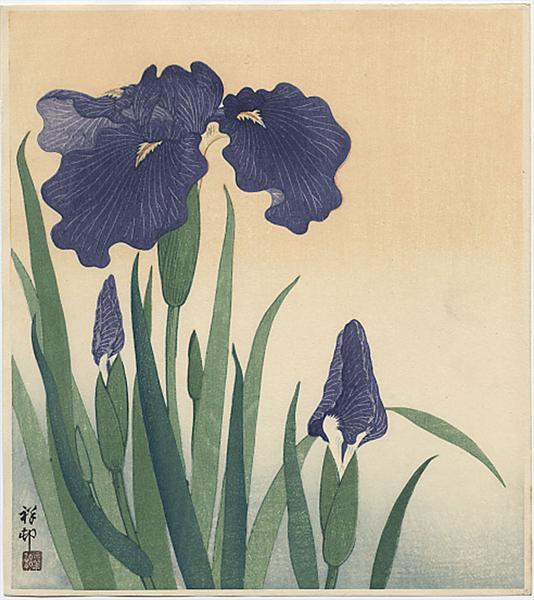
Redbuds are this color. For a day or two it was the same color as the azalea along the driveway. And the serviceberry has lost its petals, but is still intricate and pretty.
Redbuds are this color. For a day or two it was the same color as the azalea along the driveway. And the serviceberry has lost its petals, but is still intricate and pretty.


The full title of this collection is "Winter Morning Walks: 100 Postcards to Jim Harrison."
Each poem is titled with a date. Each poem starts with a short reference to the weather, like a diary entry. Each poem is created from the raw material of a morning walk (often pre-dawn or just as dawn begins or in his home just after the walk). In this way it's like all of the "art projects" that I like -- 100 days, create a poem postcard from what I see and think on a morning walk.
It always starts with a specific description of nature. And the kernel of the poem grows organically from that closely observed nature. This one, for instance, includes specific observation followed by a single sentence of reflection.

It feels like haiku in spirit. There's specific seasonality to it. And it works under the impression that everyday there is a poem waiting for us to write. The poem is not inside your brain, waiting to be birthed, but is a reaction to closely observed nature. The idea is that you go for a walk, observe, be open, describe things. Then make something of it. Make something of the day. This is not too different than when I wrote my 10 haikus in 10 days following 10 observations.
Jazz composer Maria Schneider turned 25 of the poems in this collection into a song cycle, written for the opera singer Dawn Upshaw.
Here's his website that I'd like to dig into.
Goldstein references a monk who writes: there's nothing to do, nothing to be, nothing to have.
Christiane Wolf says in her insight meditation recording: nowhere to do no one to be.
During meditation, the phrasing of "no one to be" is helpful in unclenching. This morning in meditation also "nothing to have" seems helpful.
Both point towards the sense, during meditation, of just dropping back, letting the process unfold. It attempts to push back against our tendency to lean forward, expecting, planning, wanting.
Dan Harris interviews Joseph Goldstein on the Ten Percent Happier Podcast "Three Mindfulness Strategies." Harris talks about a "standard practice" of meditation that I'd never heard of: the Brahma viharas or the "four immeasurable heavenly abodes": loving kindness, compassion, equanimity, sympathetic joy.
Because the god Brahma is said to dwell (vihara) in these four forms of love, they are known as Brahmaviharas, translated in English as “divine abidings.” They are "the four immeasurables" because they refer to four boundless qualities, which literally have “no measure” (apramana), are equanimity (upekkha), love (metta), compassion (karuna), and joy (mudita).
Equanimity is freedom from powerful reactions, positive or negative, to another person or an event—the ability to be even-minded toward everyone, no matter how they behave.
Boundless love, in contrast to clinging and attachment, is the wish for everyone everywhere to have happiness and its causes.
Boundless compassion, which is distinct from being overwhelmed by emotion, is the wish that everyone everywhere be free of pain and its causes. It banishes desire.
Boundless joy, not to be mistaken for frenzied exultation, is delight in others’ happiness. It banishes jealousy and stabilizes our capacity for engagement.
Joseph Goldstein is interviewed in Ten Percent Happier Podcast "Three Mindfulness Strategies." One thing he talks about is the fact that it's not just big emotions which lead to thoughts (and vice versa), but micro ideas.
For me it might have been just some planning or maybe remembering something or maybe a quick little comment about what I was seeing. So it could be just the ordinary activity of the mind, you know, in our daily lives and how frequently these quickly passing thoughts happen and how, for the most part, I hadn't been mindful in those short durations. And I realized a few things from this. One is that these unnoticed thoughts would, in a very subtle way, be conditioning different emotions and maybe a thought would make me a little more interested or sad or excited or whatever and all in a very mild level, which is why we generally don't notice it.
We are being conditioned, altered by these tiny rememberings or comments.
But what I saw was that every time we're in these thoughts and mindfully, you know, we're like we're lost in the dream for that short period of time. It is creating an inner mental environment. It's conditioning our inner environment. And even though it's for short durations, it's many, many times a day. So it was very interesting for me to see how our minds get conditioned very often unknowingly, you know, in these seemingly innocuous stream of thoughts.
These thoughts, because they are often self-referential, "dream ourselves into existence" as he says, by which I understand him to mean that we reinforce our "me-ness" which is, in Buddhist practice, an illusion. I don't understand that completely (we are actually physical things...). But I do grasp the idea that the constant self-referential thoughts (which are likely distorted) create a character that we think we are and follow the script of.
And there was one other little piece that stood out from me that a lot of our ordinary thoughts in one way or another. Or self-referential. You know, it's a memory I had or a plan that I have or, you know, a reaction or a comment. And so every time we're lost in the dream of those thoughts, it's as if we're dreaming ourselves into existence over and over again.
The benefit of knowing this and becoming aware of these tiny thoughts and emotions which dream ourselves into existence, is simply that we become aware of this process and the possibility of interupting the process. Dan Harris coins the phrase "counter-programming against the habitual." As Joseph says:
And the more we understand how thoughts condition different emotions and the reverse, that's also kind of a doorway into greater freedom.
In a recent blog post, Leo Babauta talks about "Lit-up ness." In some ways, this seems like the crown jewel of mindfulness practice. Without craving, joy. Without attachment, vitality. Without leaning forward, pleasure in the aliveness and detail of now.
Bring Freedom, Joy & Lit-upness to Every Activity.
We can feel trapped because we’re craving freedom, but our day job isn’t allowing for it. We can feel drained and discouraged because our day job feels draining, stressful, dull.
But it doesn’t have to be that way! We can bring joy and freedom to any activity, including our routine work.
What would it be like to do the activity you normally experience as suffocating … with a sense of freedom and joy?
What if you could do the dull routine activities with vitality? What if you could be lit up in any moment you liked?
What's the path to this "lit-up" ness? It seems to involve details, not generalities. This bird, this section of bark, this scent of lilac or ground coffee beans. It involves recognizing the body's ability to take pleasure (I was going to say "be at rest," but movement is pleasurable for the body, too.). It involves becoming aware of the infinite rush, the to-dos, and at least be present enough to see this squirrel rounding the trunk, this last raindrop clinging to the waving branch.
The world is "analog" not digital. Anytime you want to stop on the path and go sideways, you can. There you'll find remarkable things. There are hidden treasures along the way.
I am made for this world. This world is made for me.

One topic that I don't feel I've made enough headway through is the idea of having an openness and excitement about the day. It's the opposite of feeling like each day is a joyless trudge of to-dos and responsibilities. I recall Emerson writing about changing the "lens" of your life... your attitude. And I'm thinking of Thich Nhat Hahn writing about enjoying washing dishes. I am able to change/reframe my attitude towards current events... I can catch myself rushing through something and relax into it... take my time doing dishes or housework.
But I'm still always struggling to "look forward" to the day ahead. In Thubten Chodron's interview with Dan Harris, there's this section where Chodron says that she wants others to think she's "nice." Harris challenges her from a feminist perspective on that word saying many women find that offensive, like a synonym of unassertive or servile. Chodron adjusts what she says by saying she doesn't want to be grumpy.
What's the future tense of being grateful? Authentically cheerful? Joyful? I've thought about it in terms of "getting to do something" rather than "having to do something." I've thought about it being "curious" about what's to come next. That attitude is probably closest to what I'm thinking: being excited about the possibilities of what will come next, being certain that the next hour will bring novelty and intriguing things that you'll enjoy and look back to with fondness (though the joys might be small and transitory).
I wonder if it relates to being able to change my attitude to what "goodness" is... am I looking for "major and lasting goodness" or am I able also to appreciate and luxuriate in temporary goodness? (Vonnegut saying we should say "THIS is really good" more often.... and Marie Howe's sense of "this is what you have been waiting for," in "The Gate."
This is what you have been waiting for, he used to say to me. / And I’d say, What? / And he’d say, This — holding up my cheese and mustard sandwich. / And I’d say, What? / And he’d say, This, sort of looking around
This section of Leo Babauta's blog deals with the same thinking. He casts it both as a way of transforming "routine" and "suffocating" and "dull" into freedom and joy and "lit-upness." I like that word... all three of those words.
We can feel trapped because we’re craving freedom, but our day job isn’t allowing for it. We can feel drained and discouraged because our day job feels draining, stressful, dull.
But it doesn’t have to be that way! We can bring joy and freedom to any activity, including our routine work.
What would it be like to do the activity you normally experience as suffocating … with a sense of freedom and joy?
What if you could do the dull routine activities with vitality? What if you could be lit up in any moment you liked?
This is a possibility few people allow themselves. I encourage you to explore it.
What could your life be like, bringing freedom and joy to anything you liked?

The NPR article "Dispatches from Quarantine: How Young People are Documenting History" recounts Historian Alexandra Zapruder's project to document adolescents' experience of the pandemic by asking young people to send her their diaries. The project, called Dispatches from Quarantine, launched in April 2020, and those questions were explored and answered through all sorts of mediums — like the stringing of words, the strokes of a paintbrush or to the strums of a ukulele.
As a teacher (and as a fan of all sorts of these types of projects!) I love this idea for a couple reasons. First, as the article talks about, we need to pay attention to young people -- to see them and hear them -- because of how the pandemic has affected them. As the article puts it:
"It goes so fast and once it's over, it's lost forever, we cannot recapture that point of view as anybody who knows anybody who lives with a teenager knows how foreign in a way that perspective can be," she adds.
I can't stop thinking about the difference in the young man in this story. How his "education" is different at home from what a normal school day is like.
(from this NYT article "Listen to Five of the World's Newest, Wildest Instruments")
For years, Tolgahan Cogulu has been teaching the guitar to play new notes. “I love the guitar,” he said speaking in a video interview recently. “However, I cannot play my own music.”
Turkish music relies on microtones, while the traditional guitar has frets that arrange pitch according to Western tuning systems. In 2008, Cogulu designed a microtonal guitar with movable frets, but it has remained a specialist instrument.
One day his young son Atlas made a Lego replica of his father’s microtonal fretboard. Cogulu immediately realized its potential. “It is a miracle idea,” he said. “It’s the most popular toy in the world, and it’s the most popular instrument. And if you combine them it becomes a microtonal guitar — because you can move the frets on the Lego studs.”
Rusan Can Acet, an engineer and graduate student at Istanbul Technical University, came up with the idea to 3D-print a base plate for the fretboard. The Lego pieces are snapped into place, and a set of 3D-printed movable frets are attached on top. Production was almost laughably cheap, Cogulu said, and only briefly halted when they had used up all the thin single square pieces in Atlas’s Lego collection that are essential to their design.
In lessons with his students, Cogulu realized he had hit on a tool for teaching music theory. With its movable frets, the Lego microtonal guitar makes visible the changing intervals in various Western, Turkish and Balinese modes. Cogulu and his team are making the 3D-printable files available to anyone for a modest contribution. He also plans to build fully assembled versions that he hopes will be useful in music schools.

I listened to an Insight Meditation recording of Thubten Chodron talking about (what I think) are the 6 Questions of Samara. Samsara is the endless cycle of rebirth. These "questions" involve uncertainty (we can't be certain of anything because of unknown and complex conditions and causes), no satisfaction (we are always wanting more and better), that we die, that we are repeatedly reborn, that our status (health, station in life, friends) changes repeatedly, that there are no reliable friends (we are born alone and die alone).
When I googled Samsara, I didn't find anything about these 6 questions, but I came across the related Four Noble Truths of Buddhism.
The Four Noble Truths comprise the essence of Buddha's teachings, though they leave much left unexplained. They are the truth of suffering, the truth of the cause of suffering, the truth of the end of suffering, and the truth of the path that leads to the end of suffering. More simply put, suffering exists; it has a cause; it has an end; and it has a cause to bring about its end. The notion of suffering is not intended to convey a negative world view, but rather, a pragmatic perspective that deals with the world as it is, and attempts to rectify it. The concept of pleasure is not denied, but acknowledged as fleeting. Pursuit of pleasure can only continue what is ultimately an unquenchable thirst. The same logic belies an understanding of happiness. In the end, only aging, sickness, and death are certain and unavoidable.
The Four Noble Truths are a contingency plan for dealing with the suffering humanity faces -- suffering of a physical kind, or of a mental nature. The First Truth identifies the presence of suffering. The Second Truth, on the other hand, seeks to determine the cause of suffering. In Buddhism, desire and ignorance lie at the root of suffering. By desire, Buddhists refer to craving pleasure, material goods, and immortality, all of which are wants that can never be satisfied. As a result, desiring them can only bring suffering. Ignorance, in comparison, relates to not seeing the world as it actually is. Without the capacity for mental concentration and insight, Buddhism explains, one's mind is left undeveloped, unable to grasp the true nature of things. Vices, such as greed, envy, hatred and anger, derive from this ignorance.
The Third Noble Truth, the truth of the end of suffering, has dual meaning, suggesting either the end of suffering in this life, on earth, or in the spiritual life, through achieving Nirvana. When one has achieved Nirvana, which is a transcendent state free from suffering and our worldly cycle of birth and rebirth, spiritual enlightenment has been reached. The Fourth Noble truth charts the method for attaining the end of suffering, known to Buddhists as the Noble Eightfold Path. The steps of the Noble Eightfold Path are Right Understanding, Right Thought, Right Speech, Right Action, Right Livelihood, Right Effort, Right Mindfulness and Right Concentration. Moreover, there are three themes into which the Path is divided: good moral conduct (Understanding, Thought, Speech); meditation and mental development (Action, Livelihood, Effort), and wisdom or insight (Mindfulness and Concentration


middle season 11. Massive blooming in this season.
1. Three Things I love about you
Make a list of three things you truly admire about your partner.
The list might include qualities they’ve had for as long as you’ve known
them (such as being a great listener or how they make you laugh),
something they display in small moments (such as how well they sing or
remember special occasions), or something they did in the last 24 hours
(such as doing the dishes last night or making you coffee in this
morning).
Does your partner do anything that inspires you or makes you go “Whoa! You’re amazing”?
Then, make a list and share it with them.
If you want to go the extra mile, make a new list every day for a week
and leave it in notes around the home. See how it influences your
relationship.
2. How to build trust
Trust
is one of the weight-bearing walls of the Sound Relationship House.
Without it, your relationship is weakened. How you and your partner
attune to one another determines how strong this pillar is.
Grand gestures are nice, but when it comes to trust, it’s the "small
things often" that matter. If both partners build habits of turning
towards each other in simple everyday moments, they build trust.
Here are a few ways to do this from Dr. John Gottman's "The Relationship Cure."
What are the little things that your partner does for you that help you trust them more? Let them know!
3. Nonverbal bids for intimacy
Sending
and recognizing nonverbal bids for connection are collectively an
important part of your relationship. Bids can range from subtle to
obvious and always signal the need for attention and connection. It’s
good for you both to know them when you see them and accept the
invitation to turn towards each other.
So, what does it look like when your partner makes a nonverbal bid for
intimacy? Do you know their go-to move? Is it a smile from across the
table? Do they cuddle close at bedtime? Also, how do you initiate? Are
you sure your partner knows what you’re asking for?
In “What Makes Love Last?”
Dr. John Gottman notes that these types of bids work, but only “as long
as you are both clear about what message you’re sending or receiving.”
Take time today to talk about your nonverbal bids for intimacy. Start
with recalling past lovemaking encounters. How did they begin? Who
initiated and how? Did either of you ever offer a bid that was missed?
Learning to send and receive bids effectively depends on you both getting on the same page in and out of the bedroom.
4. Questions to ask after a fight
The
existence of conflict does not spell the end of your relationship. Some
negativity is necessary for stability, but positivity is what nourishes
the relationship. One of the predictors of a relationship’s failure is a
couple’s inability to manage conflict in a healthy manner and to move
forward knowing the source of their gridlock.
Couples need to understand their fights. To move forward after an argument, begin by asking yourself the following questions:
Most importantly, ask yourself: “What was the conversation we needed to have, but didn’t?”
The ultimate goal in the aftermath of a fight is to have dialogue about
the underlying issues that started it. Miscommunication can cause
further unnecessary conflict, but at the same time, such a regrettable
incident is an opportunity to work together and grow as a couple.
5. Best moments in your relationship
If the week between
Christmas and New Year’s Day is known for one thing, it’s “Best of the
Year” lists. From the biggest news stories to the hottest music hits,
everyone is talking about the great (and not so great) moments of the
past year.
How about your relationship? Have you thought about the best moments?
It was a challenging year; however, if you sit down with your partner
and remember the events—both small and big—you may find some good times
sprinkled in that bonded you and brought you joy.
Whether you just found each other in 2020 or your partnership is
decades old, pause and reflect on your year together. What were the
highs? What were the lows? And what are you looking forward to most in
the new year?
Negative Sentiment
Override is a relationship downer. In healthy relationships, it’s the
nagging perspective that your otherwise supportive partner can’t seem to
do anything right. You find yourself critical of their every move. When
left unchecked, it leads to bitterness and contempt on both sides.
How can you shift the outlook on your partnership to a positive one? To
begin, take a cue from the sentiment of the holiday season.
Instead of a naughty list, write down everything nice about your
partner. You can be broad (“I love how you make me laugh”) or specific
(“It meant a lot when you washed the dishes after that messy meal
yesterday”). The goal is to come up with as many nice attributes about
your partner as you can. This is a mental exercise of “Sharing Fondness
and Admiration,” which is also an essential level of the Sound
Relationship House.
The more intentional you are about looking for the good in your partner, the more good you will see.
Only about 30% of Americans actually like their job, and that's a really important area for happiness because you spend most of your waking hours working. So, you ask yourself how do you find a job that really speaks to your passions or purpose.
And I like to think of doing an internal inventory: "What do you like to do?" "What are you good at doing?" "What allows you to live out your values?" and "What can you give back?"
And I actually have an exercise where I answer all those four questions and put a list for each. And then find where the common denominators are, and that gives you a pretty good idea of what your purpose or as the Okinawans call what your "ikigai" is.
I first heard about ikigai in Okinawa among a group of 100-year-old women who are telling me that for them it means the reason for which I wake up in the morning.
Interestingly in Okinawa, where women live the longest in the world, there is no word for retirement. And instead, this idea of ikigai imbues people's entire adult life.
And I think it's a reminder of knowing your sense of purpose and living your sense of purpose, whether it's in your job or your social life or in your family life.
And for me, and this is an interpretation — ikigai seem more than just pursuing your passion, like golfing or knitting, but it also included an element of responsibility. Like, you get to a certain age and you can go ahead and do the job or work that fuels your flow, but you should also be thinking about giving back.
That's true ikigai.

Before
by Ada Limon
No shoes and a glossy
red helmet, I rode
on the back of my dad’s
Harley at seven years old.
Before the divorce.
Before the new apartment.
Before the new marriage.
Before the apple tree.
Before the ceramics in the garbage.
Before the dog’s chain.
Before the koi were all eaten
by the crane. Before the road
between us, there was the road
beneath us, and I was just
big enough not to let go:
Henno Road, creek just below,
rough wind, chicken legs,
and I never knew survival
was like that. If you live,
you look back and beg
for it again, the hazardous
bliss before you know
what you would miss.