Sunday, July 31, 2022

Middle Season #21


In Bemis forest: bell flower, yellow jewelweed, (is that the same as touch-me-not?), prairie coneflower, and (from a Bull Valley golf course: swamp milkweed.

This is also the week that Ginko Bilbo fruit began falling from a neighborhood tree (on 41st st. by the church on Wolf Rd.)

Saturday, July 30, 2022

An Easy Gig by M.T. Anderson

 Galv thought the Kennedys' baby was being very good.

He didn't hear a peep from the kid all night. As baby-

sitting gigs go, it was incredibly easy. The baby was already

down for the night when he arrived. So Galv watched TV

and talked to Raoul on the phone and ate the lasagna the

Kennedy parents had left in the oven for him.


He did not check the baby's room to make sure the

baby was still sleeping. He didn't check the crib to make

sure the baby was even still there. He lay on the sofa with his head hanging off the arm-

rest and his lasagna plate on his stomach, making up song

lyrics with Raoul. They laughed hard.

And when the parents came home and said, "How

was the baby?" Galv said,

"Oh, he was good. Really good

I didn't even hear a peep from him."


But Galv didn't know how the baby was. He hadn't checked.

"No." said Mr. Kennedy. "The baby was bad."

"Very bad," said Mrs. Kennedy.

"The baby cried and cried."

"No he didn't," said Galv, confused.

"Before you got here," Mr. Kennedy explained.

"The baby was so bad he had to be punished!"And when we punished him," said Mrs. Kennedy, "we

made a mistake.

"And then," said Mr. Kennedy, "we needed somewhere to hide the body. And someone to blame."

Galv backed toward the door, terrified. He couldn't

"You can't run from it," said Mrs. Kennedy. "The police

will never believe you. The crime is already yours he said.

Mr. Kennedy smiled. "How did you like the lasagna?" he said.


But Galv didn't know how the baby was. He hadnit

checked.

"No." said Mr. Kennedy. "The baby was bad."

"Very bad," said Mrs. Kennedy.

"The baby cried and

cried."

"No he didn't," said Galv, confused.

"Before you got here,

" Mr. Kennedy explained.

"The

baby was so bad he had to be punished!

"And when we punished him," said Mrs. Kennedy,

"e

made a mistake.

"And then," said Mr. Kennedy,

"we needed somewhere

to hide the body. And someone to blame!

speak.

Calv backed toward the door, terrified. He couldnit

"You can't run from it," said Mrs. Kennedy. "The police

will never believe you. The crime is already yours

he said.

N

Mr. Kennedy smiled. "How did you like the lasagna!"

Friday, July 29, 2022

Exercise on an empty stomach

From chapter "riding burns calories and makes you eat more," of Just Ride. 

 On casual rides of up to four hours, don't eat before or during the ride, and drink only water.  You won't starve or die. At that effort level, and without insulin present, your body will bum your own fat as fuel. If you need to ride hard for a while, or race up a hill, that's OK. Your muscles have enough glycogen (a form of glucose) for at least an hour of intense riding.

*

Once or twice a week, exercise to exhaustion on an empty stomach. Exert maximum effort through muscle-burning intervals or weight lifting. You're more likely to have low insulin levels on an empty stomach, and that allows the release of growth hormone to help you build muscle and burn fat. It's not fun, but it can be over in five to fifteen minutes, depending on how long you rest between efforts. This is the best way to train muscles to use more oxygen, to be able to work harder without the burning pain of oxygen debt. Then don't eat for an hour afterward. This keeps your level of growth hormone higher longer, helping you build muscle and burn fat. If you want to lose fat, you've got to gain muscle. Despite what you may have heard, muscles at rest don't burn up appreciably more calories than fat does. Muscles help you stay lean by making you insulin sensitive-mean-ins you require less insulin to lower your blood sugar. Since insulin makes you fat, the less of it you have in your blood, the harder it is to gain fat. Losing fat is largely about lowering insulin levels, and increasing muscle does just that.

Thursday, July 28, 2022

What caught my breath was the leisure

Great Blue Heron NPS © Jim Roetzel

John Berger, in a letter to a Mexican resistance fighter, writes about herons he witness "coming home together" for the first time in the spring which he will use later in the letter as a metaphor for resistance fighters' work.  The delivery of the metaphor is exquisite.  Berger has such an ability to create/to build a scene using detail, "science," his OWN reaction and a precise naming.

There were two herons circling with slow wing-beats. They were low enough for me to see the black feathers like ribbons which trail from their ears. Grey wings, white throats. Whilst they flew around me one of them crossed the circle to be nearer to the other, and the other flew to meet the first, and like this both found themselves again on opposite sides of the same circle.

It was their first morning. They had come back. Ornithologists say that the male heron searches for a partner only after he has established a nest. In which case this pair was an exception. They were cautiously surveying the terrain together.

Yet what caught my breath, Marcos, was the leisure, the ease with which they were doing this. In that leisure there was a momentary yet supreme confidence and sense of belonging. Slowly they circled the place as if they were surveying their own lives to which they had come home.

This remarkable passage is preceded by a great set-up:

Apart from the heron, there's nothing special about the place: a pool of water, a small bog, a steepish slope. It's on the north side of the mountain and so gets little sunlight. One of nature's backyards, not recommended for its flowers. And here, on Wednesday, April 12th this year, spring came out into the open.

I didn't notice anything special at first. Then gradually I became aware, before I looked up, that something unusual was happening in the sky. Nothing alarming. Rather something measured and solemn. So I glanced up. 

Wednesday, July 27, 2022

Revolt against the stream of images

Miquel Barceló, Kraken central, 2015

 John Berger, in The Shape of a Pocket, writes about "the revolt" of the material world "against the endless stream of images which tell lies about them and in which they are imprisoned."  The images are, from what I can tell, "the deluge of insubstantial consumerist clichés and the claim that the genius of mankind is to be found in the pursuit of profit."

The reference to Berlusconi is telling. Every day, all over the world, the media network replaces reality with lies. Not, in the first place, political or ideological lies (they come later), but visual, substantial lies about what human and natural life is actually made of. All the lies converge into one colossal falsehood: the supposition that life itself is a commodity and that those who can afford to buy it are, by definition, those who deserve it! Most of us know this is false, but very little of what we are shown confirms our resistance. Then we may come upon a painting by Barceló.

Imagine, suddenly, the substantial material world (tomatoes, rain, birds, stones, melons, fish, eels, termites, mothers, dogs, mildew, salt water) in revolt against the endless stream of images which tell lies about them and in which they are imprisoned! Imagine them, as a reaction, claiming their freedom from all grammatical, digital and pictorial manipulation, imagine an uprising of the represented!

This is what is happening on these canvases. They are listening to the revolt of the solid and the mortal. Before the deluge of insubstantial consumerist clichés and the claim that the genius of mankind is to be found in the pursuit of profit, they open a floodgate to the elemental flow of life and death.

Ecological propaganda, however, is no better than anynother propaganda when it comes to producing art. And so the secret of these paintings is not in their argument but in the way they listen. They listen to the protest of each thing painted against being so depicted, which means also against being recuperated and used as a lie. They listen and the protests become visual for they are nervously translated into pictorial language.

Let me list some of the ploys the protests use and the art of painting interprets. There is the ploy against being framed: the things being painted desert the centre and go to the edges. 

There is the refusal to be reduced to a patch of colour: the thing being painted heaves itself up into a three-dimensional lump, or scoops out its hollow inside so that if the canvas was on the floor you could stand a spoon up in it.

There is the rejection by the thing being painted of cheap labels: a blue fish cuts itself up into nine pieces and deploys itself across the whole terrain of the picture.

There is the sabotage of the things being painted against anything which is suave and pretends to be complete: painted bodies of flesh stuff themselves with fibres and hair.

And then there are the continual plots by what is being painted against any uniform space or perspective: things become a mirage, a sky is being stied like soup; or surfaces of the earth under rain seem as flimsy as a smear across a window.

Nothing he paints wants to give up its soul and become simply an image. And he goes along with this. "I need to have what I am painting beside me, on the painting, smelling it, handling it. And then eating itUsing melon rinds as spatulas when I am painting melons, and so mixing their juice with the paint.'

This could all lead to incoherence, the risk is considerable, and he enjoys the risk. Yet the work remains coherent. I cannot explain why, any more than I can explain why a swarm of bees always has a kind of symmetry.

I think about Chaim Soutine, not to make an art-historical comparison, but because, by imagining the two painters side by side, I see more clearly what has changed in the world during the last fifty years. Soutine, too, listened intently to the will of what he was painting, and, as a result, his art is full of pathos and suffering. In Barceló there is no pathos; there is simply the will of the teeming, pullulating material of the universe to resist!

And in this resistance is hope. A hope that we are desperately trying to learn to recognise.

Tuesday, July 26, 2022

To Find Your Gift

Le Petit Fleurs by Pablo Picasso

 The meaning of your life is to find your gift. The purpose of your life is to give it away. 

                                                                                -Pablo Picasso


Monday, July 25, 2022

Enhance Your Soundscape

Left: male Western Tanager. Right: female Western Tanager Here's the sound
NPS Photo / Rachel Ames


 The National Park Service has a big bunch of resources about natural sounds, which huge groups of sounds from Rocky Mountain and Yellowstone.

Here's a 12 minute audio montage of sounds from many national parks.

Here's Yellowstone's Sound Library.  Incredible!

Elsewhere, the NPSalso lists a number of ways that you can "enhance your soundscape":

You can enhance your soundscape experience in national parks simply by becoming more aware of the sounds unfolding around you. And you can enhance the sound environment for wildlife and other park visitors by talking quieter.

The following ideas will help you get started. Many of these suggestions can be used in your everyday life, too, outside of national park settings.

Close Your Eyes
Stop. Listen to what's around you. Do you hear more with your eyes closed?


Count Sounds
Lift up a finger for each sound you hear. Use your left hand for natural sounds and your right hand for human-made sounds.


Walk and Listen
Do you hear your footsteps? Do you hear your clothes rustle? Can you walk without making any sound?


Appreciate Sounds
What is the most beautiful sound you hear? What sound is the least appealing?


Listen to Landscapes
How does the shape of the land affect the way sound travels to your ear? Where is the source of each sound? Are there any echoes? What is the closest sound you hear?


Walk in the Wild
Walk as though a predator were after you. Walk as though you were a predator.


Chat Like an Animal
Listen for an animal. What sound does the animal make? Can you make its sound?


Sound Language
Find a sound you like. How would you spell that sound on paper?


Sound Tally
Keep a tally of every kind of sound you hear on your walk. What sound do you hear the most?


Sound Size
Listen around you. Do you hear movement in a bush or tree? Can you guess the size of an animal from its sound?

Sunday, July 24, 2022

Helping the Unracer out there


From this npr story.  Grant Petersen is the iconoclastic founder of Rivendell Bicycle Works and the author of Just Ride, a new book that distills practical bike wisdom he has gleaned from years of riding and designing bikes. In it, he makes the case for putting comfort ahead of aerodynamics, and fun over efficiency.When asked what advice he would give to bike commuters, Petersen starts out with the basics. "Wear the clothes that you're going to wear at work," he says. "Don't dress up like an American Bike Geek just to ride a bicycle to work."If your commute is reasonable — say, 10 miles or under — no problem," Petersen adds. "Dress the way you're going to dress for the weather, or the day." As for the equipment a commuter bike should have, here's what Petersen recommends: "A bell; lights; reflectors; kickstand; baskets; bags," he says. "You know, make the bike useful. Certainly for commuting, it is not a workout tool. It should be a pickup truck on two wheels." Through his blog and his business, Petersen has often stressed the benefits of traditional materials like steel and wool, saying that for the average cyclist, they're both supremely appropriate and durable. Carbon and spandex don't rate much space on his shelves.With that in mind, David asks Petersen, "Is that still a debate raging in the biking world, whether it's worth it to get this aerodynamic stuff?""There shouldn't be any debate at all," Petersen says. "Riding a bicycle should be just a natural part of your life. It's so easy. We are the only ones — 'we,' speaking as an American — we are generally the only ones who commute to work in racing clothing. Where is there room for debate about how ridiculous that is?"The idea, then, is to get more cyclists to think about how they want to use their bike — and only a select few cyclists will use their bikes to race in the Tour de France, or any other road race. In contrast, Petersen is looking to help the "unracers" out there."Racing is presented to us as the goal that we should all aspire to — the highest level of bicycle riding," he says. "I totally don't believe that. Racing is fringe. Racing ruins bicycle riding for a lot of people." The problem, Petersen says, is that once cyclists gain some experience, they feel the need to "ramp up" and buy a racing bike and other gear, so they can ride for dozens and dozens of miles — "and start not having fun on the bike."These days, Petersen often rides in the hilly countryside near his shop in Walnut Creek, Calif. And as his photographs can attest, Petersen often goes on "S24O" rides with friends and employees. The outings start after work, lead to an overnight stay outdoors, and conclude with a ride back to work in the morning.S24O stands for "sub-24-hour overnights." And while it's doubtful that such rides will ever become the norm for Bike to Work Day, Petersen's description of the ride might offer one more bit of useful advice for occasional bike commuters:"If you mess up and forget to bring something, or if the weather turns foul, it's OK," he writes, "because everything will be back to normal tomorrow."

Saturday, July 23, 2022

The Eightfold Path

 Recently found this way of presenting it:

 as one. "Ordained Theravada monks promise to follow 227 precepts!"


IV. THE EIGHTFOLD PATH The Buddha's Eightfold Path consists of:

Panna: Discernment, wisdom:

1. Samma ditthi: Right Understanding of the Four Noble Truths. Right View is the true

understanding of the four noble truths.

2. Samma sankappa: Right thinking; following the right path in life. Right Aspiration is the true desire to free oneself from attachment, ignorance, and hatefulness.

These two are referred to as Prajna, or Wisdom.

Sila: Virtue, morality:

3. Samma vaca: Right speech: No lying, criticism, condemning, gossip, harsh language. Right Speech involves abstaining from lying, gossiping, or hurtful talk.

4. Samma kammanta Right conduct or Right Action involves abstaining from hurtful behaviors, such as killing, stealing, and careless sex. These are called the Five Precepts.

5. Samma ajiva: Right livelihood: Support yourself without harming others. Right Livelihood means making your living in such a way as to avoid dishonesty and hurting others, including animals.

These three are referred to as Shila, or Morality.

Samadhi: Concentration, meditation:

6. Samma vayama: Right Effort: Promote good thoughts; conquer evil thoughts. Right Effort is a matter of exerting oneself in regards to the content of one's mind: Bad qualities should be abandoned and prevented from arising again. Good qualities should be enacted and nurtured.

7. Samma sati: Right Mindfulness: Become aware of your body, mind and feelings. Right Mindfulness is the focusing of one's attention on one's body, feelings, thoughts, and consciousness in such a way as to overcome craving, hatred, and ignorance.

8. Samma samadhi: Right Concentration: Meditate to achieve a higher state of consciousness. Right Concentration is meditating in such a way as to progressively realize a true understanding of imperfection, impermanence, and non-separateness

Friday, July 22, 2022

Talking To Strangers

 I came across psychology researcher Gillian Sandstrom while reading I Want to Thank You: How a Year of Gratitude Can Bring Joy and Meaning in a Disconnected World by Gina Hamadey and copy-and-pasted her tips for talking to stranger here.  

When I dove a bit deeper, I found that she has a really interesting career (staring as a computer scientist) and is putting her research to work by trying to talk to strangers (and report on it on Twitter!).

I talk to strangers. Even on the Tube in London. I haven’t always done this, but I’ve always seen it – both of my parents regularly talk to strangers. I admit, I found it a bit embarrassing as a kid. And annoying: going grocery shopping with my Dad was torture, because it would take SOOOO long. But I could see how much my parents enjoyed it, and how much the people they talked to enjoyed it, and how we sometimes learned new things. I also learned that you can develop skills; my Dad often uses the same opening lines, especially when talking to kids, because he’s learned that they get people talking.

The first time I remember deliberately starting a chat with a stranger was on the subway in Toronto. It was at a time when there was a wave of amazing cupcake shops, and this lady on the subway was carrying a beautiful cupcake. I started talking about the cupcake, but ended up learning from her that people can ride ostriches! I was hooked. Since then I’ve had many adventures #Talking2Strangers, and I’ve made it a central topic of my research.

Here's an example Tweet:

During the interval before the second act of La Boheme @ #Glyndebourne, I talked to a couple who were enjoying their own second act - they had both previously been married (I assume widowed, but who knows), and met each other on an opera tour in Verona. #Talking2Strangers 

I am curious about her dad's "standard lines" to begin conversations.  This reminds me that "Nobody waves, but everybody waves back."  This led me to ask the internet, which is full of crap ideas.  The Art of Manliness, though, has tackled conversation and small talk a number of times.  Here's one article on the site which is about starting conversations

The ARE method of initiating small talk.Communications expert Dr. Carol Fleming offers a three-part process to kick off a conversation: Anchor, Reveal, Encourage (ARE).

Anchor. This is an observation on your “mutual shared reality” that extends the first little thread of connection between you and another person — the lightest of pleasantries about something you’re both seeing or experiencing.

  • Dr. Landis is hilarious.
  • The set list tonight has been fantastic.
  • This weather is perfect.

Don’t get caught up thinking that such comments are too superficial, and search in vain for something truly clever to say. Fleming calls such exchanges “friendly noises,” and you both know they’re not meaningful, but just a gradual and polite way to segue into a “real” conversation.

Reveal. Next, disclose something about yourself that is related to the anchor you just threw out.

  • I’ve tried to get into Dr. Landis’ class for three semesters, and this is the first time I was able to land a spot.
  • There’s a much bigger crowd here than there was at their show last year.
  • I’ve been waiting for a break in the heat to go hike Mt. Whilston for the first time.

By opening up a little more, we extend to the other person a few more threads of connection and trust, while at the same time providing them fodder to which to respond.

Encourage. Now you hand off the ball to them by asking a question:

  • Did you have a hard time getting into the class?
  • Did you see that show?
  • Have you ever done that hike?

Thursday, July 21, 2022

Kevin Young - Ode to Barbeque Sauce

Ode to Barbeque Sauce

In all the paintings of heaven
there is little

or no food-and an afterlife 
minus okra

or barbeque or your arms 
seems useless. Of course

it wasn't even heaven 
you were after--

instead, as you once said, 
I am trying to find

the perfect sauce --
Thing is, father, I'd say

you already had -- the huge 
bottle in your fridge I found

after the first 
of your two funerals

held both honey 
& sour, a manna none

but you could make 
& I can only

hope to copy. Too busy 
to write down & now

all our answers are maybes. 
Tabasco, worcestershire, molasses,

Pickapeppa--nothing was right 
for what all you wanted,

the sauce you sought 
was like the farm

you bought & spent 
hours on, trying to burn the fields

back to native grass --  
at dusk killing

thistle, its purple 
head everywhere alien.

Sounds like a life, alright -- 
trying to find what can't be

among the weeds, fighting 
against time & the light

that, like that sauce 
darkening your fallow fridge,

there never is enough of.

Wednesday, July 20, 2022

Middle Season #20

A perfect Dahlia in a Western Springs yard on my way to Bemis (probably on Woodland Ave), a wall of bellflowers, some bellflowers up close, and early hickory nuts (I think).  There are also a lot of prairie coneflower in the Bemis forest.


It's just the beginning of the season of nuts... I also saw acorns forming. 

Robins also ready to fledge.  I'm guessing that this is a second brood?  These were so big they were almost falling out of the next.  Babies nearly as big as parent.  They were making a cacophony of sound when parent came with food.  


Tuesday, July 19, 2022

Nobody waves, but everybody waves back

While reading "I Want to Thank You" by Gina Hamadey, I read found this link about "waving."  

Nicholas Epley and Juliana Schroeder of the University of Chicago study the importance of "weak ties," or acquaintances, for people.  Nobody waves, but everybody waves back.  They provide positive stimulation, fun, social comparison, emotional support, and the feeling of being admired and respected... they give us "access to a wider range of social experience."  

Epley and Schroeder instructed participants in a study to talk to a stranger on their morning commute. Participants reported a more positive experience when they connected than when they didn't. Epley writes: Nobody waves, but everybody waves back."  

Somebody has to be the person who waves.

Researcher Gillian Sandstrom lists these great resources on how to get starting "waving" to others:

Tips on how to talk to strangers

  • Article with TONS of useful links, with tips from what to talk about to, importantly, how to end conversations.
  • The Art of Manliness (which, as a woman, I prefer to think of as the Art of Living Well) has tons of great resources about how to talk to strangers.  Start with this ultimate guide on “How to Make Small Talk”, full of great advice, and then check out the resource lists for these two podcasts (1 and 2).
  • Conversations with strangers almost necessarily start with small talk, but you can learn ways to enjoy these conversations more, and to turn them into something deeper. Time management guru Laura Vanderkam shares tips learned from small-talk expert Debra Fine, who is also mentioned in this New York Times article with “3 tips to have better conversations” and this podcast
  • Laura Vanderkam’s “7 ways to gracefully exit a conversation”, including having a wingman.
  • The author talks about she’s always been shy, why she decided to “get it under control”, and how she did it (though it’s still hard). link
  • The same author talks about how to survive a party (or other event) where you don’t know anybody. She talks about how to find someone to talk to, and what to say once you do.
  • An introverted business school professor shares “how I’ve managed to strike the balance between meeting new people – and being exposed to interesting new ideas – and not having to initiate awkward conversations”. link
  • Another introverted author talks about how to connect to people at a conference (“a massive space with lots of people, noise, and activity”). I love her tip on helping yourself by making others feel comfortable – that’s a trick I use myself.
  • The insightful Jeff Haden’s “10 habits of genuinely charming people” could be co-opted to help grease the wheels during your conversations with strangers.
  • Similarly, you might want to adopt some of these “10 rules of a great conversationalist”, including being genuinely interested in your conversation partner.
  • TED article with 3 tips on how to prolong and have more interesting conversations (tip 1 is “Ask for stories, not answers”).
  • Ok, not exactly a tip for talking to strangers, but a tip for getting to a deeper, more interesting conversation. The author encourages “Introducing your friends for who they are rather than focusing on what they do”, so “conversations…don’t begin and end with who has the most interesting job in the room”.

People reporting on their attempts to talk to more strangers

  • The not-so-successful experiences of a reporter who challenged herself to talk to fellow commuters every day, as part of Loneliness Awareness Week.
  • Results of a 21-day experiment to talk to more strangers. I love how the author discusses how difficult it was at times – I’ve felt all those things. At the end he offers 4 tips for starting conversations. Bottom line: “Almost every interaction left me feeling a little happier. I also felt like I learned new things by talking to people from different walks of life who I wouldn’t normally meet.”
  • Results of a week-long experiment to talk to people on the train. Again, I can relate to the authors difficulties in getting started and maintaining a conversation, and to the fun in the successful ones. Her conclusion: “When there was an actual jumping-off point for a conversation — a book, coffee-flavored chips, super-cool pants — the other person was very receptive, and it resulted in an actual back-and-forth. As nervous as I was to break the ice, those experiences were surprisingly fun.”
  • After a long flight, during which she observed two men bond (to the extent that one invited the other to his birthday party), an introvert wondered what she was missing out on by forgoing conversations with strangers. Read about the hilarious Jessica Pan‘s journey to overcome a fear of talking to strangers. Also, check out her brave, honest, funny book “Sorry I’m late – I didn’t want to come”, describing her adventures in extraverting.
  • Projects telling the stories of average people, encounters with strangers

Videos

Monday, July 18, 2022

The promise of tragedy

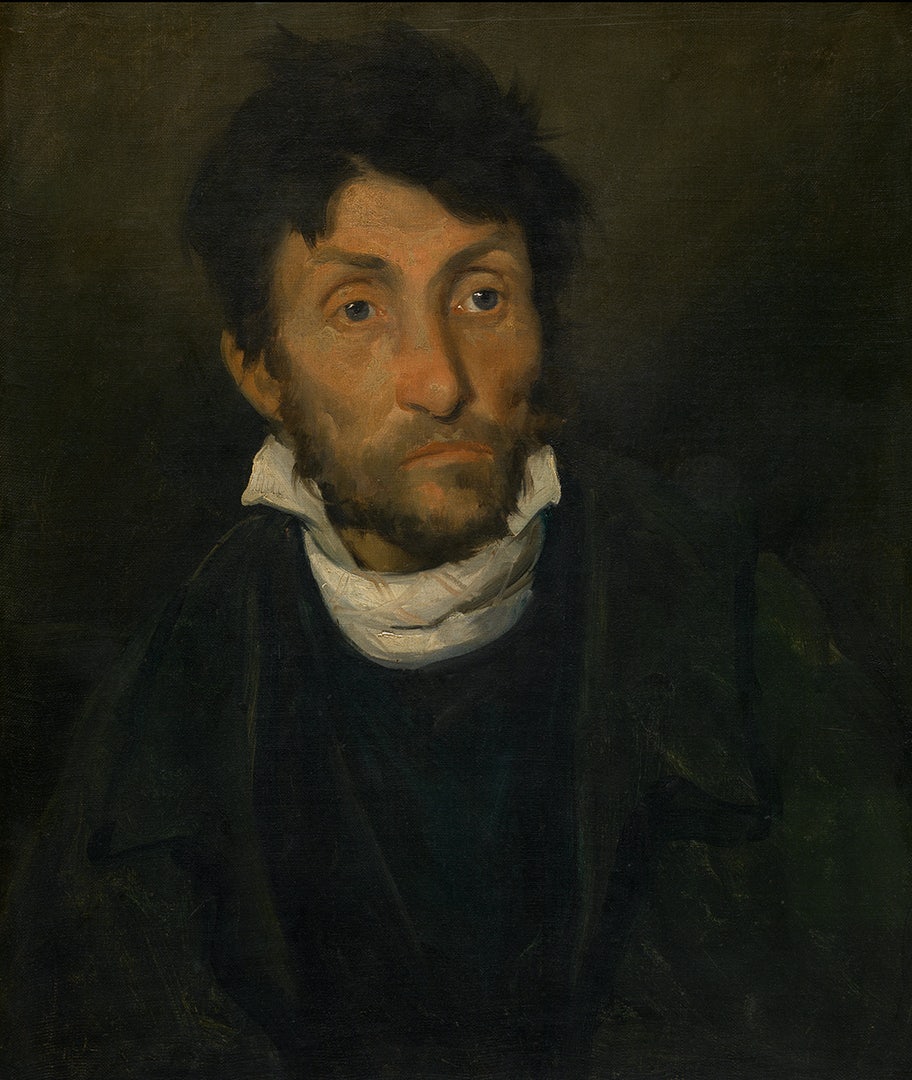
Théodore Géricault, Portrait of a Kleptomaniac, 1822, oil on canvas,
(Museum of Fine Arts, Ghent, Belgium)

In The Shape of a Pocket, John Berger writes about "madness" in the paintings of a a French artist, Théodore Géricault, who painted portraits from the insane asylum, then connects a form of madness to our current society.

Anyone who has been beside a friend beginning to fall into madness will recognise this sense of being forced to become an audience. What one sees at first on the stage is a man or a woman, alone, and beside them -- like a phantom -- the inadequacy of all given explanations to explain the everyday pain being suffered. Then he or she approaches the phantom and confronts the terrible space existing between spoken words and what they are meant to mean.  In fact this space, this vacuum, is the pain. And finally, because like nature it abhors a vacuum, madness rushes in and fills the space...

Then comes this quotation which I saw on Twitter that originally attracted me to the book. 

Between the experience of living a normal life at this moment on the planet and the public narratives being offered to give a sense to that life, the empty space, the gap, is enormous. The desolation lies there, not in the facts. This is why a third of the French population are ready to listen to Le Pen. The story he tells -- evil as it is -- seems closer to what is happening in the streets. Differently, this is also why people dream of 'virtual reality' - Anything -- from demagogy to manufactured onanistic dreams -- anything, anything, to close the gap! In such gaps people get lost, and in such gaps people go mad.  

Berger is saying, I think, that the public narratives do not account for people today.  The fact that the public narratives are so unbelievable make people drift towards demagogs... or escape through computer reality.  

I'm fascinated by the phrase "the public narratives" that do not give "a sense to that life."  People are adrift, without "a sense" or meaning.  

Today the promises [of politics, which provides stories where today's pain is real, but makes sense because "the amount of suffering in the world was being and would be reduced" and where "Any pain witnessed, shared or suffered remained of course pain, but could be partly transcended by being felt as a spur towards making greater efforts for a future where that pain would not exist.") have become barren. To connect this barrenness solely with the defeat of communism is short-sighted. More far-reaching are the ongoing processes by which commodities have replaced the future as a vehicle of hope A hope which inevitably proves barren for its clients, and which, by an inexorable economic logic, excludes the global majority. 

Where once, "during these two tragic centuries, even tragedy was thought of as carrying a promise," there is now emptiness. 

Sunday, July 17, 2022

Five Things about Gratitude

 Here's Five Things I've learned from I Want to Thank You: How a Year of Gratitude Can Bring Joy and Meaning in a Disconnected World by Gina Hamadey.  


Here's a couple quotes I loved:

"Gratitude is optimism. It's choosing to see the contours of what's there instead of the shadows of what's missing.  And gratitude is a pathway back -- to a friendship, to hobbies you once loved, to identities you've shed."

"Expressing gratitude in this vulnerable, openhearted way is not cool.  It's warm -- disarmingly so.  And that's what makes it powerful."

1. The 2014 book Making Grateful Kids lists 30 strategies for teaching kids to be grateful, including modeling gratitude, encouraging grateful thinking by pointing out good things that were happening, and the people responsible for them.


2. Gina writes to "food people" one month (mostly associated with her food career), writes: "I remember... thinking how special it was to cook for one of the food people I'd identified this month, all of whom had been so generous and provided me with so much pleasure."  The cooking was set in motion by Gina's original thank you letter.  At the end of meal, she compliments the other person's sneakers, which causes the other person to send her the same sneakers as an (unexpected) gift.  "Generosity leads to gratitude, which leads to generosity."

3. The actual theme for the food month is "life enhancers.... something that gives you daily pleasure."  To find your own, she says, "Think about how you spend extra money or time.  If you found $10 on the street and had to spend it on something nonessential, what would you buy? You have one extra hour and can't spend it doing something productive. What do you choose to do?  Ask yourself if there is something you never tire of talking about.

4. Tom Chiarella, in Esquire, in an article "How to Give a Eulogy," says "a eulogy is, above all, the simple and elegant search for small truths."  Condolence cards function similarly to thank you notes, I realized.  Ideally, they shed light on the deceased by sharing a specific memory. It's a final thank you to the person who is gone, addressed to their loved ones. ... Perhaps writing them down and sharing them with the people who loved him, and thanking them for sharing in that love, will help her process the grief.  So... (in this chapter about thanking other for health things) "write from the heart... describe what you remember about that person's role in your life -- something specific that they said or did while you were in their care and how that made you feel."

5. Oliver Sacks in his book, Gratitude: I cannot pretend I am without fear. But my predominant feeling is one of gratitude... I have had an intercourse with the world, the special intercourse of writers and readers. Above all, I have been a sentient being, a thinking animal, on this beautiful planet, and that in itself has been an enormous privilege and adventure."

She suggests that you buy a Thank you Folder

She uses Artifact Uprising to print on card stock


Saturday, July 16, 2022

Herons in Ohio


Great blue heron© Jim Roetzel

From National Park Service website about Cuyahoga National Park.

The largest heron in North America, the great blue is impressive. It stands four feet tall, weighs slightly over four pounds, and has a wingspan of nearly seven feet. In flight, its long neck is usually coiled and its wings are arched, giving it a distinctive silhouette. Its wings beat slowly and steadily. Other large birds hold their wings in V (turkey vultures) or out flat like an airplane (bald eagles).

These herons are generally spotted in wetlands, along the Cuyahoga River, or in their nesting colonies. Look for them slowly stalking fish, frogs, and various other small animals along the water’s edge. They often stand motionless, waiting for a chance to strike. From about Valentine’s Day to Independence Day, you can easily observe one of their nesting colonies, called the Bath Road Heronry. 


Great blue herons nest in colonies, called heronries. Nests are typically in 30-70 foot high trees surrounded by water. Both the male and female share in nest building and caring for the young. Depending on the severity of the winter, males usually start returning to the nesting areas in early February to claim their nests. Two to three weeks later the females arrive, and seasonal monogamous pair bonds are established. From early March to early April is the best time to observe nest building. A male will gather a stick and present it to the female, who takes the stick and adds it to the nest, strengthening the pair bond. Later the inside of the nest will be lined with fine twigs and leaves. Great blue herons are known to use nests from previous years, although it is not known whether or not the same individuals use the same nests each year.


Friday, July 15, 2022

Gratitude Letters - Give Everything; expect nothing

 Gina Hamadey, author of I Want to Thank You: How a Year of Gratitude Can Bring Joy and Meaning in a Disconnected World, writes a "How to write a gratitude letter" in the New York Times. 

She has some apprehensions about awkwardness and vulnerability that she has to overcome. One of her mantras for the year is "Give everything. Expect nothing. Don't keep track of responses. Keep them, but never go back to the list to check or follow up."

In Joe newsletter, author  Jenny Rosenstrach gets a note from Gina and writes about it:

Turns out, she is Gina Hamadey, a writer and content strategist, and a mother of two who lives in Brooklyn. She told me the project came to her after she and her son, Henry, 5, wrote thank-you notes for a City Harvest food drive she organized in 2017. There were 31 notes to write (and 31 days in January, which felt fortuitous) and she wrote many of them while commuting to a freelance job in New Jersey. (Henry would add his part later.) “When I was writing the notes,” she told me, “I realized that I was doing it instead of scrolling through my dumb feeds — so often I’d finish a commute and be like ‘Well that was a wasted hour on this quiet train ride.'” Writing the notes, though, felt positive. “I left the train feeling really good.” When she finished, she missed that feeling so much that she decided to turn it into a year-long campaign, writing one for every day of the year.

She themed each month to make it easier for herself (e.g., neighbors, friends, family, health, food, career mentors, writers), stocked up on some notecards (nothing fancy) and got to work.

She handed off notes to the woman who ran her local bookstore, to her babysitter, to the butcher, thanking him for making a fresh batch of soup for her after running out. She wrote friends she hadn’t seen beyond Facebook in years, reminding them of a memory or just saying “I miss you.”  She wrote a note to the doctor who delivered her younger son, Charlie, who’s two now; and to the heart doctor who saved her dad’s life. (“Oh my God, that was emotional.”) She wrote a career mentor thanking her for offering advice she thinks about every day. She wrote me! (“Post-kids, your book gave me back my confidence, and laid out a little plan for me in the kitchen… I actually love to cook! Thank you for helping me remember.”)

The letters are not lyrical, fountain-penned missives you’d find in a Jane Austen novel. “A perfect thank-you note is not very long,” Gina says, “But it’s earnest, specific, and from the heart.”

From Cup of Joe: Jenny is the creator of Dinner: A Love Story, a blog based on the fundamental principle that cooking and sharing meals with the people you love — even if those people are less than 36 inches tall and aren’t eating what you’re cooking half the time — will infuse every day with meaning. She is the New York Times bestselling author of four books about family dinner, including, most recently, The Weekday Vegetarians 

Thursday, July 14, 2022

Places where some little thing is coming into being

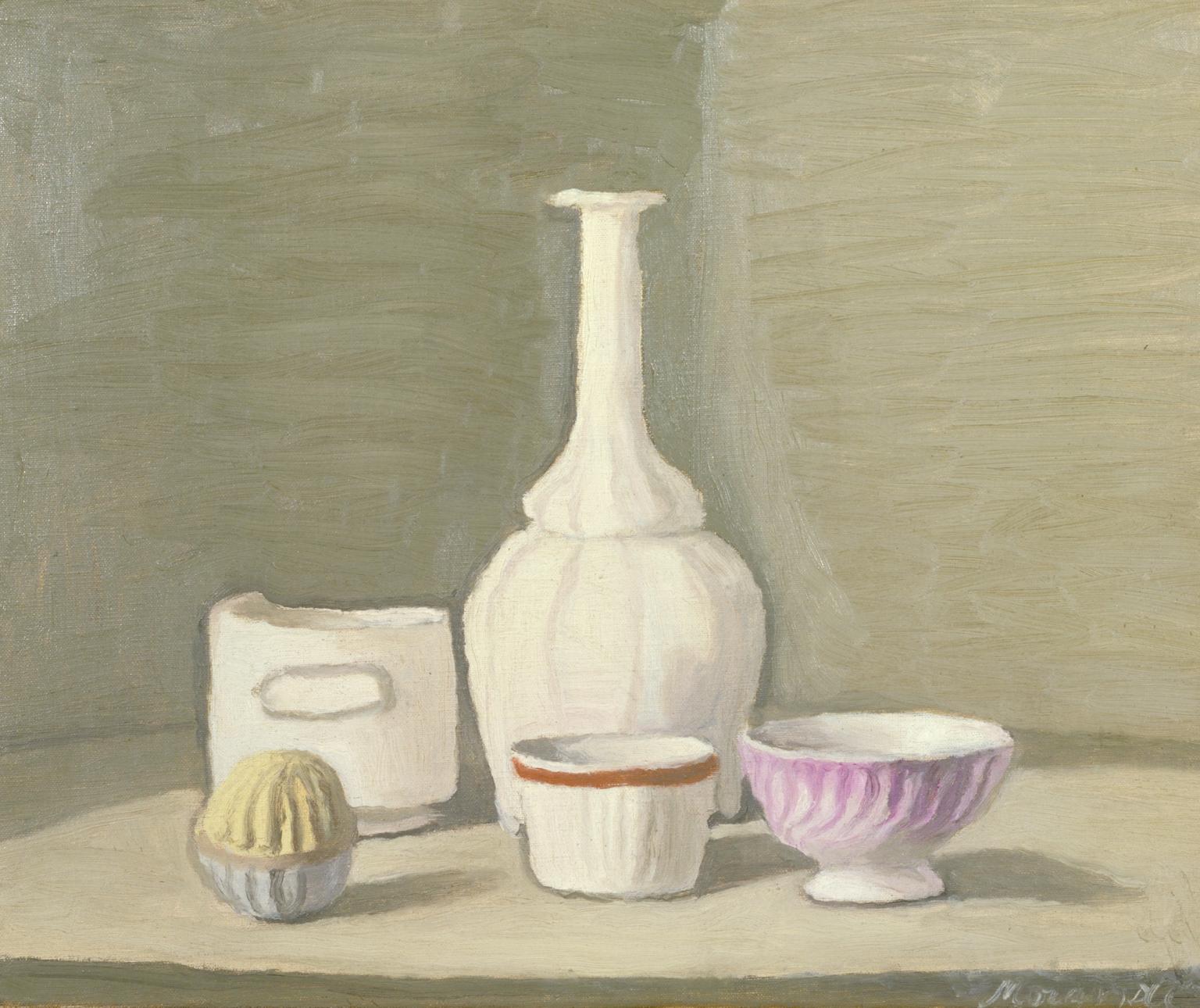
Giorgio Morandi 1890–1964, Natura Morta, Tate Gallery

At the end of an essay about the Italian artist Morandi, John Berger (in The Shape of a Pocket) names three distinct decade-long periods of his artistic life.  He writes,

If we assume this is a progression -- that a mastery increased as he grew older -- we have to ask: What was he trying to do?  The answer, often given -- that Morandi is the poet of ephemeral -- doesn't convince me.  The energy of his work is neither nostalgic nor -- in any personal sense  - intimate.  In his life he may have shut himself away.  And his odious politics suggests panic. Yet his art is strangely affirmative.  Of what?

The drawings and etchings whisper an answer.  Because there is no density and no colour the objects there don't distract us.  And we realise that what interests the artist is the process of visible first becoming visible, before the thing seen has been given a name or acquired a value.

....

One has to imagine the world as a sheet of paper and a creator's hand drawing, trying out objects which don't yet exist. Traces are not only what is left when something has gone, they can also be marks for a project, of something to come. The visible begins with light. And as soon as there is light there is shade. The hand drawn shadows on the white of the paper. All drawing is a shadow around light.

The marks weave together, quiver, alternate. And slowly the eye registers and reads the unrepeatable pattern of a particular branch of leaves trembling in front of a particular sunlit wall.

In other words, the objects he paints can be bought in no flea market. They are not objects. They are places (everything has its place), places where some little thing is coming into being.

---

Morandi... was in love, not with appearances, but with the project of appearances.

Wednesday, July 13, 2022

The Camelot Wheel


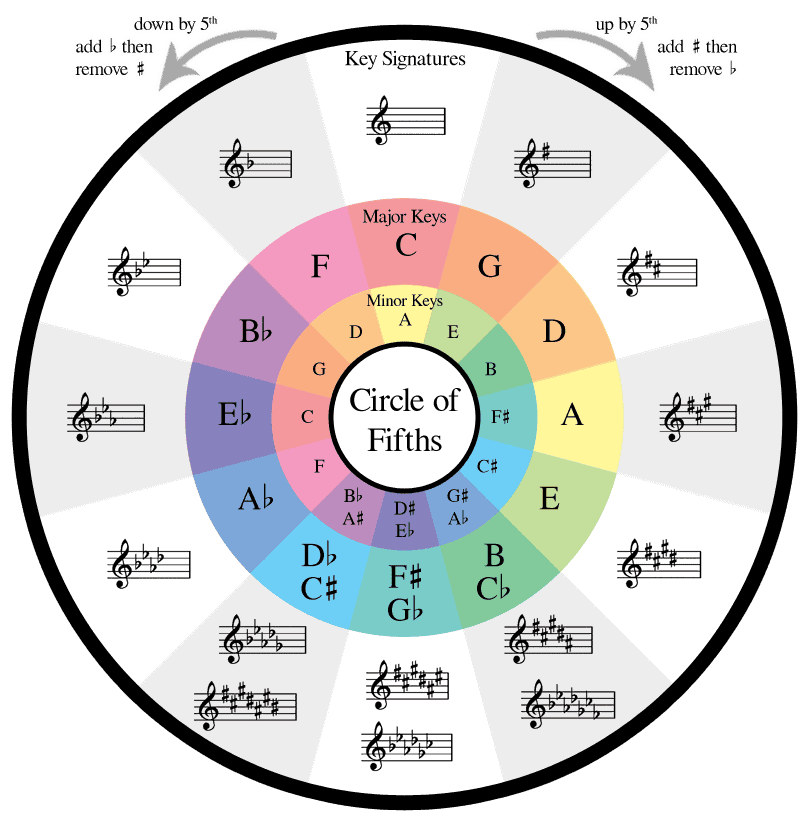
I was looking up the beats per minute for Elvis Costello's Radio, Radio and visited Tunebat, a site for DJs who are trying to match Key and BPM.  They listened not just BPM and Key (E Major), but "Camelot," which is 12B.   (You can also find reference to the song's popularity, energy, danceability, happiness, acousticness, speechiness, among other things.)

The Camelot Wheel is a tool to help DJs mix tracks in key so that they work together harmonically.  It is fundamentally the circle of fifths that has been adapted with a numerical value system to make it as easy as possible for those not accustomed to working with key signatures.

The number values on the Camelot Wheel represent the key and the letters distinguish between minor (A) or major scales (B).  Although very useful for producing and writing music, this method simplifies the ordering process and makes it so you don’t have to know or memorize the order of the circle of fifths.

Also check out Tunebat's advanced search.  


Tuesday, July 12, 2022

Fathoming Abundance

My gratitude practice has, over the months and years of doing a daily journal, waxed and waned.  It has become stale and predictable.  What should we be grateful for, and how?

Panda Planner, where I got my jumpstart in doing daily gratefulness, just has three lines in the daily planner for "grateful" and three lines for "looking forward to."

More specifically, Stephen Dubner says that we should be grateful "for three things that went well."

Another source that I can't remember says be grateful for three things: "another person, a thing in the world, and yourself, for something that you did"

"Things that went well" is different than "a person, a thing, yourself."

Leo Babauta at Zen Habits says that we should make gratitude part of a practice throughout the day, not just a once-a-day thing, like when we're bored, overwhelmed.  We should "appreciate the gift of the moment" 

I could pay attention to how my body feels, the texture of my breath, the light all around me, the nature sitting right in front of my face, the sounds of the world busy in activity. The vibrant colors, the life that’s struggling to survive and thrive. The feeling of just being alive.

Adam Grant says that you should put gratitude "into action" by thanking people.  

At some point, what I realized is one of the greatest acts of giving that you can undertake is to make the other givers in your life feel appreciated. And the only way that you can do that is to go out of your way to show gratitude and for me, that’s, that’s rarely in the moment. It’s more often months, or even years later when the person has forgotten the act or the moment has faded from their memory, but it still sticks with me. And so the practice I’ve most enjoyed during the pandemic is finding my dormant ties — some of the people I’ve lost touch with — and letting them know how, you know, eight, nine years ago, they really fundamentally affected my life in a positive way.

On Twitter Grant says:

The point of gratitude is not just to feel it; it's to show it.

Experiencing gratitude serves our happiness. Expressing it reminds others how they matter.

As an emotion inside a journal, gratitude is fleeting. As an action in the outer world, it lasts. 

There's this description of gratefulness at Mindful.org

It is wonder; it is appreciation; it is looking at the bright side of a setback; it is fathoming abundance; it is thanking someone in your life…it is “counting blessings.” It is savoring.

Monday, July 11, 2022

Kevin Young - Uncles (Blood)

Uncles (Blood)
by Kevin Young

Talk turns
to who has the sugar
& how much water
you should drink a day,
to conspiracy theories -- cornbread
can kill you --

Uncles give advice
not gifts. They forget
your birthday but recall
how short you once were
forever. In your mind
they always loom taller

even years after bumping you
the Bar-Kays from an 8-track--
all back & bucket seats
in the souped-up black Camaro
parked in the yard
they mean to mow.

Uncles will build half
a house, the frame, the place
the plumbing will go, all
beams & bone,
& never finish the walls

till once day the rain will
rot it all.
Uncles got plans 
& they're big.
Unclers underestimate

everything but food, buy 
in bulk then watch it
go bad. Uncles heal
with a touch & can fry
turkeys whole. Uncles smoke
menthols & speak
prophecy. Will lift
you above their head, 
bad backs & all — will jerry-rig
a motor to an old-fashioned
lawnmower to slay

the weeds. Will lie
down after, exhausted,
prone on Mama’s couch,
refusing to see

no doctor — dragged in 
lucky, Doc’ll say, hours before
shrapnel from some unseen
mowed-over tin
was about to bore

into their huge hearts.
Uncles lie
beautifully. Year later
Uncles won’t much remember —
Instead show you their watch

that’s stopped — It’s ghetto,
they’ll laugh, flashing teeth
more gold than their timepiece
that’s a copy
of a copy of a copy—
the battery run down

tut still worn, still shiny.