
Sunday, November 30, 2025

Saturday, November 29, 2025
Things you will never regret doing
Things you will never regret doing:
- Intense exercise
- Making more money
- A meditation session
- Putting your foot down
- Defusing your own anger
- Cooking your meals at home
- Forging your own path to success
Do more things that improve your quality of life.
Friday, November 28, 2025
Thursday, November 27, 2025
Ask a question about their life
One easy way to show you care about others is to ask them questions about their life.
- What are they excited about?
- What are they working on?
- What are they hoping for?
Simply asking the question and listening thoughtfully is an act of generosity. You're giving them the gift of attention.
Wednesday, November 26, 2025
For a few minutes it was enough
From Comfort of Crows
Two hours later, after helping with a unit on the Harlem Renaissance, I was humming as I walked back to my car. I wasn't thinking about the cataclysmic state of my country. I was thinking about the bright, funny students I'd met in a class for English language learners. I was thinking about Bessie Smith singing "St. Louis Blues." But when I started my car, the radio came on, offering the usual news summary that opens each hour's programming.
Two red lights later, my happiness was gone.
That's how my vow of resistance finally yielded to the appeal of retreat.
When I came to the third light, I turned left instead of continuing through it, and I drove to a little park in the woods where I often walk. There wasn't time before work to take the lake trail, my favorite path, but I walked as far as the dam and sat for a bit to watch a great blue heron fishing in the clear water. I listened to the invisible songbirds high in the treetops, and I watched the cold turtles climbing slowly onto fallen branches to warm themselves in the grace of a sunny day in January. For a few minutes, it was enough. (27)
On This Day (11/26):
Tuesday, November 25, 2025
When I'm done, I say 'Bam! Next!'
From NYT profile
David Amram has just turned 95. He's still playing gigs — including two sets with his jazz quintet on Tuesday at Dizzy's Club at Jazz at Lincoln Center. Last week, he gave a master class in Schenectady, N.Y., then performed at a concert featuring both his chamber compositions and his jazz group. In an interview a few days before his Nov. 17 birthday, Amram recalled his father asking what he wanted to be when he grew up. As he tells it now, his reply was, "I'd like to live on a farm and be a jazz musician and write classical music and go around the world learning different stuff."
He doesn't live on a farm, but he's done the rest.
Amram is a composer, musician, author, conductor and boundlessly connected collaborator who has been cheerfully ignoring musical categories since the 1940s. His output includes jazz tunes, symphonies, op-eras, film scores, theater music, off-the-cuff talking blues and idiom-hopping folk-festival performances where he's likely to play piano, pennywhistle and percussion.
----
With travel, Amram kept expanding his musical palette. He delved into Native American music, learning its subtleties of rhythm and melodic inflection. He visited Africa, the Middle East and South Asia. He soaked up Latin music in New York and across the hemisphere. During the inter-view, he casually tapped out complex two-handed polyrhythms to demonstrate the subtleties of Cuban clave variations.
Amram is still looking ahead. He wants to learn new languages, after picking up a little Swahili in Kenya. He's working on a piece for a wind, brass and percussion orchestra. "Then I'm going to start another orchestral piece, I imagine," he said. "What I try to do now, when I'm done with whatever it is, I say, 'Bam! Next!'"
On This Day (11/25):
Monday, November 24, 2025
The Comfort of Crows m: A Backyard Year by Margaret Renkl
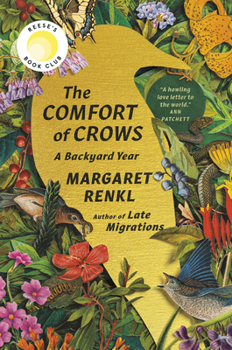
Comfort of crows
Many cultures have associated crows with death. Their uniformly black coloring, their harsh cries, their taste for roadkill all may have contributed to that most famous of collective names among birds, a murder of crows. Crows have been observed conducting "funerals" for fallen flock mates, and this somber ritual may account for the gloomy associations, too.
But other cultures have associated the birds with intelligence and adaptability, even transformation, and these are the connections I'll rely on as the year unfolds. I have entered my sixties now, a time of change—to my body, to my family, to the way I think about my future—and I cling to the crow's promise of metamorphosis. What more could anyone ask from a new year than the promise—or just the hope-of renewal. (7)
Two hours later, after helping with a unit on the Harlem Renaissance, I was humming as I walked back to my car. I wasn't thinking about the cataclysmic state of my country. I was thinking about the bright, funny students I'd met in a class for English language learners. I was thinking about Bessie Smith singing "St.
Louis Blues." But when I started my car, the radio came on, offering the usual news summary that opens each hour's programming.
Two red lights later, my happiness was gone.
That's how my vow of resistance finally yielded to the appeal
of retreat.
When I came to the third light, I turned left instead of continuing through it, and I drove to a little park in the woods where I often walk. There wasn't time before work to take the lake trail, my favorite path, but I walked as far as the dam and sat for a bit to watch a great blue heron fishing in the clear water. I listened to the invisible songbirds high in the treetops, and I watched the cold turtles climbing slowly onto fallen branches to warm themselves in the grace of a sunny day in January. For a few minutes, it was enough. (27)
But a creature lurking inside was not what singled this knothole out among the hundreds, even thousands, I passed in the park that day. What caught my eye was a cluster of chickweed seedlings colored the new green of springtime, so bright they seemed to glow. They were growing in the loam inside the knothole. Far above the ground, a hole made by decay in a living tree had become a cold frame, a natural greenhouse that let in light and kept out frost. Life in death in life.
On the way home I thought about that mundane miracle, that commonplace resurrection. Even now, with the natural world in so much trouble even now, with the patterns of my daily life changing in ways I don't always welcome or understand-radiant things are bursting forth in the darkest places, in the smallest nooks and deepest cracks of the hidden world. I mean to keep looking every single day until I find them. (53)
The world does not proceed according to our plans. The world is an old dog, following us around the kitchen with its eyes.
The world understands us. We understand nothing, control less.
Today it is springtime. Every green thing has grown greener as the pines send out new growth. Every brown thing is taking on green as the hardwoods wake into warmth. But tonight the black sky is spitting out ice, and the green sap rising will likewise turn to ice in the dark. Some of these frail green things will be blasted forever, but most will live. Life is what life does.
We, too, will live. In the morning we will wake and rejoice, for we are once more among the living. (65)
The world will always be beautiful to those who look for beauty.
Throats will always catch when the fleeing clouds part fleetingly and the golden moon flashes into existence and then winks out again. Tears will always spring up at the wood thrush singing through the echoing trees, at the wild geese crying as they fly. A soul touched by the scent of turned soil or sun-warmed grass, a spirit moved by crickets singing in the grass, will spend a lifetime surrounded by wonder even as songbirds drop one by one from the poisoned sky and crickets fall silent in the poisoned grass.
Apocalyptic stories always get the apocalypse wrong. The tragedy is not the failed world's barren ugliness. The tragedy is its clinging beauty even as it fails. Until the very last cricket falls silent, the beauty-besotted will find a reason to love the world.(70)
Here is the world I need, a world that exists far beyond the impulse to scroll and scroll. The bluebird bringing pine straw to the nest box in a sunny spot of the yard, like the chickadee bringing moss to the box under the trees, is doing her work with the urgency of the ages. She has no care for me. Even her watchful mate ignores me as I dig in the flower bed beside our driveway.
The natural world's perfect indifference has always been the best cure for my own anxieties. Every living thing— every bird and mammal and reptile and amphibian, every tree and shrub and flower and moss— is pursuing its own vital purpose, a purpose that sets my human concerns in a larger context. The dramas and worries and pain that are the warp of my life, woven tightly through the light and love and joy that are its weft, don't register on the blue jay at all. The earthworms beneath the soil haven't the least idea of the frets that pluck at my heart. In their rest, I find rest. 78-79
Monarchs are the only butterfly known to conduct an extravagant multigenerational migration, flying thousands of miles north in the springtime and thousands of miles south in the fall.
Somehow, butterflies that hatch in Minnesota and New York know how to get to their wintering grounds in Mexico without ever having left Minnesota or New York before. Along the way, there are many deadly assaults on the monarch population— herbicides, development, extreme weather—but the only one I have any power over is loss of habitat. I can't change Americans' love affair with poison, and I can't solve the problems of climate change, but I can plant a garden.
It takes the monarch four generations, sometimes more, to complete its annual migration. Each generation flies farther north to lay its eggs before the "Methuselah" generation turns south again and heads to Mexico. What those northbound butterflies need is milkweed, the only plant monarch caterpillars can eat. So I filled my garden with milkweed—more and more and more milkweed— and waited.
But years passed and not a single monarch arrived. Short of cutting down all our trees and replacing them with an entire field of milkweed, there was nothing more I could do. I finally decided to take the same approach to my pollinator garden that I had once adopted for my vegetables: I watered and I weeded, after a fashion, but mostly I let it go its own way. (123)
In July, there's hardly a reason to feed the birds in this yard that is well stocked with bugs and seeds, but I sometimes feed them even so, just to see them up close, their colors as bright as any summer flower. The red wasps, too, have babies to feed and help themselves when I set out mealworms for the bluebirds. I used to shoo them away bluebirds respect the dagger of a red wasp as much as I do and won't come near any feeder a wasp has claimed-but i don't do that anymore. The world is fertile. In this yard, for now, there's enough to go around. (158)
This kind of circular structure is what I love best about nature, even in its most violent reality. Outdoors, my spider's web might have been destroyed by hummingbirds, who build their nests partly of spider silk, and the spider herself might have been fed to the baby hummingbirds. Everything goes to some crucial use; nothing goes to waste. It makes sense. And things that make sense are particularly reassuring when the human world has turned itself upside down.
There is only so much information a person can take in during an emergency. There is only so much active resistance a person can engage in without succumbing to despair. Sometimes a body needs to rest. I have friends who pray more now, friends who drink more now, friends who read more novels or watch more television, friends who have taken up yoga or needlework or gardening. I have friends who wanted to adopt a kitten and then found that so many people had the same idea they had to get on a waiting list. A waiting list for rescue kittens!
I have tried some of these distractions myself, but I am taking my greatest comfort in a plastic bin full of earthworms turning garbage into food for flowers, in one spider crouching among a hundred silken strands that gleam like silver in the sunlight, in a cloud of fruit flies on their way to becoming a baby hummingbird's wings. (173-174)
It was just one flower on just one ordinary day in September. It would be gone by morning, not to return for another year. Its arrival did nothing to mitigate the drought gripping the land. It did nothing to feed a native pollinator or shelter a tree frog. You could insist that it didn't matter in any way, and I would not think to argue with you.
But it was also not nothing. That night-blooming cereus brought my grandmother back to me in her halo of white hair. It brought back, too, her plum tree, long since cut down, and the feeling of red dirt between my toes. For an hour, just this once, it made me remember what it feels like when the world is exactly as it must be, and I am exactly where I belong. (210)
The commandments don't identify by name which day of the week should be the Sabbath. They don't even mention the need to attend church. "Remember the sabbath day, to keep it holy," reads Mother Ollie's Bible. "Six days shalt thou labor, and do all thy work: But the seventh day is the sabbath of the Lord thy God: in it thou shalt not do any work."
Reading those verses again made me wonder: What if resting, all by itself, is the real act of holiness? What if honoring the gift of our only life in this gorgeous world means taking time every week to slow down? To sleep? To breathe? The natural world has never needed us more than it needs us now, but we can't be of much use to it if we remain in a perpetual state of exhaustion and despair.
It's hard not to work on Sunday, but I do try. I take a walk around my favorite lake, the best possible way to celebrate a day of rest in autumn, when the temperatures have finally dropped, the rains have finally come, and Middle Tennessee is serving up one fine day after another. (226)
On This Day (11/24):
Sunday, November 23, 2025
Take ordinary things and make them special
 |
| Ruth Asawa (second from left) with visitors to her 1973 retrospective at the San Francisco Museum of Art (now SFMOMA). Her looped-wire forms made of pliable copper, brass or steel resembled her early drawings of dancers, floating abstracted figure-eight forms, nipped at the center with spherical heads and bodies.Credit...Laurence Cuneo |
More on Ruth Asawa from earlier NYT article:
“A lot of times she worked right here,” Paul said, pointing to a discreet hook at the center of a double-wide door frame between the living room and kitchen, where Asawa would hang her looped-wire works in process. She used a knit stitch by hand, which she learned from a local wire-basket maker on a 1947 trip to Mexico, to draw in space and define volumes with a continuous line of pliable copper, brass or steel.
and
She was rejected all four times that she applied for a Guggenheim fellowship. But as distinctions between art and craft have dissolved and artists long overlooked because of their race or gender are being reappraised, Asawa’s looped-wire forms have been widely acclaimed for transforming a utilitarian material and innovating on techniques that added buoyancy and transparency in sculpture.
and
Asawa’s life started on a farm southeast of Los Angeles where she was one of seven children of Japanese immigrant parents. She and her siblings did farm work before and after school, in early morning, late nights and on Sundays. Saturdays they studied Japanese, including calligraphy.
“We used to make patterns in the dirt, hanging our feet off the horse-drawn farm equipment,” Asawa told an interviewer in 2001. “We made endless hourglass figures that I now see as the forms within the forms in my crocheted wire sculptures.”
and
In 1942, two months after the Japanese attack on Pearl Harbor, Asawa, age 16, and her family were among more than 120,000 people of Japanese descent — mostly American citizens — held by the government in internment camps. For six months, Asawa slept in a horse stall at the converted Santa Anita racetrack in Arcadia, Calif., and was tutored for six hours a day by three detained Disney animators who taught the children how to draw.
“You have to say for her it was a mixed blessing,” Addie said.
Asawa was transferred to Rohwer, Ark., where a Quaker organization arranged for her to continue her education at Milwaukee State Teachers College, and she learned about the interdisciplinary utopian college in Black Mountain. Beginning there in 1946, she met Albert “on a mountain path,” he recalled in 2002. In a 1948 letter to him, Asawa called herself a “citizen of the universe,” refusing to be defined by race or trauma. They married in 1949 with Albers’s approval. (Both families initially objected to the interracial union, which was then illegal in all but two states, California and Washington.)

For her “San Francisco Fountain,” Asawa had more than 250 schoolchildren and adults contribute little figures and city landmarks molded in her signature playdough on its 41 panels, then cast in bronze.
When SFMOMA gave her a midcareer survey in 1973, “it was her preference to have a dough-in where thousands of people could make baker’s clay figurines in lieu of a snooty opening,” the museum’s Bishop said.
A member of the San Francisco Arts Commission, the artist was a driving force behind the establishment of the San Francisco School of the Arts, a public high school, in 1982. “She wanted real artists in the classrooms,” said Susan Stauter, artistic director emeritus for the San Francisco Unified School District. “She brought the Black Mountain College ethic with her. It was almost a religious commitment.”
After Asawa developed lupus in 1985, she focused on drawings from her garden, which the retrospective also spotlights. Her hands became too unsteady after 2000 to continue drawing.
Asawa maintained that artists weren't special; they were just ordinary people who could “take ordinary things and make them special,” she said. “I always had my studio in my house because I wanted my children to understand what I do and I wanted to be there if they needed me — or a peanut butter sandwich.”
On This Day (11/23):
Saturday, November 22, 2025
The power of art to allow us to begin anew
 |
| one of Asawa's 'shaggy' chrysanthemum pieces.Credit...Ramona Jingru Wang for The New York Times |
NYT article by Deborah Solomon about Asawa show at MOMA.
Some highlights:
She was easy to locate; she did much of her artwork in her living room in the Noe Valley neighborhood in San Francisco. We know from photographs that she liked to sit on the floor, cross-legged and within reach of her materials — spools of inexpensive industrial wire. From this hardware-store staple, she spun, loop by loop, inch by inch, fabulous abstract sculptures that hung from the ceiling and mesmerized visitors to her home with their lacy delicacy and wavy, spiraling silhouettes.
and
Granted, Asawa was not mainly interested in inventing a new formal language. She wasn’t trying to be the next Picasso. She was trying to be herself. Some of the loveliest works in the show are ink drawings in which she relinquishes her early yen for abstraction and faithfully depict petunias and poppies.
She apparently made a drawing or a watercolor every day. Most subjects were culled from her garden. Her line drawings are careful, precise compositions untouched by crosshatching or shadows. She loved rendering shaggy chrysanthemums, with their mass of spindly petals, a challenging subject that she undertook in black ink, with the assurance of a person doing a crossword puzzle with a pen. She had no need for erasure.

and
Some of the niftiest objects in the show pertain to art education. I was fascinated by a mimeographed booklet entitled “Milk Carton Sculpture.” Asawa wrote it with fellow artists, and it is a breakfast-table fantasy come true. It tells you how to build intricate, multipart structures from milk cartons. You start by cutting your carton into thin strips. Then you decide whether you want your sculpture to be decorative (as in “a floral star”); modular (a pineapple); or mathematical (“a truncated cube.”).
When Asawa began her career, such projects tended to be maligned as female busywork that lacked the gravitas of high art. But the boundary separating craft and art has thankfully been dissolved. In an age when many young artists incorporate sewing, knitting and appliqué into their paintings and sculptures, Asawa’s belief in the nobility of labor-intensive, do-it-yourself projects undertaken with materials that can probably be found in your kitchen drawer, demands to be recognized as pioneering.
and
Asawa rarely spoke about the 16 months she spent in detention camps. But then perhaps she didn’t need to. Her looping-wire sculptures, her deepest and most satisfying works, invariably recall the wire that once confined a teenage girl and her family to a place that denied them their rights and dignity.
In Asawa’s hands, wire was transformed from an instrument of imprisonment into a lifeline, a route to imaginative freedom. She created a world in which forms brim and bloom and multiply without end. As much as that of any artist, Asawa’s work affirms the power of art to allow us to begin anew.
 |
| Asawa’s piece based on a gift bouquet from Anni Albers, the artist-weaver and wife of Josef Albers; .Credit...Ramona Jingru Wang for The New York Times |
On This Day (11/22):
Friday, November 21, 2025
Substitutions by Adrienne Su
Substitutions, by Adrienne Su

Balsamic, for Zhenjiang vinegar.
Letters, for the family gathered.

A Cuisinart, for many hands.
Petty burglars, for warring bands.

A baby’s room, for tight quarters.
Passing cars, for neighbors.

Lawn-mower buzzing, for bicycle bells.
Cod fillets, for carp head-to-tail.

Children who overhear the language,
for children who speak the language.

Virginia ham, for Jinhua ham,
and nothing, for the noodle man,

calling as he bears his pole
down alley and street, its baskets full

of pickled mustard, scallions, spice,
minced pork, and a stove he lights

where the customer happens to be,
the balance of hot, sour, salty, sweet,

which decades later you still crave,
a formula he’ll take to the grave.
Thursday, November 20, 2025

Wednesday, November 19, 2025
Single best predictor of long life: move all day
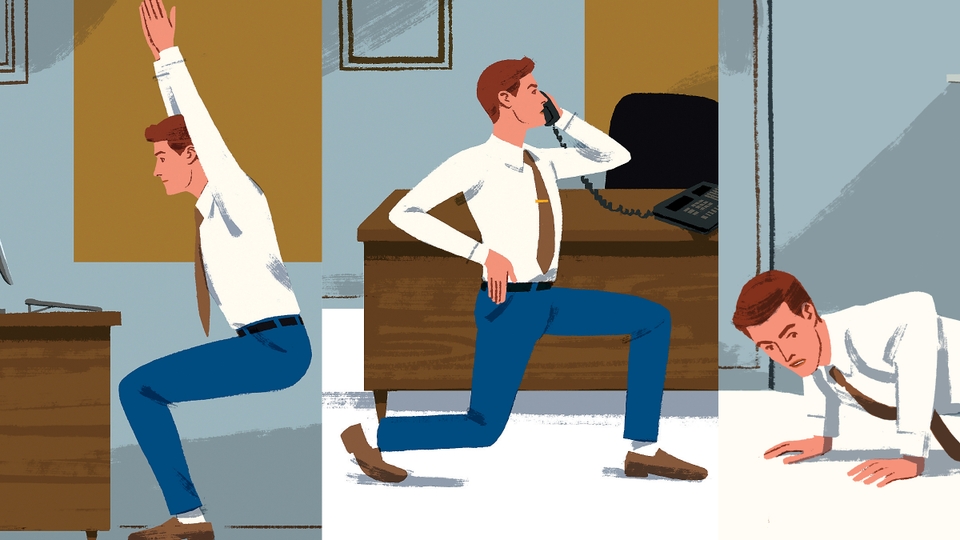
Outside magazine - you want to live longer; you'd better move (all day long)
The goal of self-measurement is to scrutinize which factors truly predict longevity, so that you can try to change them before it’s too late. A new study from biostatisticians at the University of Colorado, Johns Hopkins University, and several other institutions crunched data from the long-running National Health and Nutrition Examination Survey (NHANES), comparing the predictive power of 15 potential longevity markers. The winner—a better predictor than having diabetes or heart disease, receiving a cancer diagnosis, or even how old you are—was the amount of physical activity you perform in a typical day, as measured by a wrist tracker. Forget pee speed. The message to remember is: move or die.
The study zeroed in on 3,600 subjects between the ages of 50 and 80, and tracked them to see who died in the years following their baseline measurements. In addition to physical activity, the subjects were assessed for 14 of the best-known traditional risk factors for mortality: basic demographic information (age, gender, body mass index, race or ethnicity, educational level), lifestyle habits (alcohol consumption, smoking), preexisting medical conditions (diabetes, heart disease, congestive heart failure, stroke, cancer, mobility problems), and self-reported overall health. The best predictors for how to live longer? Physical activity, followed by age, mobility problems, self-assessed health, diabetes, and smoking. Take a moment to let that sink in: how much and how vigorously you move are more important than how old you are as a predictor of the years you’ve got left.
in related article that's linked:
The solution to sitting isn’t to stand, though it helps. In fact, according to the findings of a 2015 consensus panel on the topic, we need to be on our feet two to four hours while at work. But the real solution is to move. All day. The stillness is what’s killing us. We should be pacing the hallways and climbing stairs and squatting and lunging and stretching.
Now that requires a radical change, one exponentially more difficult than putting your desk on stilts. But aiming for more movement might also be the most important habit you adopt from an issue of Outside packed with 72 pages of fitness advice. This is especially true if, like me, you exercise vigorously each day and therefore consider yourself healthy. Researchers have shattered that idea. I might run for an hour every weekday morning, but studies show that if I then go to work and sit at my desk for epic stretches, which I do, I am no more immune to the side effects of sedentary living than the prototypical couch potato.
Tuesday, November 18, 2025
School for Thieves

Often school feels boring in comparison to the Instagram lessons: three weeks of tai chi for the perfect body! how to apply makeup to look your best! How did the Beatles create that great sound on Straberry Field? Humans' interest in improvement is pretty high if it's self-serving or it fits kids' own pictures of themselves.
Instead, we are left trying to convince kids to care bcause it will affect their chances to get into college (i.e.... do MORE school) which will probably lead to some potential great job.
Sometimes I think we should be much more direct: how to pass as rich/entitled, how to build social capital, how to convince someone to give you money, how to land a good girlfriend? How could schools transform themselves if they got rid of the lofty, ethical, moralizing notions that come along with most lessons and rely on more base, crude instincts of kids (of humans)? You could probably do a lot without landing in the realm of "school for thieves." It'd more be more like "school for the self-centered." The striving? the mildly ambitious?
In English literature classes, we can promise something more... beauty, insight into humans, the ability to think about (and talk to peers about) things that really matter. The question is how do you awaken in kids' the sensitivity to beauty, psychological insight, discussion about what truly matter?
As a coaching endeavor, schools offer the ability for young people to get structured activities that can make you better, but also feedback on many attempts, and 1:1 tutoring sessions. But kids don't always see that writing is a valuable skill.
Monday, November 17, 2025
Three thoughts from a recent walk

I had these thoughts while walking at Fullersburg on Friday (I have taken a couple weeks off after a running poop disaster at the end of October).
This one in terms of the quiet, consistent way that norms of wealth, of gender, of social norms "confronts" us continually and is an irritant. Wrong clothes, lack of fantasy football team, lack of brown liquor bottles on my walls.
Greeted each day by a world that quietly, consistently, continually, confronts you with a mirror that says that you haven't made it, or you're not enough, that you're a minor, an adolescent, or you're seriously failing.
Later on the walk, this notion of being dissatisfied and undirected, comes into my head. The idea snaps into place, like a lego.
Special sensation of not being where you want to be, but also not knowing where you want to go
Finally, as I am adding to my Apple Notes things I'm noticing (I do a record of 21 things on this walk), I see an oak, brown leaves, stubborn:
Are you like that oak tree, clinging to your leaves over winter while the other trees have had their fun and gone?
Sunday, November 16, 2025
Kairos by Jenny Erpenbeck

Book Notes and Quotes of Kairos by Jenny Erpenbeck, translated from German
Over breakfast, Hans says: Ingrid and Ludwig are getting in on the one o'clock train.
While Katharina sips her tea and spreads the second half of her roll with honey, she watches Hans getting up and washing the wineglass from yesterday that has her lipstick stain on it, and putting it back in the cupboard, watches him take her dinner plate and—now that she's finished —her breakfast plate as well, and the cutlery, and wash them and tidy them away. She follows him into the living room and watches as he takes the pencils he let her use for her drawing yesterday and returns them to his desk drawer, and puts the unused sheets of typing paper back on the shelf. He picks up her drawing off the floor, lays it in a folder, and says: I think you'd better hang on to this. He takes the chair he sat in when be was modeling for her, pushes it up against the dining table, and drapes his wife's cardigan over the back of it, just exactly the ways It was yesterday. Then he leaves the room, and she can hear him calling out: Here, you forgot your toothbrush. In the long corridor he passes her with the towel he pushed under them yesterday when they were making love. As she takes receipt of her toothbrush, she sees him drop the towel in the laundry basket. (54)
High up over the roofs of the city they find themselves sitting at a table, look, says Hans, eyeing the sorry-looking waiter, see the poor fellow's Stasi expression. At least in here he's out of the rain, says Katharina. At the next-door table, an elderly couple are asking for separate checks, which makes her snort with indignation. Then, everything outside falls away into insignificance. It's bliss, says Hans, a state he's rarely experienced before with another person: withdrawal from everything around about into one's own essence. A kind of inner emigration. He says it and empties his glass of korn. Now just a coffee and if she likes, a peach melba for the lady. And she does like. (55)
Then up in the apartment, while Hans has gone to the kitchen to fetch glasses and wine, she sees two or three of her blonde hairs on the blue carpet from last time, which Hans, when he tidied up after them on Sunday, must have overlooked. Now his wite and child are already on the Baltic. Still, Katharina bends down, picks them up, and lets them float into the wastepaper basket. Am I the only one here who tidies up? she hears her mother's voice in her head. No, Mother, you're not, she says, but her mother has already slammed the door shut after her, and Katharina hears her sobbing. Her mother cries, her mother sleeps a lot when she comes home from work and on weekends. Of course, Katharina is able to take a plate out of the kitchen cupboard without making a sound, not the plate and not her footfall when she carries the plate and a pack of biscuits back to her room. Once there, she tears open the pack, and then Moritz the guinea pig squeaks because he thinks he's getting something to eat now. Her father was in Leipzig, Moritz in his cage, and Ralph only appeared on the scene a couple of years later. During those two years her mother was very unhappy, and Katharina attained great expertise in being inaudible and preferably invisible as well. Hans comes back, sets down the glasses, and pours them wine. Almost all the sand has run through the hourglass, he thinks. Just the last few grains. Tomorrow morning she'll pick up her visa, and when she comes back from Cologne, he'll be with the family on holiday on the Baltic, then in September school will start. All the memories he took such trouble to create will just be the altimeter for his plunge back into normality. (60)
Before she goes out the door the next morning, he says: Wait! And he runs over to his bookcase. He comes back with a little book, where, after looking briefly, he finds the passage he was looking for. He puts the book down on the chest in the corridor, presses it flat with one hand, and with the other carefully tears out the page he wants. She glances at it, and he says: Read it later. But she can't wait past the moment when he's waved goodbye to her on the first bend of the stairs and closed the front door behind him. As she walks slowly down the stairs, she holds the page in her hands and reads: You ask, when did they meet?/ A moment ago.— And when will they part? — Soon./ So love seems a support to lovers. Has he gone back to his room and already put the book back? The page she is holding will always be missing from it. That gap, she thinks, is the first trace of her in his world. (61)
For maybe an hour an a half she watches his summer existence from afar. Excitement, happiness, chagrin, fear, envy, doubt, curiosity, desire, pique, and yearning switch through her soul for an hour and half, while she sits in the sand, watching the part of his life that doesn't involve her. (87)
Katharina writes to Hans: I am only happy when we are together.
And that's the truth.
She writes in her diary: Worked on the model set with Vadim.
And that also is the truth.
She does not write that in the morning, when she gets in, she always looks out for Vadim's bicycle. Nor does she write that she spent two nights with Vadim in October, and one more in early November. She does not write that she likes his arms and wishes she could bite them (not that she ever does). When she stays over at Vadim's she now lies in his bed, but she keeps her clothes on, and he is not allowed to undress her or kiss her.
All this she does not admit to Hans, but above all she will not
admit it to herself.
What is not written down has not taken place. (144)
Subscribe to:
Posts (Atom)