Sunday, January 31, 2021
Middle Season #3
A season of snow. Two significant snow events this season. One caused a snow day at work. We got to walk in Bemis. It left enough snow for an after work XC ski in Fullersburg on Thursday. The other was a 34 hour event on Saturday and Sunday dropping 9 inches. There’s a red tailed hawk that likes to hang out on the locust tree in the front yard.
Saturday, January 30, 2021
Soul Murder and Being Literally Scared Out of Your Mind
| photo credit |
From NextDraft, published after the Capitol Insurrection of January 6:
Even now, determined to hold the spotlight, Trump immediately released a statement explaining that while this "represents the end of the greatest first term in presidential history" and "Even though I totally disagree with the outcome of the election, and the facts bear me out, nevertheless there will be an orderly transition on January 20th.'" There won't be. He's not capable of it. We'll get to the story of America's devastating day and what could follow below, but first let's focus on an area far too often ignored when it comes to Trump. Psychology. Any decent psychoanalyst knows Trump is a narcissistic sociopath. He's following the exact pattern of someone with his illness. Burn it all down to avoid psychic death, which he fears more than physical death. Yesterday's behavior was predictable. So is today's and tomorrow's. He must go, now. First, because of the crime against America he committed on January 6. And second, because his symptoms present a clear danger. With some help from my friend Dr. Michael Levin, here's a way to think about what's happening psychoanalytically. Trump's entire life has been devoted to earning the regard of a monstrously tyrannical, sadistic, sociopathic father for whom the world was divided into predators and prey, 'killers' and suckers, winners and losers. We should imagine that, from his childhood perspective, sons that ‘win' or ‘kill' are accepted and valued; those that lose deserve what one well known psychoanalyst called "soul murder". He's now the most famous loser in the world. He is facing the fact that he's failed at the only task that has ever mattered to him, and he's about to be murdered, psychically, by his internal father (just like his older brother Freddy was, in his probable interpretation). Trump is literally scared out of his mind; that is, he is now delirious or psychotic, as has been leaked to the media by several insiders. He will do anything to restore his feeling of victory and save his own psychic life, internally. And he still has access to the world's largest megaphone, a cult of hypnotized followers, and the nuclear codes as external tools to pursue his internal objective. And he is being enabled. This is a truly dangerous situation. If he's not controlled, Wednesday could look like child's play—which it was in a deep way. We're at the whim of an absolutely terrified and enraged psychic child. I use that term 'child' structurally, not as an insult. The threat is severe. Don't mistake this for some show where Trump is callously pulling the levers of power for personal gain. That may have been part of the story in previous years, but he fully believes all this shit now. Yesterday, Trump banned Pence chief of staff Marc Short from the White House because he blames Short for convincing Pence not to install him as an unelected, authoritarian dictator. None of this would surprise a shrink.
Here's an Atlantic article about Trump's narcissm.
Friday, January 29, 2021
Don’t notice... observe
While I’m taking notes on mindfulness training, I’m becoming more aware of the benefits of awareness. Years ago, following an exercise in The Not So Big Life, I began “noticing 10 things” each day. Typically they were nature related. They were the basis for writing my 10 haiku project.
I’ve found it hard to notice 10 things though. So, as I’m rereading a journal from 2018, it popped out when I read: “maybe I don’t want to ‘notice 10 things’ but ‘observe 10 things’ daily...”
This reminds me of the exercises from Rob Walker's The Art of Noticing, which is about recording "metaphor-free observations":
Record 10 Metaphor-free observations about the actual world this week. Poet Marie Howe asks her students to write down "ten observation s fo the actual world" every week. What she has in mind sounds fairly simple. "Just tell me what you saw this morning, like in two lines. 'I saw a water glass on a brown tablecloth, and the light came through it in three plceas,'" she explained during an interview on the public radio show On Being. "No metaphor. It's very hard." "To resist metaphor is very difficult, because yo have to actually endure the thing itself, which hurts us for some reason." Howe tells her students: no abstractions or interpretations. After a a few weeks, they get it. "it is so thrilling. Everyone can feel it. Everyone is just like , "wowo" The slice of apple, and then that gleam of the knife, and the sound of the trash can closing, and the maple tree outside, and the blue jay. I mean, it almost comes clanking into the room." . The students have finally worked around their need to interpret and have simply foudn a way to engage ith the world as it is, through their senses -- "just noticing what's around them," without comparison, without reference point of metaphorical shortcut.
***
I just came across the "On Being" where Marie Howe says this. Here's the original:
I ask my students every week to write 10 observations of the actual world. It’s very hard for them.
Just tell me what you saw this morning like in two lines. I saw a water glass on a brown tablecloth, and the light came through it in three places. No metaphor. And to resist metaphor is very difficult because you have to actually endure the thing itself, which hurts us for some reason.
We want to say, “It was like this; it was like that.” We want to look away. And to be with a glass of water or to be with anything — and then they say, “Well, there’s nothing important enough.” And that’s whole thing. It’s the point.
Right, the this, whatever. And then they say, “Oh, I saw a lot of people who really want” — and, “No, no, no. No abstractions, no interpretations.” But then this amazing thing happens, Krista. The fourth week or so, they come in and clinkety, clank, clank, clank, onto the table pours all this stuff. And it so thrilling. I mean, it is thrilling. Everybody can feel it. Everyone is just like, “Wow.” The slice of apple, and then that gleam of the knife, and the sound of the trashcan closing, and the maple tree outside, and the blue jay. I mean, it almost comes clanking into the room. And it’s just amazing.
Thursday, January 28, 2021
Self Protection and Cruelty and Change
I've been thinking recently about how we protect ourselves psychologically. Leo Baubauta talks about it, along with the necessity of doing hard, challenging things to face our fears. Tara Brach talks about it in terms of how we escape or numb ourselves. I'm thinking about it in terms of Charlotte (and Henry) and how they choose to ignore and shrink into smaller circles. From other readings, I know that binge eating or binge 'doing' (or cubing or gaming) are ways we distract ourselves from facing things we can't face. Recently there was an article I saw in NextDraft that linked to a piece about Trump as a narcissist who can't face the fact that he lost the election. Instead, he creates alternate narratives (election was rigged, mass conspiracy) to explain what he needs to be the truth.
In Present Over Perfect, Shauna Niequist says "People only really change when the pain gets unbearable." (An online search attributes that quote to approximately everyone.).
Pema Chodron, in the audiobook From Fear to Fearlessness, she talks about how this self-protection can turn into cruelty.
The cruelty we are capable of is the result of our inability to feel. Our inability to reach out, our fear of pain. that we become cold and cruel because of our fear of feeling the pain. Mostly initially I think the pain of who we are. And so other people's suffering tragically evokes in us an coldness and cruelty which is not really based on fundamental cruelty but based on the soft spot being felt then shutting down around it very hard.
Chodron goes on to say this you can realize that it's not you that are reacting with cruelty, but others who are inexplicably being cruel to you. She talks about the realization
that whether its about ourselves or not it based on this soft spot. which you simply can't bear to feel and you harden against it and you harden against others and you strike out and there's a viscousness that comes. cruelty that we receive is based on this.
Wednesday, January 27, 2021
Abatis
An abatis, abattis, or abbattis is a field fortification consisting of an obstacle formed of the branches of trees laid in a row, with the sharpened tops directed outwards, towards the enemy. The trees are usually interlaced or tied with wire
I came across this while reading Vicksburg by Donald Miller. I can't help but thinking about this as an emotional think we do, too. We create these intertwined defenses to keep from being vulnerable -- to others or ourselves.
Tuesday, January 26, 2021
6 big influences on who you'll become
David Geurin notes "6 big influences on who you'll become"
- What you watch
- What you read
- What you listen to
- Who you spend your time with
- The things that you say to yourself
- The thoughts you choose to accept
These seem right to me and remind me of the Brad Stulberg list of 6 foundational activities with far-reaching benefits that compound over time.
(from my journal on Saturday, March 10, 2018)
Monday, January 25, 2021
What questions frame your day?
At the end of the day, maybe we shouldn't be recording our "wins," (which sounds like your goal is to conquer the world, to beat people and things), but "what did I learn?"
The question you frame your day with (one in the morning, one in the evening) really reflects (or shapes?) your world view and what kind of person you are.
Instead of "wins," it could be "learn," or "experience fully." It could be "talk to" "what did I finish what I set out to do?" "experience Gods love in the world?" "see?" "make?" "new ideas that I had?"
Each of those suggest what's important in the world, where you think inspiration and value come from.
The same can be said for the questions that you ask at the beginning of the day: Instead of just WHAT are you grateful for, you can ask WHO are you grateful for? WHO do you look forward to talking to today?" "What do you want to learn today?" "what experiment do you want to achieve?" And then can be even simpler: Where do you look forward to riding? walking? eating?
More end of the day questions: "what was I inspired by?" "What made me curious?" "what do I want to learn more about?"
When did I feel happiest? Most alive? Most at ease?
(seed idea from Feb 24 2018 journal)
Sunday, January 24, 2021
Saturday, January 23, 2021
Less Ugly, More Beautiful
January moon over garage
If you draw, the world becomes more beautiful, far more beautiful. Trees that used to be just scrub suddenly reveal their form. Animals that were ugly make you see their beauty. If you then go for a walk, you'll be amazed how different everything can look. Less and less is ugly if every day you recognize beautiful forms in ugliness and learn to love them.
E.O. Plaven In Defense of the Art of Drawing
(qoute from Austin Kleon blog)
Friday, January 22, 2021
40 Meditation Lessons from Tara Brach and Jack Kornfield - Part 1
Over the past couple weeks, I've been spending time each morning listening to a Course on Insight Timer App called "Mindfulness Daily." The short (10 minute) talks are given alternately by Tara Brach and Jack Kornfield. I wanted to record my notes on each session on the blog, but maybe in chunks of 10.
I would make this a "5 Things I Learned From" but there's too much to say!
Day 1: Pausing for presence. Rumi - "Do you make regular visits to yourself?" Poet: "Create a clearing in the dense forest of your life and wait there patiently until the song that is your life falls into your own cupped hands." Our minds wander. Learning to pause brings you to what's happening. The pause frees you from habits and patterns and creates a space for clarity and empathy and respond in a balanced way. You can remember what's really important. Let your intention be to carry this quiet aliveness into your next activity.
Day 2: Conscious relaxing. Our lives are often filled with tension and stress, rush and pressure, being carried away. We are often caught in the flight/fight/freeze. We can shift to a healthy way of living. We can pause the busy 'doing' which undermines the quality of life. Practice: notice tension, undo, untangle it; set intention for a relaxed presence. Come into stillness. Imagine: ice -> water -> gas. Receive your breath in a softening belly. Relax each area of body one by one, then open to feel body at once as a field of sensation. Feel calm, open presence. Feel life living through you. (intention:) Start your next activity with relax, spacious presence.
Day 3: Coming Back to Your Senses. (Kornfeld). We are often "lost in thought" worrying, planning, regretting, waiting to arrive somewhere else, being somewhere other than where we are and missing the landscape we've been through. This is a habit, to space out, to be somewhere else. References Joshua Bell/ Washington Post experiment. We can deepen our sense of presence to awake to our senses. Practice: notice places of contact of our body on chair, our clothing, the air as it touches our face. Be receptive to scents in the air, receive the symphony of sounds, let it wash through you, not just with your ears, hear distant, nearby. Feel the soles of your feet, inside your chest, head. Feel life flow through you, listening to moment to moment experience. Sense what's present here and now. Let yourself appreciate this awake inner space of presence and the expression of aliveness that is here. As you complete this exercise, know you can take this to what you're doing next. [each lesson ends with a 1-question survey. today's is "what causes you to space out of daily life?" (a) urgent tasks I've yet to do, (b) the mundane (driving the same route, shopping same place), (c) thinking about what I need to do next and where I need to be, (d) thinking about the past. Then is says the total number of people who have responded and the percentage of responses for each answer.
Day 4: Attitude of Friendliness. (Brach) Your attitude can be one of interest, compassion, patience, warmth. What's typical attitude toward the self? Lacking, falling short, feeling not enough. Learn to be a friend to yourself... like training a puppy. Develop a sense of connectedness. Example of gorilla field scientist who gets closer to them because he doesn't bring a gun. Rest in an atmosphere of ease. Bring a smile to your hear, eyes, jaw, eyes, heart, chest, stomach. Bring a sense of warmth and friendliness and receptive openness. Q: are you frequently judgmental of yourself? (usually, when I make mistakes, when I fall short of a goal, when it comes from others)
Day 5: Mindfulness of Breath. We breath together with all living things; when something stressful happens, breath to give yourself space. Don't control breath; just be aware of it. It helps train the mind in attention. It's the art of steady focused attention. Where do you feel breath? Put your kind attention . Feel next 3; relax mind and body; feel next 3. This breath; just now. See if you can do 4, 5, 6 breaths with calm mindfulness.
Day 6: Calming and Steadying with the Breath. This mindful breathing exercise will help your memory, planning, reasoning. It will help you reduce being jumpy and scattered. New tool: say "calm" on the inflow and "ease" on the outflow. Settle in with dignity and graciousness. You can do 1-minute sessions throughout the day. You can't stop the waves, but you can learn to surf. You can set "limits and expectations" for others. Your breath is always there for you to use.
Day 7: Counting the Breath(JK). Observe your natural breath with kind attention; steady and focus your attention. Build muscle of steadiness and focus. Count breaths: 1->5; 1->10; count backwards as a way to remain alert. Let the number be a whisper; 95% is on breath. Start with 2 deeper breaths, then atention on natural breath. No where to go. Just repeated returns. Grow the counts from 3->5->10. Practice like an athlete or a musician, honing your skill.
Day 8: Deepening the Focus. Every breath is a wave. Notice how each breath has a beginning, middle, end. Notice stillness in gap between breaths; notice how breath naturally begins. Be a steady witness with kind and careful attention. Let steadiness grow: "a few minutes amidst the waves." Relaxed and careful breaths. Steady witness of body. Q: do you encounter difficulty in focusing on things? Under stress, sometimes, when I'm overwhelmed by external distractions, I hope to develop this skill
Day 9: Mindfulness of the body. We are conditioned to escape from unhappy sensations by grasping or pushing away, becoming numb of running away. Put one hand in front of you, move it back and forth, feel the sensations from the inside; then sense the other hand. Feel the aliveness, receive sensations from inside out. Then feet, then up legs to the head. Return to the intimate receptive presence of the breath. Through the day, periodically pause... fell the body from the inside out. Q: how attuned are you to the sensations in your body? limited to intense sensation (pain hunger), not sure, it def needs work, still working on attention to breath.
Day 10: Feeling from the Inside Out. Do a Mindful "survey" of the body. This will help you listen to the messages about your well being from your body, connect to others, and have a visceral connection to the natural world. Will help us feel love, joy, empathy, creativity, empowerment and plant ourselves in the living universe. Imagine your body as a house: where are you living? Scan body for tension. Widen to sense whole field: breath and feel sensations. Come back to home base of feeling: hands? Rest in this. Q: what's your relationship with your body like? I only feel sensations on the surface, I tend to view ift from afar, generally unhealthy, it's something that could use improvement.
Thursday, January 21, 2021
King Arthur Blog and 11 Bread Recipes for the Spring
- Perfectly Pillowy Cinnamon Rolls - 2021 Recipe of the Year (link)
- Crusty European-Style Hard Rolls (link)
- Golden Pull-Apart Butter Buns (link)
- Vermont Whole Wheat Oatmeal Honey Bread (link)
- Back-of-the-Bag Oatmeal Bread (link)
- Cinnamon Raisin Sourdough Bread (link)
- French-Style Country Bread (link)
- No-Knead Harvest Bread (link)
- Pizza Crust (link)
- Chicago-Style Deep Dish Pizza (link)
- No-Knead 100% Whole Wheat Bread (link)
Wednesday, January 20, 2021
Tuesday, January 19, 2021
40-Day Discomfort Challenge - and a path to self knowledge
Recently, Leo Babauta posted this Tweet:
I'm doing 40-day discomfort challenges this year, trying to face hard, scary things ... help me pick them! First challenge is cold swimming (today is Day 18) ... you can help me pick the rest ... (1/3)
He provided some examples:
* Meditation retreat * Learn a language * Public speaking * Martial arts * Eat only lentils & kale * Fasting (eat 1x a day) * Sleep outside * No Internet except creation & calls
On reader (maybe snarkily?) replied:
Why not just chill out and enjoy your one life for 40 days? What are you trying to prove and to who?
But Babauta took the question seriously:
I'm working with ideas about bringing inquiry & mindfulness practice with discomfort. I'd love to prove to the world that discomfort can be embraced and loved as much as any other experience, so we don't need to run from it
So, this isn't the same self-challenge that adds to our list of things done. Because discomfort can be a form of self-hiding, a 40-day challenge can be a path to self knowledge.
———-
A couple days later, being more deliberate in his answer to the “why not just enjoy life” question, Leo wrote about the benefits of doing hard things
Hard challenges are incredible! They can:
- Teach us that we can adapt to discomfort
- Show us the beauty of uncertainty and not knowing
- Help us find growth in failure and loss
- Prove that we have the courage to do what we fear
- Give ourselves evidence of our resilience, grit, determination, commitment
- Help us to grow in new and unexpected ways
- Show us what our patterns are when we feel discomfort & uncertainty — if we don’t challenge ourselves to do hard things, it’s almost impossible to see what our patterns are, except of course the avoidance of doing hard things
Monday, January 18, 2021
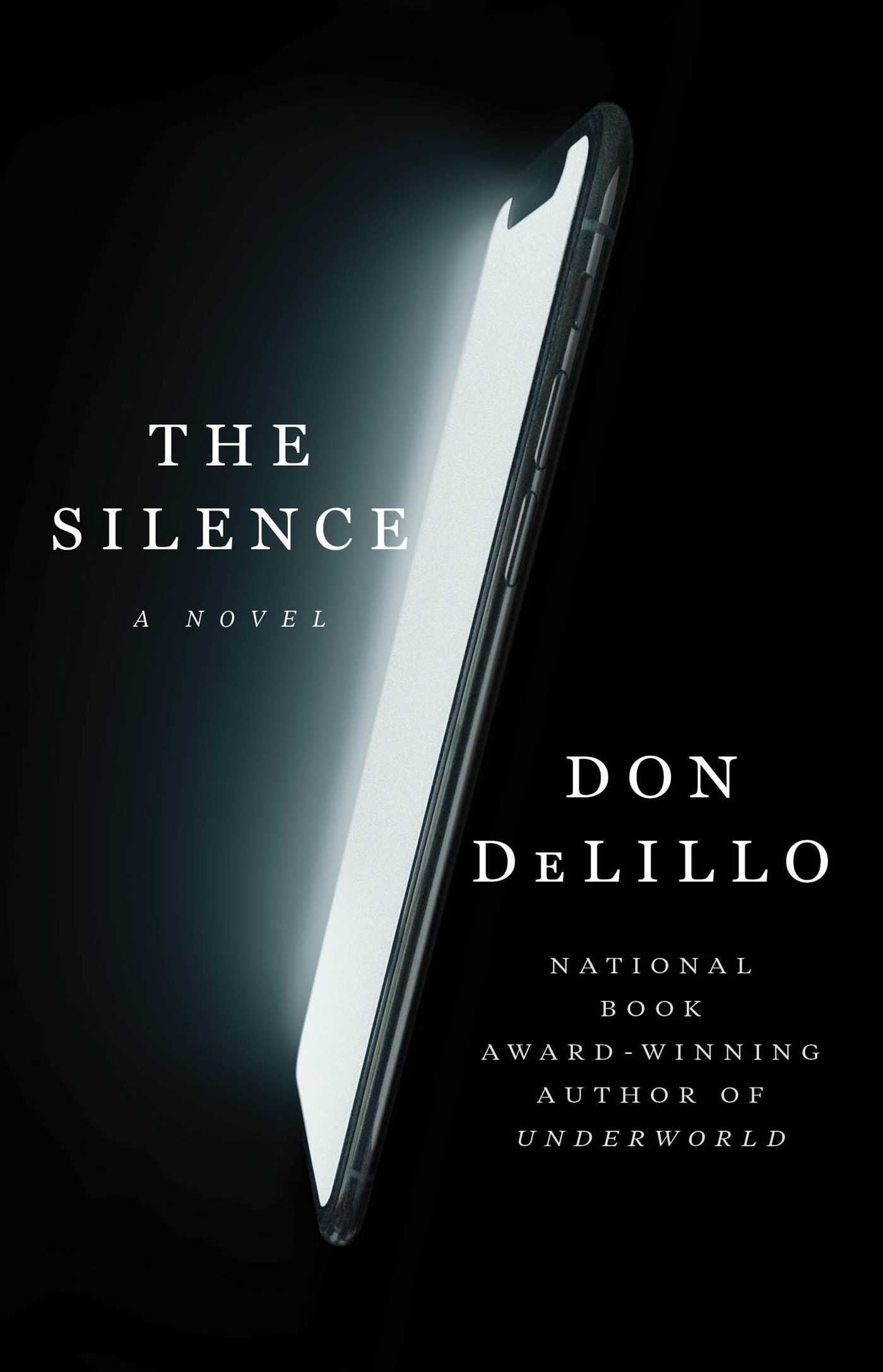
The Silence by Don DeLillo
![]() |
| Publisher's link |
One character, Martin, says: “This is Einstein, his handwriting, his formulas, his letters and numbers. The sheer physical beauty of the pages.”
This was erotic in a way, this exchange. His responses were quick, his voice suggesting the eagerness of someone who has retained what truly matters.”
Sunday, January 17, 2021
What narrative is going to win out?
J and watched several hours of news shows in the wake of the storming of the Capitol on January 6. It’s over two weeks since then and it seems that for many, including me, it’s a slow process of coming to terms with what happened.
Many people are asking: What facts matter? What stories are emerging? What do the stories mean about what is going on right now? About what were the causes and what should be the responses? And how should I feel about things? What should I DO next?
One show that we watched was this hour long special report ("American Reckoning") on PBS
One guest, Justin Hansford of Howard University, talked (starting around 34:30 in the video) about how he is dubious about some of the various narratives that are being told.
I'm concerned that so far we've heard two narratives - one that these are bad apples that will be identified and excluded from law enforcement and then that will be the answer, or secondly, that this was a failure of preparation in terms of lack of skill or lack of know-how. I think that neither of those narratives are persuasive, but I do worry that the people that have oversight over the capitol police will begin an investigations that seem to be premised on the belief that that these were mistakes or that there was some other motives besides white supremacy and sympathy with white supremacy that was the reason for this breach .
It's really a question of who's going to win out? Who's going to win this competition over the narrative on what caused this crisis, this attack and that will determine whether we have the will to go forward and make real change, systematic change.
Other guest were selling their own narratives that explained things. The elements of narrative (who is involved? what actually happened? what were their motivations? what was the crisis? how did the crisis resolve?) are really important. Hansford suggests that the narratives are a competition. One emerges over others.
This story is fascinating in terms of this current political crisis, but also much more generally concerning how we know about the world. What narrative will take hold? How do people come to hold different narratives?
I'm thinking a lot about this topic, about how it relates to my job as a teacher of language arts (narrative, telling stories, using language). And it's making me think of many other things:
- Lots has been said about how we are in a rough spot politically because we don’t share the same facts. Mom said that Philip claims that the story of the bombs in the capital was a lie by the media. That’s a different level of distrust. Everything is a conspiracy
- What I’ve been thinking about is the idea of narratives itself how did Charlotte's narrative about me change? How did Henry's? How did my narrative about my own life change?
- Isn’t “reframing” about changing the narrative that surrounds the facts?
Saturday, January 16, 2021
Questions to Start the Year - Fresh Starts and Finally Doing the Thing
In a blog post titled "A New Year is a Beautiful Fresh Start," Leo Babauta writes about how we should embrace the opportunity for fresh starts. His Zen teacher said to him, after he admitted that he wasn't studying as much as he should, "Start at one," referring to the mindful breathing practice of beginning again. Babauta notes that he was going to use "Start at One" to be one his mantras this year.
Practicing a fresh start in each day
Ask yourself...
- what would I like to do with this incredible day?
- what would make today incredible for me?
- what am I feeling called to do today? What's most important?
These are similar to questions about setting intentions. And these questions can help focus every time we find ourselves distracted:
- What is most important right now? What would you like to do with this incredible hour in front of you?
Practicing with the blank slate of the new year
- What would make this an amazing year for you?
- What is possible for you this year?
- Who would you like to be?
Take 30 minutes thinking about the fresh space of the new year. Is this the year you finally write your book? launch something? create something? Tackle something hard and scary and meaningful? Are there new habits you want to create? This is your year, to use however you like. What magic can you create?
Putting it Into Action
In another blog post, he addresses "How to Actually Do the Thing." There are ideas like: find an accountability buddy, get small victories, start small (the smallest possible chunk), celebrate.
He suggests that we get into the "habit of recognizing what you're avoiding, turning towards it (instead of away from it), and then just starting."
Why do we avoid the thing?
We often spend our days doing everything but the hard thing we don’t want to do.
We’ll research something to death instead of actually just doing the thing. We’ll talk about it, read about it, buy all the equipment for it, but not actually do the thing. We’ll do our email, messages, small tasks, and check social media or the news — just real quick! — instead of doing the thing.
Why? We’re protecting ourselves from uncertainty. We don’t want to feel like we don’t know what we’re doing. We don’t want to look stupid. We don’t want to feel overwhelmed, we don’t want to feel like we’re not good enough, we don’t want to feel like a failure or disappointment.
We’re protecting ourselves from feeling that. So we do everything else, out of protection.
And of course, it doesn’t work. Avoiding doing the thing actually just makes us feel more overwhelmed, more like a failure or disappointment, more stupid or not good enough.
Avoidance doesn’t actually work.
Friday, January 15, 2021
A Modest Quest
| link |
Once I read in a local Chicago nature magazine... Chicago wilderness? - I learned that there were eskers in the Palos forest preserves. Eskers are ice age remnants like kettles and moraines. They were the bottom of river beds in ice age glaciers that collected debris over decades and are now raised ridges through the forest (the debris being left over).
I remember I packed the kids and went in search of these features, going off trails and exploring through the woods. It was an adventure that was fun and interesting. I told the story about it dozens of times. It revealed something pretty cool about how we live in a world that has these rich elements of and evidence of the far away past.
That’s maybe why I was so interested in Rob Walker’s recent piece of the Modest Quest- link And in TAoN No. 61, he goes on a short quest to find a real “milestone” that he read about.
My inspiration was this article about the history and significance of Elysian Fields, a thoroughfare here in New Orleans that runs five miles from Lake Pontchartrain to the Mississippi River, and used to link those destinations via the Pontchartrain Railroad. That train ceased operation in the 1930s, and the tracks were removed by the 1950s. But one trace remains. The article explains:
“On the neutral ground by North Roman [Street’s intersection with Elysian Fields] may be found a stone slab etched with the Roman numeral ‘I,’ meaning one mile from the river. This is the last of the five milestones along the Pontchartrain's tracks, and now stands as a sort of tombstone” for the departed rail line.
That’s right: an actual milestone.
Ever since I read this article back in 2018 I’ve wanted to go check this out. It’s about a 30-minute bike ride from where I live, and on a recent weekend I finally did it. That’s my first modest quest of 2021.
Life is more interesting when you have a series of modest quests. When you are learning about the world in books (or TV) and then take field trips to find them.
In a recent newsletter he also wrote about a different kind of modest quest - binge reading (all books by an author) or binge listening (the entire collection of NPR’s list of essential classical CDs). I’m very happily in the middle of listening to Ted Giiia’s list of the the 200 best recordings of 2030.
Of the first 20 albums on his list, I have really enjoyed 10 of them. I’m keeping a Spotify playlist of the tracks I’m really digging here.
Thursday, January 14, 2021
A Year of Maximum Enthusiasm
There's this great article in Outside, that is republished from 2012 called "Make 2021 the Year of Maximum Enthusiasm." Here's the heart of it:
Kurt Vonnegut, in a 2003 speech to students at the University of Wisconsin, said, “I urge you to please notice when you are happy, and exclaim or murmur or think at some point, ‘If this isn’t nice, I don’t know what is.’”
In 2021, I urge you to notice when something is awesome, as it often is, and exclaim or murmur or just make a mental note of it. Isn’t it just goddamn fantastic that you have your health, for example? Or running water, or electricity? Or that you have enough money to actually pay someone else to make you a cup of coffee? Or if you want ice cream, you are at any time in America probably only five or ten minutes away from a place that sells some form of it? (Trust me on that one.)
Your life, even the bad parts, is fucking amazing. And most of the small things that make up your life are amazing, too—mountain-bike rides, rock climbs, ski runs, sunsets, stars, friends, people, girlfriends and boyfriends, dogs, songs, movies, jokes, smiles ... hell, even that burrito you ate for lunch today was pretty phenomenal, wasn’t it?
All of this makes me see this as related to doing daily "grateful" exercises. It's a great addition!
Remember yesterday, when you saw that one thing that reminded you of that one friend of yours, and you thought about how, if you sent that friend a photo of the thing that reminded you of them, they would smile? But then you didn’t send your friend that photo, and it wasn’t awesome. Don’t do that again.