
from Austin Kleon blog
In the book Draw It with Your Eyes Closed: The Art of the Art Assignment, David Levine tells of “The Worst Assignment I Ever Gave.”
Hoping to get the students to find their “artistic allies,” Levine passed out a bunch of art magazines to his students and told them to find an artist they liked that they’d never heard of and report back the next week to the class.
The assignment was a total failure: none of the students liked anything they saw.
So Levine told them to come back next week and give a report on an artist they hated. Bingo.
“The students performed totally engaged, specific, ten-minute critiques, followed by adrenalized argument… which inevitably led back to a positive discussion of each student’s own practice.”
"What I found interesting about this turn of events was how much easier it is, as a first step, to define your own position negatively, and how the beginnings of articulating taste are almost always through discovering what you don’t like.
David Brooks on Building Social Skills in Ourselves and Others
The Essential Skills for Being Human (NYT)
“Being openhearted is a prerequisite to being a full, kind, and wise human being,” says
David Brooks in this New York Times article. “But it is not enough. People need social skills.”
He’s often struck by people’s “social clumsiness” – for example, when he leaves a gathering
and realizes that only one third of the people he talked with asked him a question.
This widespread lack of curiosity results in people feeling unseen and disrespected,
says Brooks: “Black people feeling that the systemic inequities that afflict their daily
experiences are not understood by whites; people who live in rural areas feeling that they are
overlooked by coastal elites; people across political divides staring at one another with angry
incomprehension; depressed young people who feel misunderstood by their parents and
everyone else; husbands and wives who realize that the person who should know them best
actually has no clue about who they are.”
Brooks is working on a book about teaching and learning social skills, and this article
includes some of his insights so far. He believes we’ve become unmoored as a society, too
many of us are unable to connect across our divides, and national survival depends on
improving our interpersonal skills. He’s learned most from people he calls illuminators: “They
have been trained or have trained themselves in the craft of understanding others,” he says.
“They know how to ask the right questions at the right times – so that they can see things, at
least a bit, from another’s point of view. They shine the brightness of their care on people and
make them feel bigger, respected, lit up. Illuminators are a joy to be around.” Some key skills
we can learn from them:
• See people well – The way we attend to people makes all the difference, says Brooks.
As a young man, he came across as reserved and aloof, which didn’t bring out the best in
others. He’s learned from illuminators to be warmer, more respectful, seeing others as
“creatures with infinite value and dignity, made in the image of God,” he says. “Casting this
kind of reverential attention is an absolute prerequisite for seeing people well. When you offer
a gaze that communicates respect, you are positively answering the questions people are
unconsciously asking themselves when they meet you: ‘Am I a person to you? Am I a priority
to you?’ These questions are answered by your eyes before they are answered by your words.”
• Accompany others – As we encounter people in the routines of daily life, says Brooks
– chatting at work or when we pick up the kids at school – we need to be “lingerable,” taking
our time, letting go of the efficiency mindset, being present, and using conversation as a form
of play that brings out the best in others. He makes the analogy to a piano accompanist,
“sensing where the singer is going, subtly working to help the singer shine.”
• Develop the art of conversation – From experts at being better conversationalists,
Brooks has picked up these pointers:
- Be an active listener with interjections like Aha, Yes, Amen.
- Get people telling stories – Instead of asking, What do you think about that?, ask How
did you come to believe that?
- Paraphrase back – This makes the other person feel heard, or allows them to correct
things you’ve misunderstood.
- Ask follow-up questions – This encourages your conversational partner to go into more
detail.
- Don’t be a “topper” – If you tell a related story from your own experience, you’re
trying to make a connection but it shifts attention to you.
• Ask big questions – “People are dying to tell you their stories,” says Brooks; “very
often, no one has ever asked about them.” Getting to know a person for the first time, ask
where they grew up, where they got their names, or a favorite unimportant thing about them.
Once a trusting relationship is established, you can move on to a 30,000-foot question, for
example: What crossroads are you at? If the next five years is a chapter in your life, what is
the chapter about? Can you be yourself where you are and still fit in? What would you do if
you weren’t afraid? What have you said yes to that you no longer really believe in? What is the
gift you currently hold in exile? How do your ancestors show up in your life? If you died today,
what would you regret not doing?
• Stand in their standpoint – When talking with someone with different views or status,
says Brooks, it’s important to be persistently curious. Every conversation has two levels:
what’s actually said and “the ebb and flow of emotions that get transmitted as we talk. With
every comment I am showing you respect or disrespect, making you feel a little safer or a little
more threatened… I think the wise person’s gift is tender receptivity.”
Really good confidants “are more like coaches than philosopher kings,” says Brooks.
“They take in your story, accept it, but prod you to clarify what it is you really want, or to
name the baggage you left out of your clean tale. They’re not here to fix you; they are here
simply to help you edit your story so that it’s more honest and accurate. They’re here to call
you by name, as beloved. They see who you are becoming before you do and provide you with
a reputation you can then go live into.”
“Give the Gift of Your Attention” by David Brooks in The New York Times, October 22, 2023
Some Notes on recent Jon Kabat-Zinn videos:
JKZ 43-
Taking your seat is "taking a stand" of profound care/wisdom; it's an invitation to look and attend, inwardly, outwardly;
It's a recalibration to this moment, under the pyrotechnics; no forcing, straining, no idealizing, knowing what's there -- the pleasant, unpleasant; getting out of autopilot, we're more asleep than awake
each in-breath- brand new beginning, invitation, wake up; each out-breath - compete letting be, as they are (no passive resignation but recognition); be with things exactly as they are; can I be at home here and now?
JKZ 42 -
just this soundscape of now, mindscape of now, heartscape of now, bodyscape of now, breathscape of now
live life as though it really, really, really mattered
what's bigger than my story, her story, his story?
full flowering of dignity of human being; often it looks like nothing; non-doing does. not equal doing nothing; make room for and enter and reside in; not something you "get," but a tiny shift in orientation, intention;
let it be an adventure, investigation into not knowing and saying yes; equanimity is balance of heart and mind;
life lights up because we're not missing it
wanting things to be the same is like being in the middle of the ocean and saying "stay like this"... that's where self-compassion comes in
don't ignore the (challenging) landscape that your living in. That's a form of violence to yourself. Instead, life is your curriculum -- taking it on --
advises parent not to introduce kids to meditate, but do it yourself and be the example "be mindful and let them figure it out themselves"
USGS - Illinois Rain Gauge Stations - total cumulative rain - link
A Collection of Gardening Websites
Some Collections
A Collection of Places to Visit
A Collection of Science Websites & Stories
A Collection of Health & Fitness
A Collection of Gardening Websites
A Collection of Music Websites
On October 23, 2013 I wrote this in my journal:
Looking in windows on my night walk on a dark, wet, chilly night. First, I see a pudgy man, balding, setting a table in a kitchen. Set look on his face... not -a-smile, but a "pleasant" look set for waiting rooms and client meetings. Next block I see into a dim dining room ... bloated big hair matron sit across from husband -- bulky -- in a house with a sizable addition. This is the Sponge Bob house - where I see SB on a huge screen TV at 6:30 every ay that I ride my bike to work. They look like they're both doing work -- across from each other... kids in addition watching the megascreen.
Suddenly this is the place that I live. This is my swimming pool of life, like Mt Prospect was/is the world of mom and dad. This is the place that I will exist -- like the first man I saw -- neither enjoying or not enjoying -- but with a mask of domesticity. And this is the place that after working hard on "earning an addition," you sit in work clothes and slippers extending your work day into the night while the kids aneasthesize themselves in the next room.
I was walking at night and looking into (literally!) the lives of my neighborhood. I see dulled people, people devoting their home time to work (while kids space out in front of "megascreen."
The realization was that I am living in that "swimming pool," too. There's a sense of awareness: this is where I am, there is where I'm headed. Probably the swimming pool is a reference to Ani DiFranco's "Little Plastic Castles."
I've been copying my 2013 journals into my massive "DRL history" file. I find that there's no time to come up for air: kids soccer practices and games, my HW (sometimes small bits, sometimes 2 hour chunks of grading), my domestic chores, menus, cooking, tiny bit of guitar (I think I'm doing guitar lessons with Jason at this time). All of October 2013 is playing on those few notes repetitively. (Correction: I do take family to Gov Dodge for Columbus Day.).
Connection to now: I do a LOT less HW than I did (though I do continue to bring schoolwork home to do... I just don't do it very often!). I do a LOT less schlepping kids around. My after schools and weekends are MOSTLY mine. Thinking about ten years later -- new house, divorce, marriage. Major life changes... I spend a lot more time cooking, having coffee with Jennie.
related to: critique of suburbs, realization of limited life, being over busy, life satisfaction, life purpose
 |
| Koson Ohara |
staying awake
and subsisting on poetry Ogawa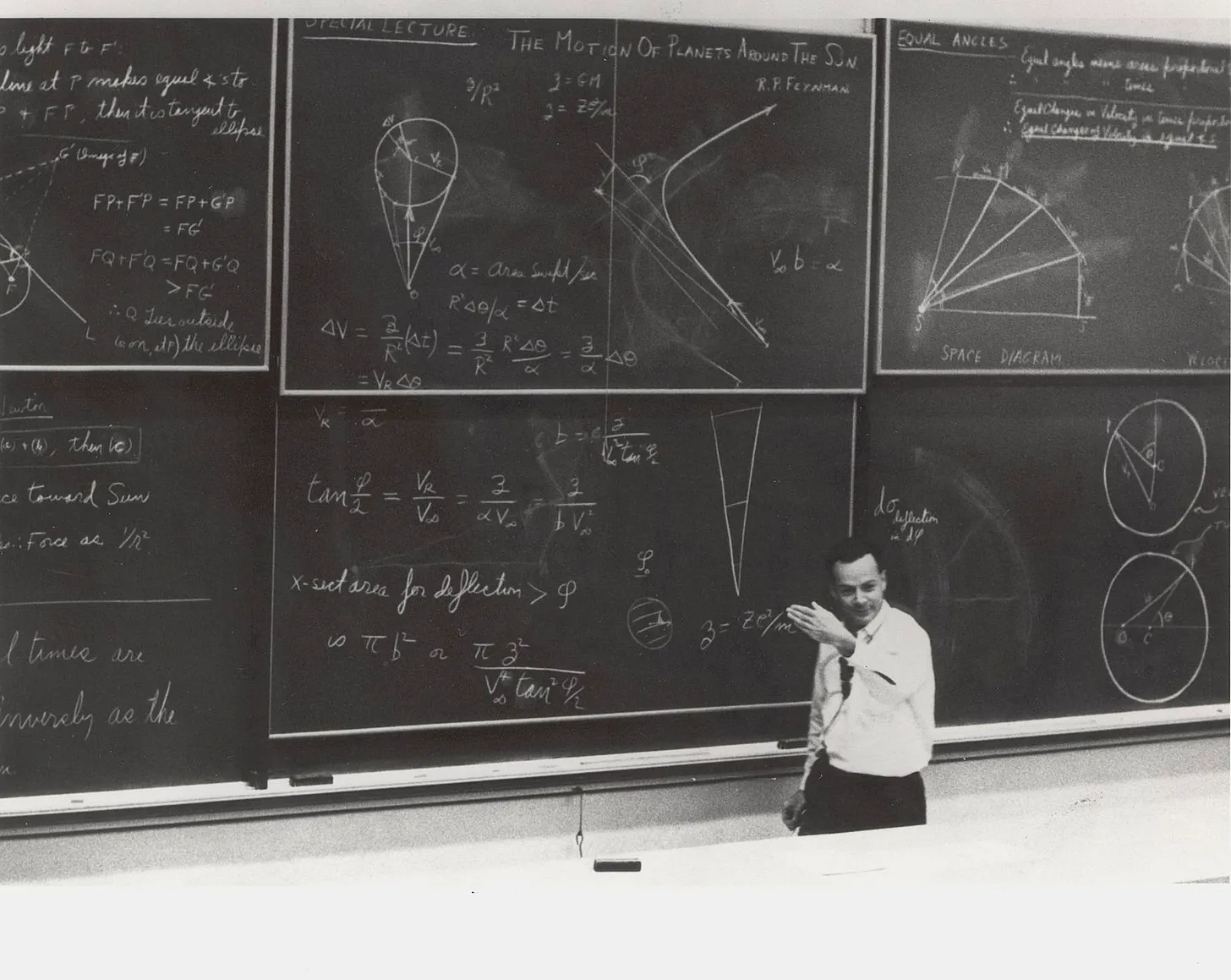 |
Ted Gioia (My Twelve Favorite Problems creates his own set of "Twelve Problems" based on Richard Feynman's own list of Twelve Questions. Gioia's list is really interesting and inspiring. I immediately began creating my own list.
Most people look for solutions. But few seek out problems.
There are exceptions. Physicist Richard Feynman, for example, liked to keep a list of his dozen favorite problems. These were big open-ended questions that could guide his life’s work.
“Every time you hear a new trick or a new result, test it against each of your twelve problems to see whether it helps. Every once in a while there will be a hit, and people will say, ‘How did he do it? He must be a genius!.’”
Feynman realized that genius is not having all the answers. Everything starts with asking the right questions.
Gioia then lists his Twelve Favorite Problems
My 12 Favorite Problems
I will start with problems that I constantly ask myself as a scholar in music and the arts. But the scope will widen as we go down the list, and vocational concerns will overlap with personal matters.
(1) How can music change people’s lives?
When I started asking this question, it energized and revitalized how I pursue my vocation. I might even say it defined my vocation.
I began looking at what music does. And not just what it is.
It took a long time before I could even formulate it correctly in words. But once I managed to do that, it transformed everything. At least five books have resulted—and that only begins to measure the impact.
This question came to the forefront of my thinking around 1990, almost exactly the midpoint of my life to date. I was 33 years old, and that’a a good age for defining your mature work. From that moment on, songs weren’t just songs for me. They were change agents in human life and a source of enchantment.
After this shift in my thinking, I would do things I’d done many times before—attend a concert, talk to a musician, teach music students, etc.—and notice things I’d previously missed. My writing improved, even my decisions on what to write about got better. My efforts became more holistic, more distinctive, more efficacious, and more aligned with my core values—hence, more satisfying.
Here are others:
(2) How do I deal with situations when great art is created by flawed artists?
(3) How can creativity, intellectual vitality, and learning be maintained in the face of inescapable obstacles—such as earning a living, or aging, or financial hardship, or residing far from major cultural centers?
(4) How can we avoid cultural stagnation—especially given the obsession with remakes, reboots, spinoffs, and brand extensions of old works by the dominant corporations that control most of the creative economy?
(5) How do I avoid becoming a narrow specialist or a superficial generalist? Is there a third way? If so, how do I get there?
Philosopher Miguel de Unamuno once said that a smart person can either be a pedant or a dilettante. Both results are unfortunate—and there is no in-between.
That’s a sad dilemma. I don’t want to be either.
But I see the trade-offs all the time. Some smart people become specialists and know lots and lots about less and less—and this turns them into pedants and obscurantists. It’s almost impossible to avoid this in some settings (e.g., many tenure-track university jobs or research positions).
***
I’ve tried to find a third way. I do immersive deep dives into new subjects—reading 40 or 50 books in a particular area. Then I move on to a different field of inquiry, and do the same thing all over again. This allows me to achieve a degree of specialization in many areas, without getting lost in any of the rabbit holes.
(6) How can I protect or nurture local styles and perspectives in an increasingly globalized and homogenized culture?
(7) How can I operate honestly as a critic without absorbing all the negative psychic energy involved in criticism? How do I reconcile this vocation with my desire to act kindly and compassionately at all times?
(8) How can we find balance and cohesion in a culture where the supply of creative work (100,000 new songs are uploaded every day) outstrips audience demand, which is at best static and perhaps shrinking.
(9) Is criticism objective or subjective?
(10) How do I handle the divide between highbrow and lowbrow culture?
The bottom line here is this: I aim to praise excellence wherever I see it, and this means I have to operate comfortably both in the populist and elitist camps without giving full allegiance to either.
(11) How can I thrive while operating contrary to dominant social and cultural trends?
(12) How can I have a positive impact?

Why Have Twelve Favorite Problems - Fortlabs article
You can create a list of your own favorite problems – a concrete set of questions you rely on both to filter the information you consume and to connect the dots between challenges and potential solutions.
They allow you to:
He experimented for years with lucid dreaming and sensory deprivation to unravel the mysteries of consciousness. He taught himself how to play the drums, pick lock safes, draw nude figures, and decipher Mayan hieroglyphics. He embraced all of the surprise and serendipity that life had to offer with an attitude of childlike wonder.
Richard Feynman was a true Renaissance Man – as impressive as his scientific accomplishments were, what truly distinguishes him in our era of hyperspecialization is that he also managed to live a rich and varied life. His intense focus on his research didn’t prevent him from savoring the finer things in life – travel, culture, art, music, and family.
For me, this is Richard Feynman’s greatest achievement: he both went deep in the area where he could make a genuine contribution to society, while also embracing the full breadth of everything else life had to offer along the way.
---
Buried in an obscure article written by a contemporary of Feynman’s, the MIT mathematician Gian-Carlo Rota, lies a clue to how Feynman achieved his formidable reputation (emphasis mine):
“You have to keep a dozen of your favorite problems constantly present in your mind, although by and large they will lay in a dormant state. Every time you hear or read a new trick or a new result, test it against each of your twelve problems to see whether it helps. Every once in a while there will be a hit, and people will say, “How did he do it? He must be a genius!”
In other words, Feynman’s approach was to keep a list of a dozen of his “favorite problems” – these were fascinating open questions that he found himself returning to again and again in his research.
In Praise of Being Peripheral
Without philosophy,
tragedy,
history,
a grey squirrel
looks
very busy.
Light as a soul
released
from a painting by Bosch,
its greens
and vermilions stripped off it.
He climbs a tree
that is equally ahistoric.
His heart works harder.
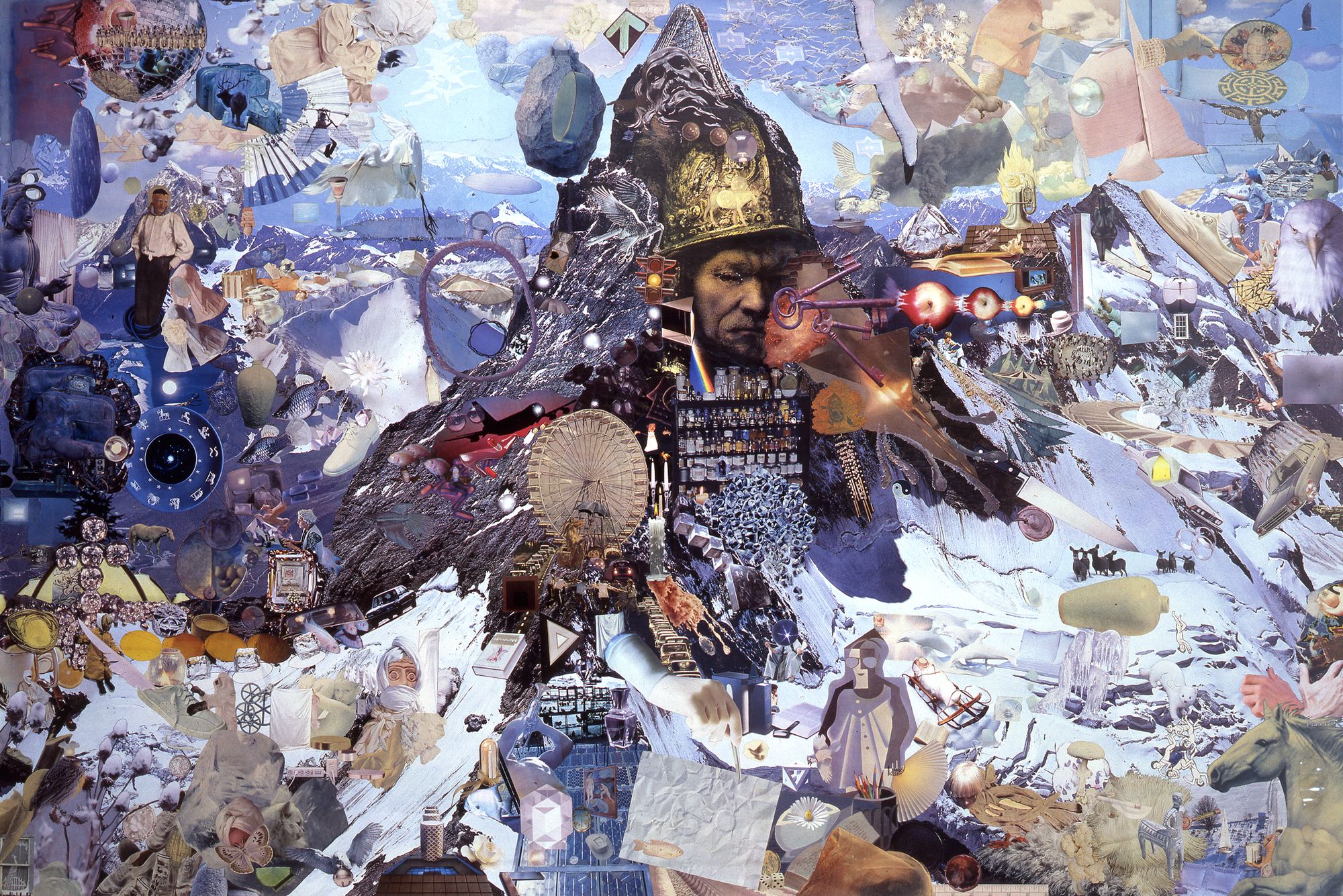 |
| Jess, A Cryogenic Consideration or Sounding One Horne of the Dilemma (Winter), 1980. Collage, 48x72 inches. |
Searching, finding, and filing—especially in seclusion, as Jess often worked—are what sense-making looks like to me. I grew up in a time of grotesquely proliferating information, easier than ever to access and with a seemingly total lack of structuring narrative. For me, collection and arrangement were a response, a necessary adaptation: you could give up and live in a senseless world, or you could set about building sense from whatever scraps you could find. But this arrangement could be a pleasure in and of itself, full of devotion to each little piece and to the kind of complexity that needs only finding, not making. In a short text collaged into an announcement for Jess’s 1989 show at Dilexi Gallery, Duncan calls Jess’s art “not impression, not expression, but an involvement in what is.” It is this assumption that meaning is to be found among what[already] is that I relate to most in Jess’s work.
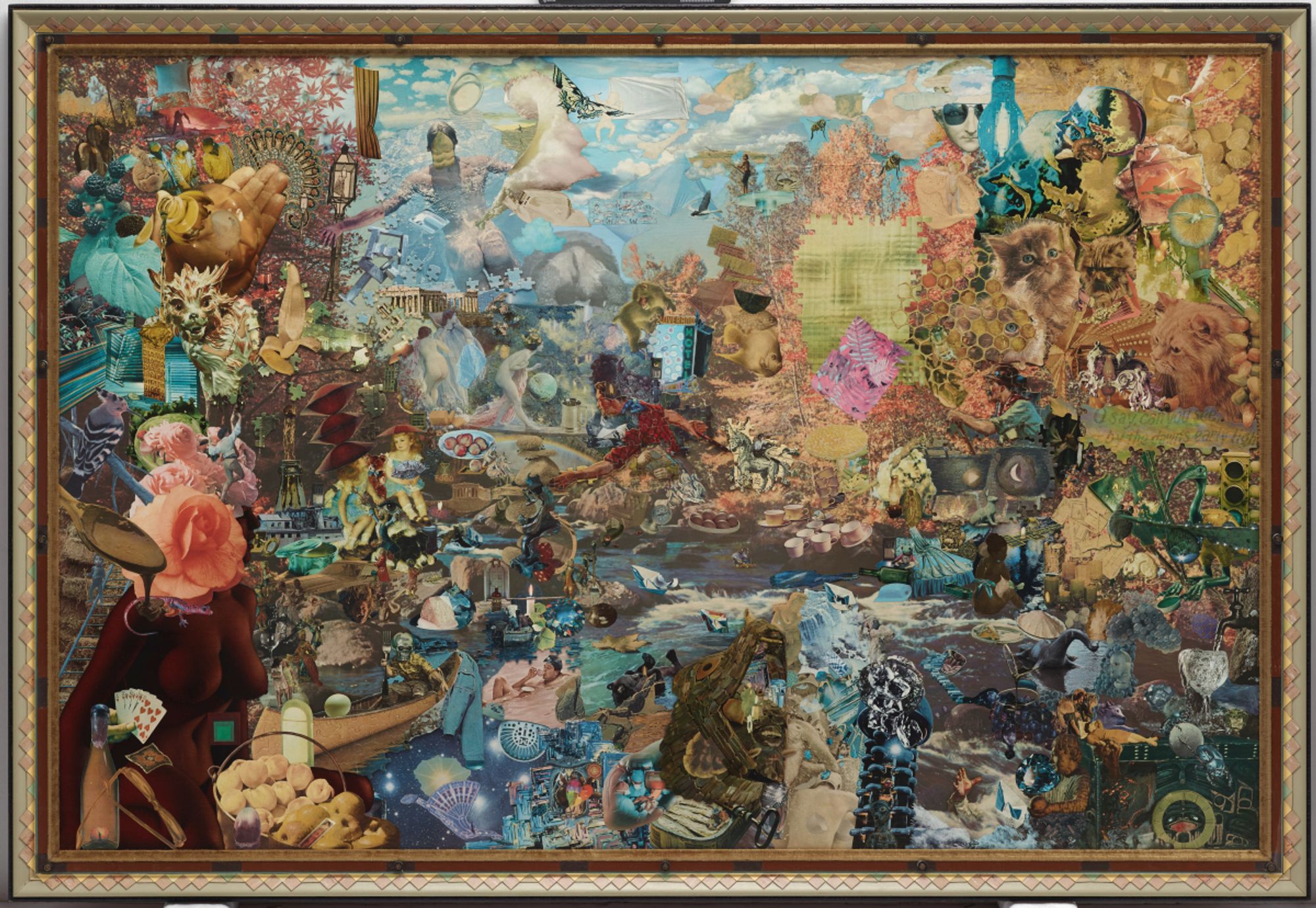 |
| Jess, Arkadia’s Last Resort; or, Fête Champêtre Up Mnemosyne Creek, 1976. Magazine cutouts and puzzle pieces, 47 × 71 in. Dallas Museum of Art, |
Jenny Odell in an article about collage artist Jess: article-https://pioneerworks.org/broadcast/13-ways-jenny-odell?utm_source=substack&utm_medium=email
The day I spent hunched over the two Jess books in the Berkeley library (before they would be re-shelved to their separate homes in art and poetry), I emerged from the building only to find myself in a different collage. The paved walkway was straight, but the campus was made out of fractal paths of noticing, each with its own surprising details: the perfectly constructed beehive outside the library, the man in a skeleton costume posing for a photo in front of the science building, the peregrine falcon shrieking overhead while he did. Every oak leaf, edges backlit by the afternoon sun; every tired shoe crossing Oxford Street; every menu item outside the Persian restaurant; every metal pipe along the ceiling of the BART station; every plastic curve of the AC Transit bus; every scratch on the window through which I saw every stucco wall and peeling billboard. In the visual frame left to me by Jess, the meaning was to be found not in the things themselves, but in the dialogue of their presences. It’s a language I’m still learning how to see and write in
Later:
Searching, finding, and filing—especially in seclusion, as Jess often worked—are what sense-making looks like to me. I grew up in a time of grotesquely proliferating information, easier than ever to access and with a seemingly total lack of structuring narrative. For me, collection and arrangement were a response, a necessary adaptation: you could give up and live in a senseless world, or you could set about building sense from whatever scraps you could find. But this arrangement could be a pleasure in and of itself, full of devotion to each little piece and to the kind of complexity that needs only finding, not making. In a short text collaged into an announcement for Jess’s 1989 show at Dilexi Gallery, Duncan calls Jess’s art “not impression, not expression, but an involvement in what is.” It is this assumption that meaning is to be found among what[already] is that I relate to most in Jess’s work.
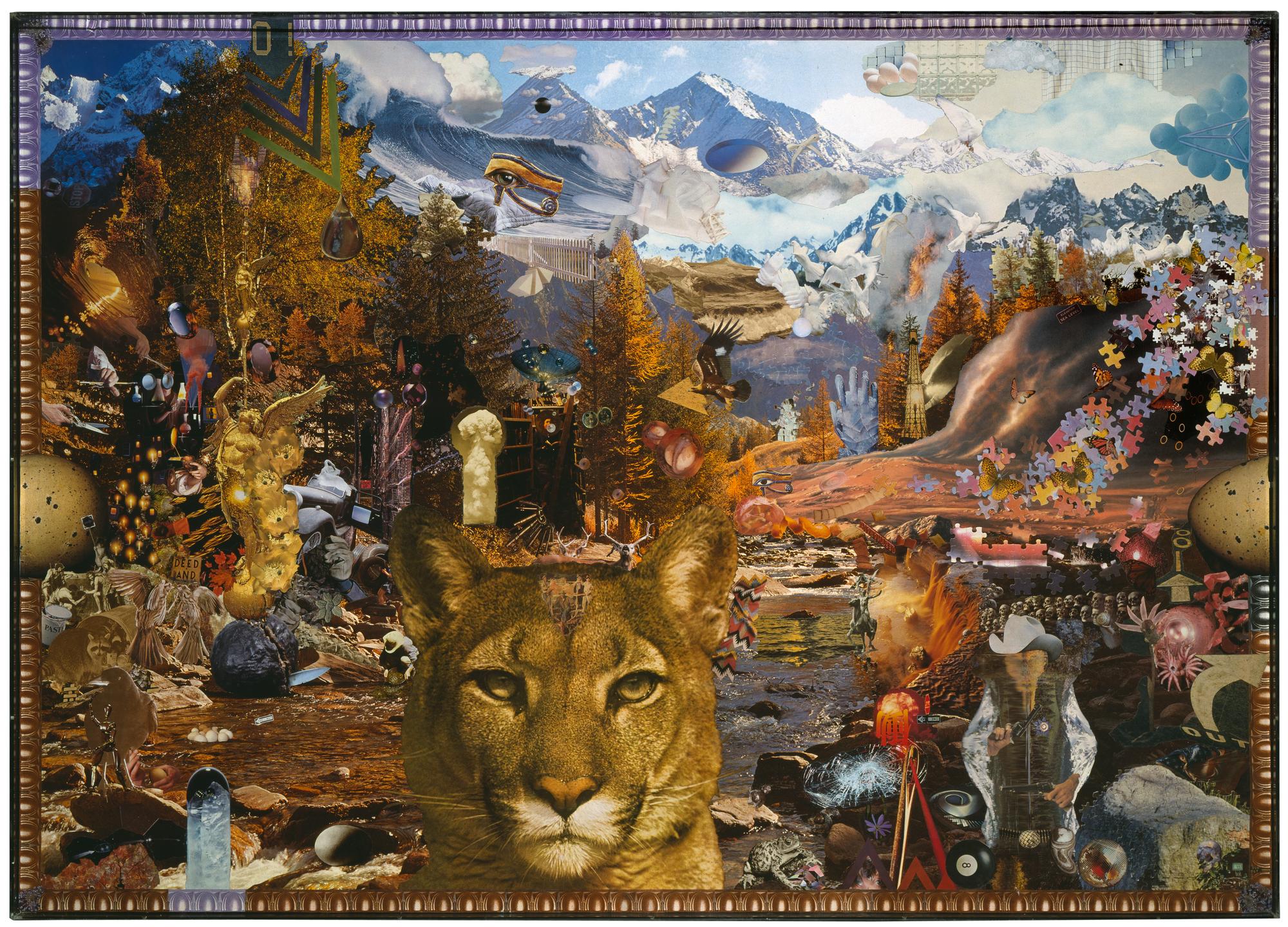 |
| Jess, A Western Prospect of Egg and Dart, 1988. Printed papers and jigsaw puzzle parts mounted on board, 56 1/4 x 79 3/4 in. (142.8 x 202.6 cm). Gift of the Marion L. Ring Estate, by Exchange, 1989. Hirshhorn Museum and Sculpture Garden |
Odell article on collage artist Jess
Not that I think anyone who looks at Jess’s more complex paste-ups would believe they were easy to make, but as someone who works according to a similar logic, I know the unseen periphery of time required of each composition. Some of Jess’s paste-ups took years to make, and his unfinished project Narkissos took decades. This would have included not just cutting and pasting, but noticing, first of all. In one interview, Jess told the curator Michael Auping that he salvaged most of his imagery from books, magazines, and postcards wasting away in thrift stores, but that images could also be salvaged from “a possible obscurity” if they had “spoken up out of the matrix of images that surround them.” Auping reports that Jess treated his scraps like family heirlooms and would sometimes hold on to a clipping for more than 20 years. While 90 percent of his filed-away scraps never made it into a piece, Jess would “ritualistically continue the process of searching, finding, and filing.”
For a dog,
No news the wind brings is without interest.
A boat’s hull does not travel last year’s waves.
-Jane Hirshfield
Like the Small Hole by the Path-Side Something Lives In


.jpg)