 |
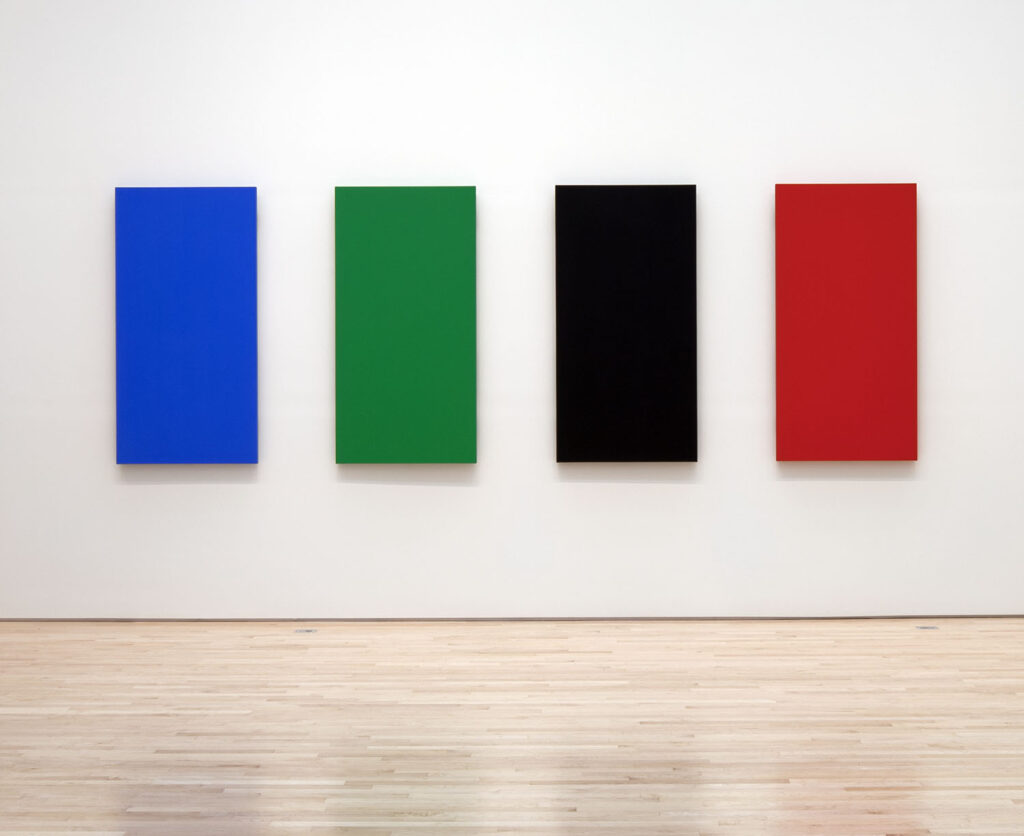
| Ellsworth Kelly, Blue Green Black Red |
In How to Do Nothing, Jenny Odell writes about an experience with Ellsworth Kelly's Blue Green Black Red.
For lack of a better description, the painting seemed active. I can't stress enough that this was a bodily feeling -- like Buber's tree, the painting "bodied" across from me. I realized I needed to look at every single panel, spending the same amount of time on each one, since each color vibrated differently, or rather, my perception of the the color did. Strange as it sounds to call a flat, monochromatic painting a "time-based medium," there was actually something to find out in each one -- or rather, between me and each one -- and the longer time I spent, the more I found out. Somewhat sheepishly, I thought about how someone across the room, too far away to understand, would see me: a person matter-of-factly staring at one after another of panels with "nothing" on them.
These paintings taught me about attention and duration, and that what I'll see depends on how I look, and for how long. It's. a lot like breathing. Some kind of attention will always be present, but when we take hold of it, we have the ability to consciously direct, expand, and contract it. I'm often surprised at how shallow bth my attention and my breathing are by default. As much as breathing deeply and well requires training and reminders, all of the artworks I've described so far could be thought of as training apparatuses for attention. By inviting us to perceive at different scales and tempos than we're used to, they teach us not only how to sustain attention but how to move it back and forth between different registers. As always, this is enjoyable in of itself. But if we allow that what we see forms the basis of how we can act, then the importance of directing our attention becomes all too clear.

No comments:
Post a Comment