 |
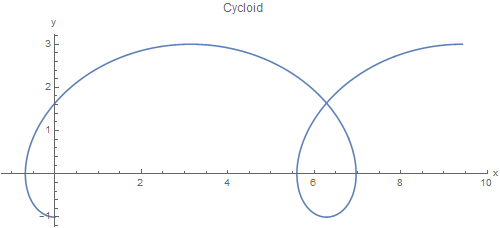
| A cycloid is the curve traced by a point on the rim of a circular wheel, of radius 𝑎 rolling along a straight line |
Brad Stulberg
You may crave order and stability, but that stability is a moving target, it's always somewhere new. Stability doesn't come from resisting change. It comes from learning to work with it. The latest findings from psychology, biology, sociology, philosophy, and neuroscience all demonstrate that change itself is neutral. It becomes negative or positive based on how you view it—and more importantly, what you do with it. Life is an ongoing and oscillating series of ebbs and flows. The average person undergoes more than 30 significant life changes. Marriage. Divorce. Kids. School. Graduation. Moving. Illness. Recovery. Starting jobs. Leaving jobs. Promotions. The list goes on and on. Old models represent change as a cycle of order, disorder, order. Change is something that happens to you. The goal is to get back to where you were. But this is neither accurate nor how change, which is to say life, actually works. Change and disorder are not the exceptions. They are the rules. Look closely and you'll see that everything is always changing, including you. Life is flux. The only time something is static is when it's dead. A better and more accurate way to view change is as a continuous cycle of order, disorder, reorder, a phrase first coined by Richard Rohr. Yet our models for change are old and outdated. Here's a better way: Developing a strong, enduring, and cohesive sense of self means learning to ride the waves.
It requires equal parts ruggedness and flexibility.
To be rugged is to be tough, determined and durable.
To be flexible is to consciously respond to altered conditions, to adapt and bend without breaking.
Put them together and you get a gritty endurance, an anti-fragility that not only withstands change but thrives in its midst.

No comments:
Post a Comment