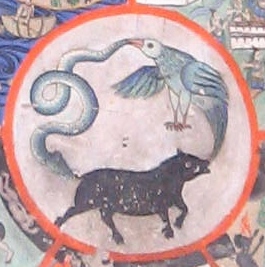
The three poisons (Sanskrit: triviṣa; Tibetan: dug gsum) or the three unwholesome roots (Sanskrit: akuśala-mūla; Pāli: akusala-mūla), in Buddhism, refer to the three root kleshas: Moha (delusion, confusion), Raga (greed, sensual attachment), and Dvesha (aversion, hate).[1][2] These three poisons are considered to be three afflictions or character flaws innate in a being, the root of Taṇhā (craving), and thus in part the cause of Dukkha (suffering, pain, unsatisfactoriness) and rebirths.[1][3]
The three poisons are symbolically drawn at the center of Buddhist Bhavachakra artwork, with rooster, snake and pig, representing greed, ill will and delusion respectively.
In the Buddhist teachings, the three poisons (of ignorance, attachment, and aversion) are the primary causes that keep sentient beings trapped in samsara.
The three wholesome mental factors that are identified as the opposites of the three poisons are:[10][11]
- amoha (non-delusion) or prajna (wisdom)
- alobha (non-attachment) or dāna (generosity)
- adveṣa (non-hatred) or mettā (loving-kindness)

No comments:
Post a Comment