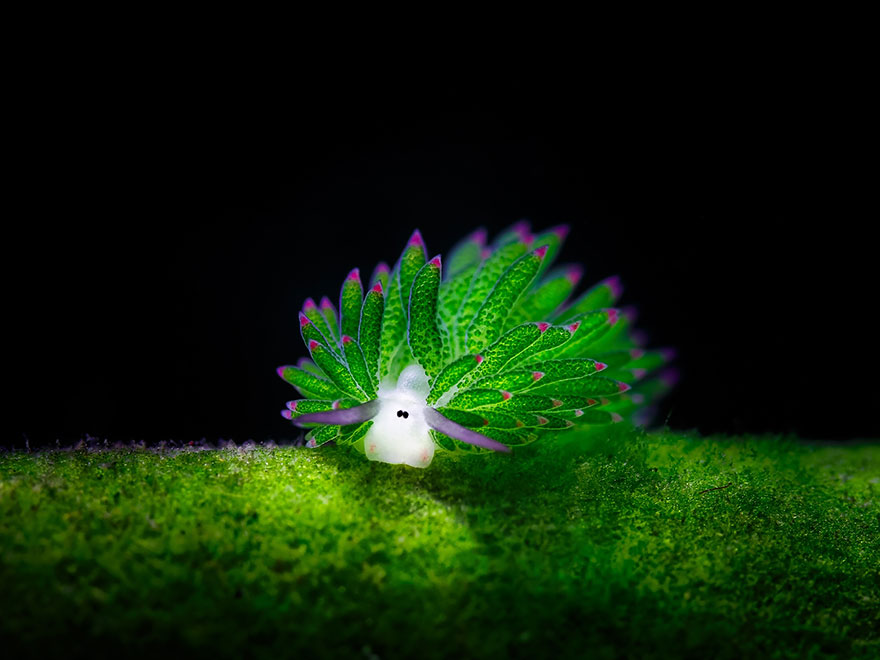
Can animals photosynthesize? Some sea slugs steal chloroplasts from algae; others retain algae in their body and live symbiotically.
Costasiella kuroshimae (leaf sheep), is a sea slug performing 'kleptoplasty' = retaining the chloroplasts from the algae it eats, so that they can be used to indirectly perform photosynthesis.From Science Focus:
Some animals have managed to harness the power of photosynthesis. For example, when sacoglossan sea slugs chow down on photosynthetic green algae, chloroplasts from the algae become incorporated into the animals’ gut cells where they continue to pump out nutrients long after the rest of the algae have been digested and expelled. It’s a feat called ‘kleptoplasty’.
Other animals, including some clams and flatworms, also use the photosynthetic powers of algae, but adopt a symbiotic approach where the algae remain unharmed. Corals are the classic example. Most reef-building corals contain colonies of algae, called zooxanthellae, which live in their tissues and bequeath the coral their hue. During the day, the algae provide the coral with most of their energy needs and, in return, the algae get a safe place to live with a stunning sea view.

No comments:
Post a Comment