Sara Hendren's newsletter entitled "Vocab Lesson: Learning How to Describe the Built World."
How do you describe the design of the stuff all around you, beyond what you like or don’t like, beyond what’s interesting or cool or boring? Next semester I’ll be teaching a class called Writing About the Built World. We’ll examine a mix of academic and journalistic criticism — for architecture, design at all scales, and technology — and we’ll look for analysis of objects and environments in all kinds of unexpected places: podcasts, movies, fiction. We’ll practice finding the most precise language we can for all the stuff that’s around us, the better to both cultivate our own sensibilities and to see the choices designers make as choices — choices that could always be different.
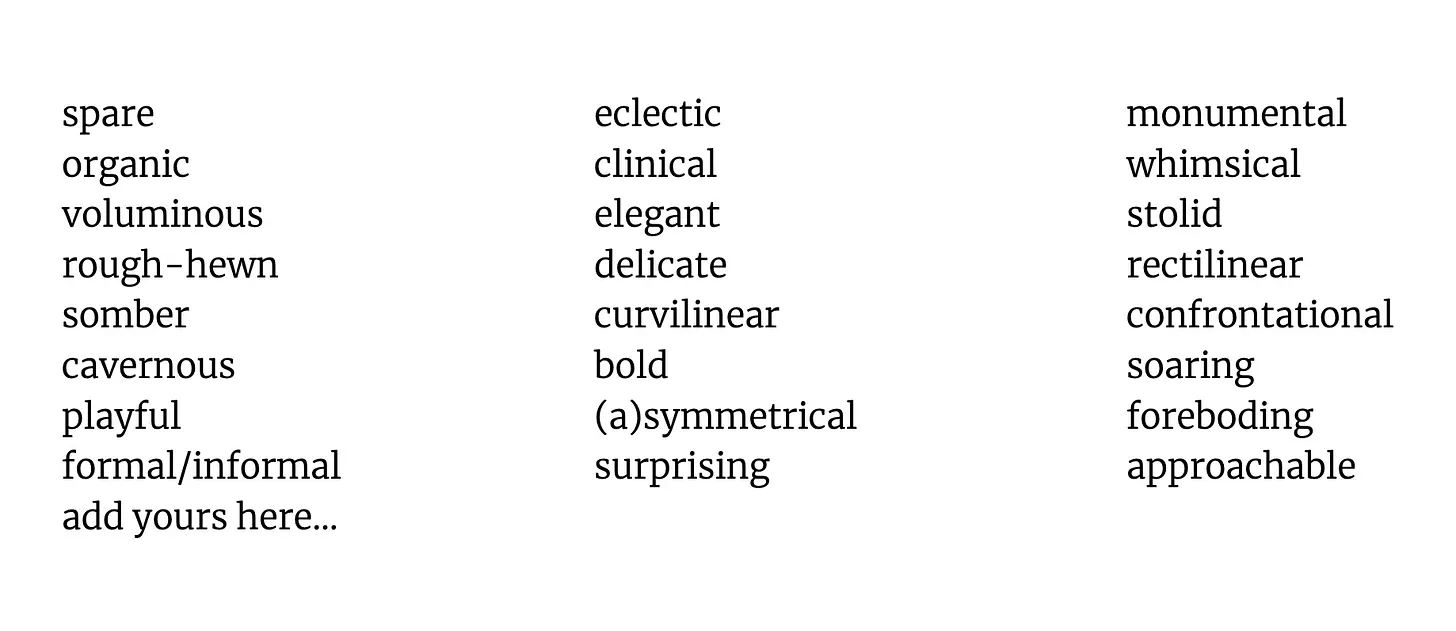
I usually offer a word bank to get students going:
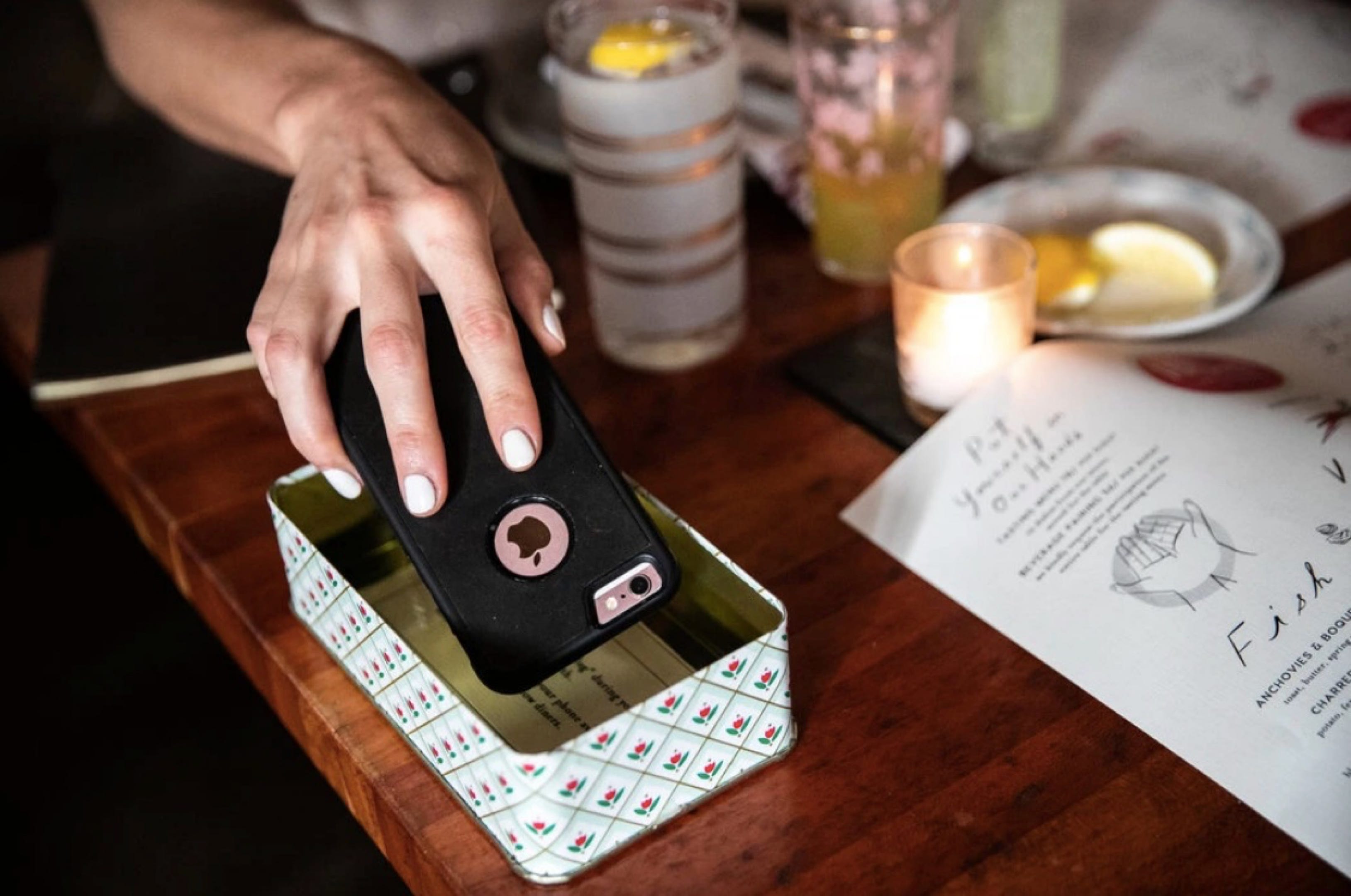
The Manhattan restaurant Hearth, in the early days after they opened, had a box on every table like this to invite diners to keep smartphones out of their mealtime. How would we talk about this arrangement of choices? It’s a suggestion, not a policy, and the container is open, not closed. The box is embossed tin and printed with a demure floral, like something from the 1920’s—not an armed safe, and not a bag for the coat check. Is this a subtle, nostalgic nudging? Is it an elegant escape hatch from digital life? Or is it paternalistic? Overly precious, even twee? Finding the words for this designed object-and-experience helps you figure out the assumptions behind the choices and the origins of your reaction.
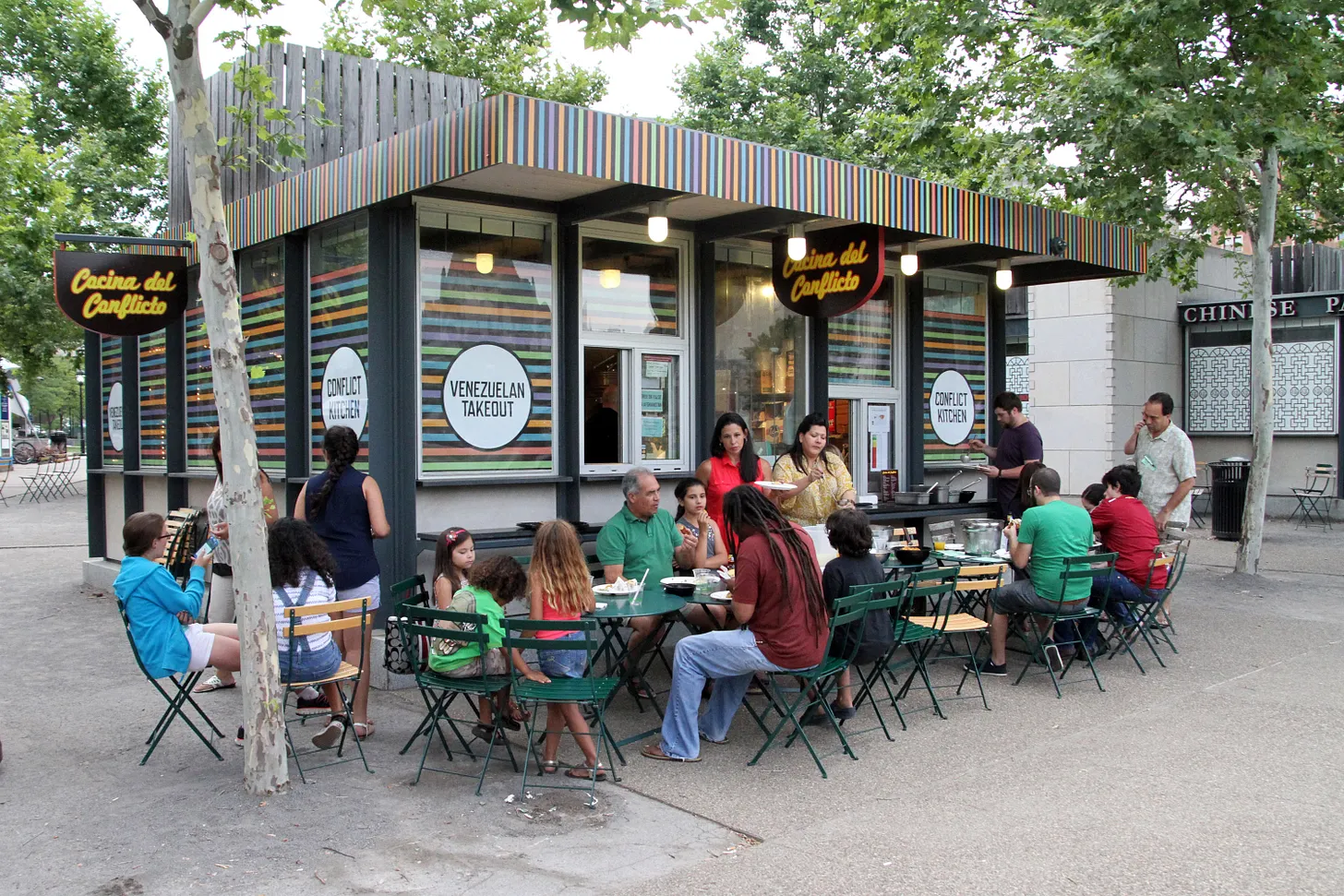
Conflict Kitchen, in Pittsburgh, serves food from regions of the world with which the US is in conflict. So they have programs and lectures and “lunch with an expert” on offer. But notice the design of the actual structure: it’s a trendy modern kiosk, heavy on stylish graphics, and the signage is just their name and the cuisine you can (temporarily) purchase there. So we might say this project leads with approachability — no protest posters or policy recommendations out front, as you see here — and follows with an invitation to more information, more provocation, if you so choose. A design group interested in politics could do otherwise, of course, with some aesthetic and programmatic changes. They could have decided to employ the confrontational, DIY graphic style of the handmade stenciled typeface. They could have printed menus with foreign policy demands on the back. They could have foregrounded the conflict part of the project, but instead they foregrounded the kitchen — the feasting, the conviviality, the enterprise. These are all choices, and it’s worth asking why.

No comments:
Post a Comment