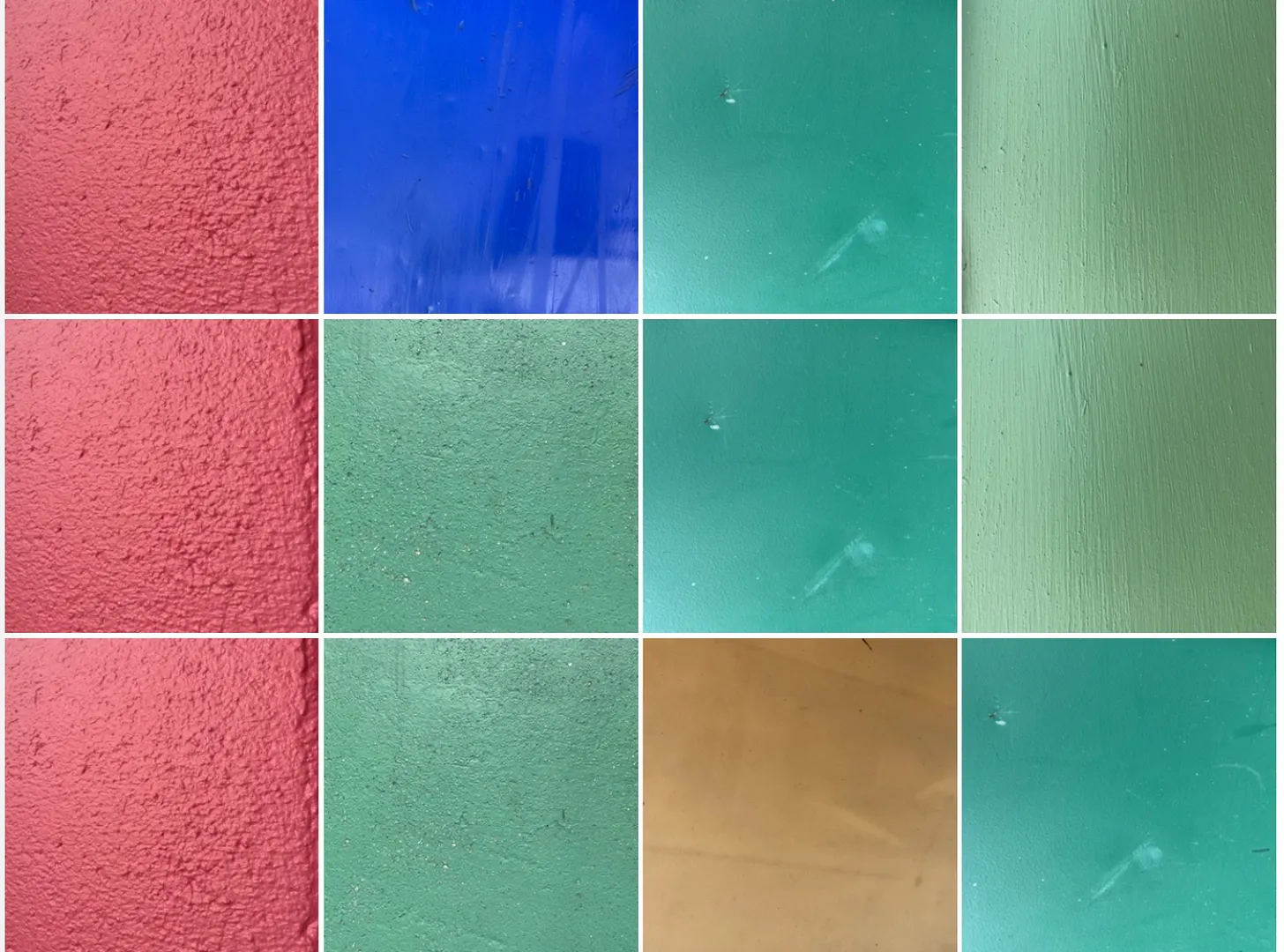
Two things on color walks, one from a Pittsburgh Museum, and one from Rob Walker.
Walker in a post called "Collecting Colors" first notes William S. Burrough's directions on doing a color walk:
Probably the most famous advocate of the color walk—and certainly the most poetic about it—is William Burroughs. In fact, he used the lovely term “walking on colors” to describe the practice. As he once wrote:
“Another exercise that is very effective is walking on colors. Pick out all the reds on a street, focusing only on red objects—brick, lights, sweaters, signs. Shift to green, blue, orange, yellow. Notice how the colors begin to stand out more sharply of their own accord.”
And elsewhere1:
“I was walking down the boulevard, when I looked out I was seeing all the blues in the street in front of me, blue on a foulard…blue on a young workman’s ass…his blue jeans…a girl’s blue sweater…blue neon…the sky…all the blues. When I looked again I saw nothing but all the reds of traffic lights…car lights…a café sign…a man’s nose.”
Then he begins to collect "color swaths"...
A few days later, while biking, I started really noticing the variety of colors to choose from. This gave a surprising jolt to the way I was seeing. It reminded me, kind of randomly, of the Pantone Colors Tumblr — just pure blocks of color that I always found weirdly compelling. I ended up stopping my ride a few times to “collect” pure-color samples. You (or at least I) can’t really get pure captures on real-life surfaces, but I settled for what I could.
Pittsburgh's Nature Challenge
City Nature Challenge (April 29-May 2, 2022) is coming soon! Going for a “color walk” is one fun and easy way to participate no matter where you live.
What is a color walk you might ask? Each time you go for a walk, pick a single color—maybe green, white, red, pink, yellow. As you are out, keep your color in mind and look for it in the wild, noting plants, animals, and fungi that you see. When you find one (or evidence of one that you can’t see!), take a picture, and upload it to iNaturalist.
You’ll start to notice patterns among things you see in the color you’ve chosen, and you can make some hypotheses about the observations for each color, like what species you are likely to see in certain areas. Lots of plants are green, so a green color walk might help us to notice all of the plants that are around us, even in places like cracks in the sidewalk.

No comments:
Post a Comment