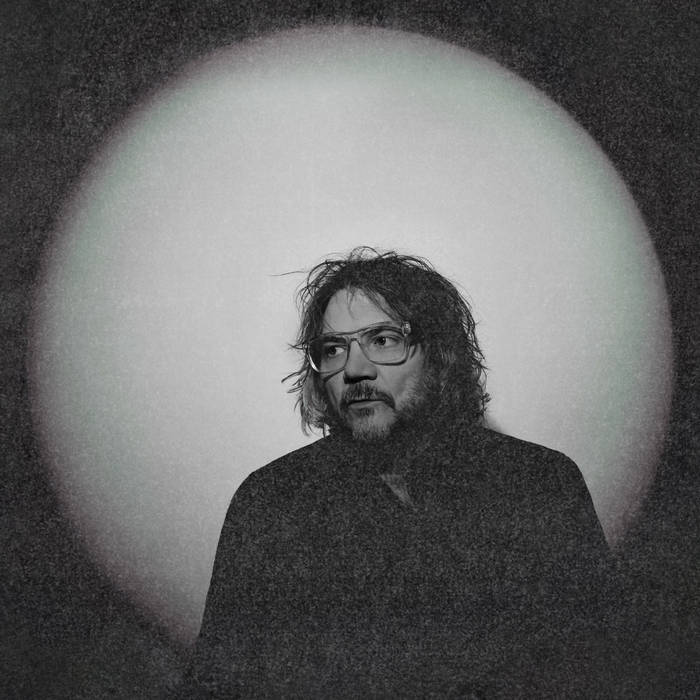
Jeff Tweedy is interviewed on the NYer Radio Hour as he releases a new triple album called Twilight Override.
Jeff Tweedy: I like going to work every day, and I like having a practice of writing and that tends to provide a lot of material. There was an inspiration to make a triple record. Just kind of like just to fly in the face of how short everything is getting, and how fast everybody wants everything to be. You don't have to listen to it in one sitting. I think the songs, hopefully, stand on their own, but I do like the idea of giving someone almost two hours to be pulled along by an outpouring of songs.
Amanda Petrusich: It feels almost like there's like a little bit of a punk rock. A thread of defiance through this, which is it is almost a sort of resistance to modern life or the way we consume culture now.
Jeff Tweedy: It's driven by a belief in individuated self-expression. That that's a really essential part of rock and roll, it's an essential part of art, in my opinion. It's a continuation of an art form to me, that is defiant. It grows out of a music that was formed around the inspiration and genius of probably the least free of our fellow citizens. I think that's what resonates to me still, is that it's like the best expression of what the dream of America, an American ideal, would be. The individualism, the liberty to be yourself, to think freely.
I don't know. It's not just America. The world pushes against that, I think. When you think about how the internet works, it really is like a conformity machine. It's really efficient with that.
Tweedy: The biggest concern with aging, to me, is obviously your body. Having your body stay in service of your desires. Just being more aware of our body's fallibility, something like that. If time is represented a lot on the record, which I think it is, in some ways I think I tried to organize the record as past, present, and future, with the three discs. It was certainly on my mind, but I don't know anybody that isn't like, kind of obsessed with time.
I have panic disorder. One of the things that comes with that is feeling like you're never going to be okay, and then you are. I've seen people facing circumstances much more harrowing than I'll probably ever face in my life, with a lot more resolve and fearlessness. I've been fortunate enough to work with Mavis Staples a lot in my life. Like, several records. She lives in Chicago. I always think about her history, the history of the movements she was a part of, her family history, and her joy that is not put on at all. It is so rebellious to me. Defiant. It's like, dance at them. Dance at the bastards.
[laughter]
Jeff Tweedy: I have a lyric on the record, and I was like, not to quote-- [chuckles] that's what we're here for.
Amanda Petrusich: Please. Yes, that's what we're here for.
Jeff Tweedy: I want to dance right into the light. Instead of seeing the light at the end of your life and thinking, "Oh, like--" I do want to be like, "Oh, yes, here we go. Let's--" [chuckles]
Amanda Petrusich: I love that.
Jeff Tweedy: I'm ready.
Amanda Petrusich: That's almost a response to that Dylan Thomas line, right? I think it's Dylan Thomas. The rage, rage against the dying of the light. To [crosstalk]-
Jeff Tweedy: Yes, for sure.
Amanda Petrusich: -instead. Yes, dance right in.
[laughter]
Jeff Tweedy: It's this way, guys.
[laughter]
Amanda Petrusich: I love that.
Jeff Tweedy: The conga line.
Amanda Petrusich: [laughs] Just going to limbo right on into the afterlife.

No comments:
Post a Comment