 |
Ted Gioia (My Twelve Favorite Problems creates his own set of "Twelve Problems" based on Richard Feynman's own list of Twelve Questions. Gioia's list is really interesting and inspiring. I immediately began creating my own list.
Most people look for solutions. But few seek out problems.
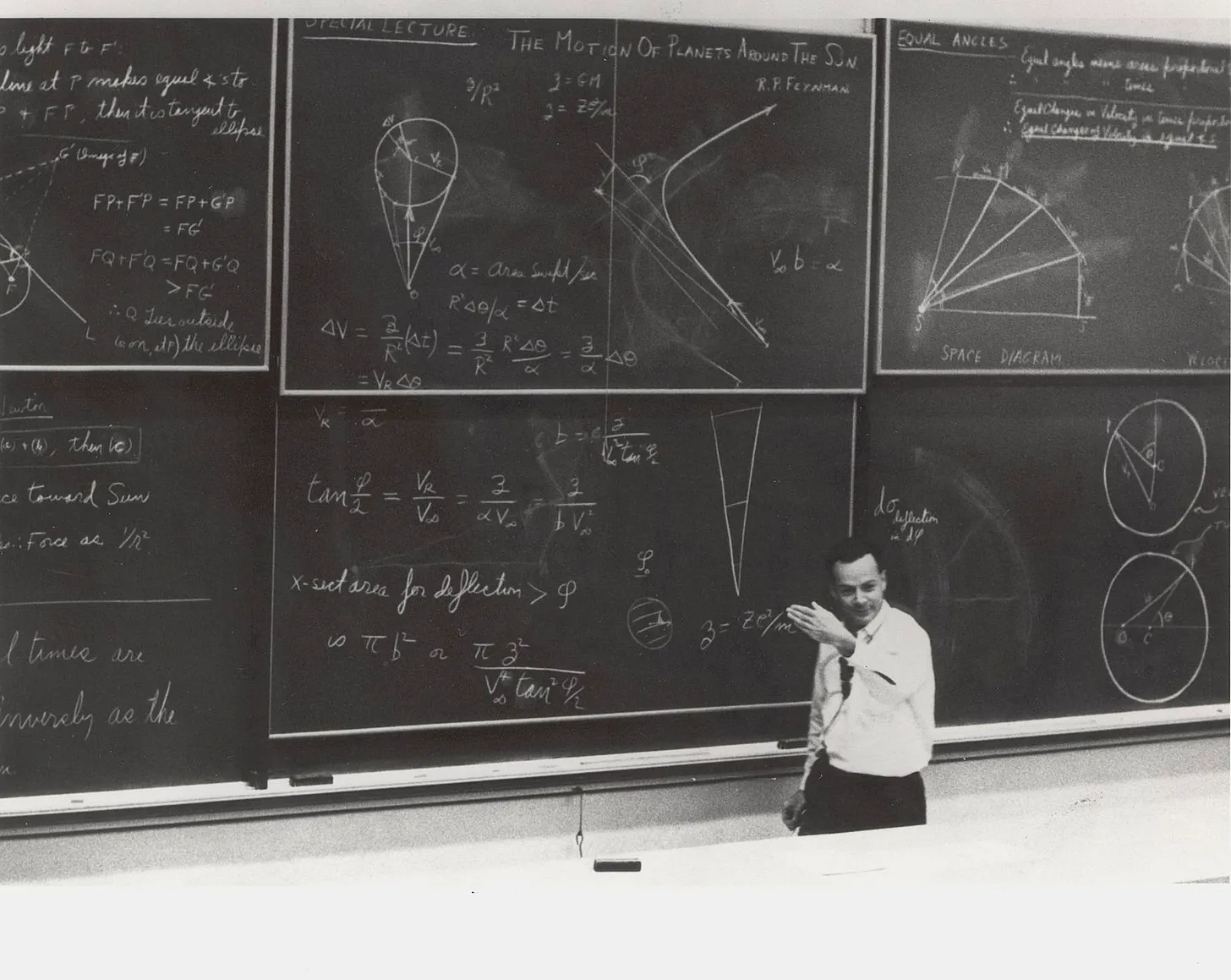
There are exceptions. Physicist Richard Feynman, for example, liked to keep a list of his dozen favorite problems. These were big open-ended questions that could guide his life’s work.
“Every time you hear a new trick or a new result, test it against each of your twelve problems to see whether it helps. Every once in a while there will be a hit, and people will say, ‘How did he do it? He must be a genius!.’”
Feynman realized that genius is not having all the answers. Everything starts with asking the right questions.
Gioia then lists his Twelve Favorite Problems
My 12 Favorite Problems
I will start with problems that I constantly ask myself as a scholar in music and the arts. But the scope will widen as we go down the list, and vocational concerns will overlap with personal matters.
(1) How can music change people’s lives?
When I started asking this question, it energized and revitalized how I pursue my vocation. I might even say it defined my vocation.
I began looking at what music does. And not just what it is.
It took a long time before I could even formulate it correctly in words. But once I managed to do that, it transformed everything. At least five books have resulted—and that only begins to measure the impact.
This question came to the forefront of my thinking around 1990, almost exactly the midpoint of my life to date. I was 33 years old, and that’a a good age for defining your mature work. From that moment on, songs weren’t just songs for me. They were change agents in human life and a source of enchantment.
After this shift in my thinking, I would do things I’d done many times before—attend a concert, talk to a musician, teach music students, etc.—and notice things I’d previously missed. My writing improved, even my decisions on what to write about got better. My efforts became more holistic, more distinctive, more efficacious, and more aligned with my core values—hence, more satisfying.
Here are others:
(2) How do I deal with situations when great art is created by flawed artists?
(3) How can creativity, intellectual vitality, and learning be maintained in the face of inescapable obstacles—such as earning a living, or aging, or financial hardship, or residing far from major cultural centers?
(4) How can we avoid cultural stagnation—especially given the obsession with remakes, reboots, spinoffs, and brand extensions of old works by the dominant corporations that control most of the creative economy?
(5) How do I avoid becoming a narrow specialist or a superficial generalist? Is there a third way? If so, how do I get there?
Philosopher Miguel de Unamuno once said that a smart person can either be a pedant or a dilettante. Both results are unfortunate—and there is no in-between.
That’s a sad dilemma. I don’t want to be either.
But I see the trade-offs all the time. Some smart people become specialists and know lots and lots about less and less—and this turns them into pedants and obscurantists. It’s almost impossible to avoid this in some settings (e.g., many tenure-track university jobs or research positions).
***
I’ve tried to find a third way. I do immersive deep dives into new subjects—reading 40 or 50 books in a particular area. Then I move on to a different field of inquiry, and do the same thing all over again. This allows me to achieve a degree of specialization in many areas, without getting lost in any of the rabbit holes.
(6) How can I protect or nurture local styles and perspectives in an increasingly globalized and homogenized culture?
(7) How can I operate honestly as a critic without absorbing all the negative psychic energy involved in criticism? How do I reconcile this vocation with my desire to act kindly and compassionately at all times?
(8) How can we find balance and cohesion in a culture where the supply of creative work (100,000 new songs are uploaded every day) outstrips audience demand, which is at best static and perhaps shrinking.
(9) Is criticism objective or subjective?
(10) How do I handle the divide between highbrow and lowbrow culture?
The bottom line here is this: I aim to praise excellence wherever I see it, and this means I have to operate comfortably both in the populist and elitist camps without giving full allegiance to either.
(11) How can I thrive while operating contrary to dominant social and cultural trends?
(12) How can I have a positive impact?

.jpg)
No comments:
Post a Comment