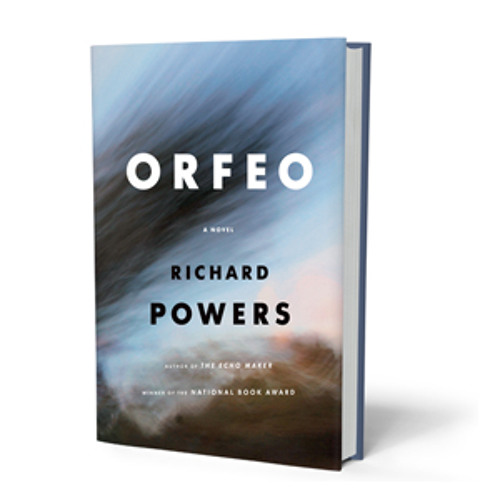
1. Music history. The novel contains extended sections on Olivier Messiaen's Quartet for the End of Time and Shostakovitch's Fifth Symphony, Gustav Mahler's Songs on the Death of Children, Steve Reich's Proverb, and shorter sections on Mozart's Jupiter Symphony. I loved it. It sent me back to relisten to the music. He assembled this discography.
2. I appreciated how much the main character observes: nature, music, snipets of conversation.
3. I like the format/structure of the narrative - it begins at the end, which sets Peters Els off on a cross-country escape. Then the journey is intertwined with flashbacks of his life, focusing on the relationships with his first serious girlfriend, this ex-wife, his daughter, and a choreographer/friend.
I've been reading a number of things about music. In Orfeo, the main character is interested in making the perfect song, in saying something that has never been said before, and making others' react. The fact that Els chooses to encode his song in DNA underlines his desire to make some for all time. In Write One Song, that I write about here and and here and here, Jeff Tweedy pushes back against the idea that it has to be original, and focuses more on the benefits of being creative each day.
Also, check out "Selected blog posts about Orfeo" on Powers' website.

No comments:
Post a Comment