Southern Wisconsin Bird Alliance website has a section on teaching outdoors.
Here are a couple great activities:
“These Three Things” Scavenger Hunt
Use a scavenger hunt as a way to spark interest in a new topic or as a way to quickly assess what you have been teaching. Tell students to find three things. Some examples include:
A bird flying, walking, and standing still
A bird will yellow on it, a bird with red on it, a bird with black on it
An animals’ home, sign of humans, sign of an animal
An animal track, a human footprint, a sign of an animal that is NOT a footprint
A living insect, a dead insect, sign of an insect
A mammal, a reptile/amphibian, a bird
A green leaf, a fall-colored leaf, a leaf skeleton
A bird nest, a squirrel nest, a hole in a tree that an animal might live in
Sit Spots
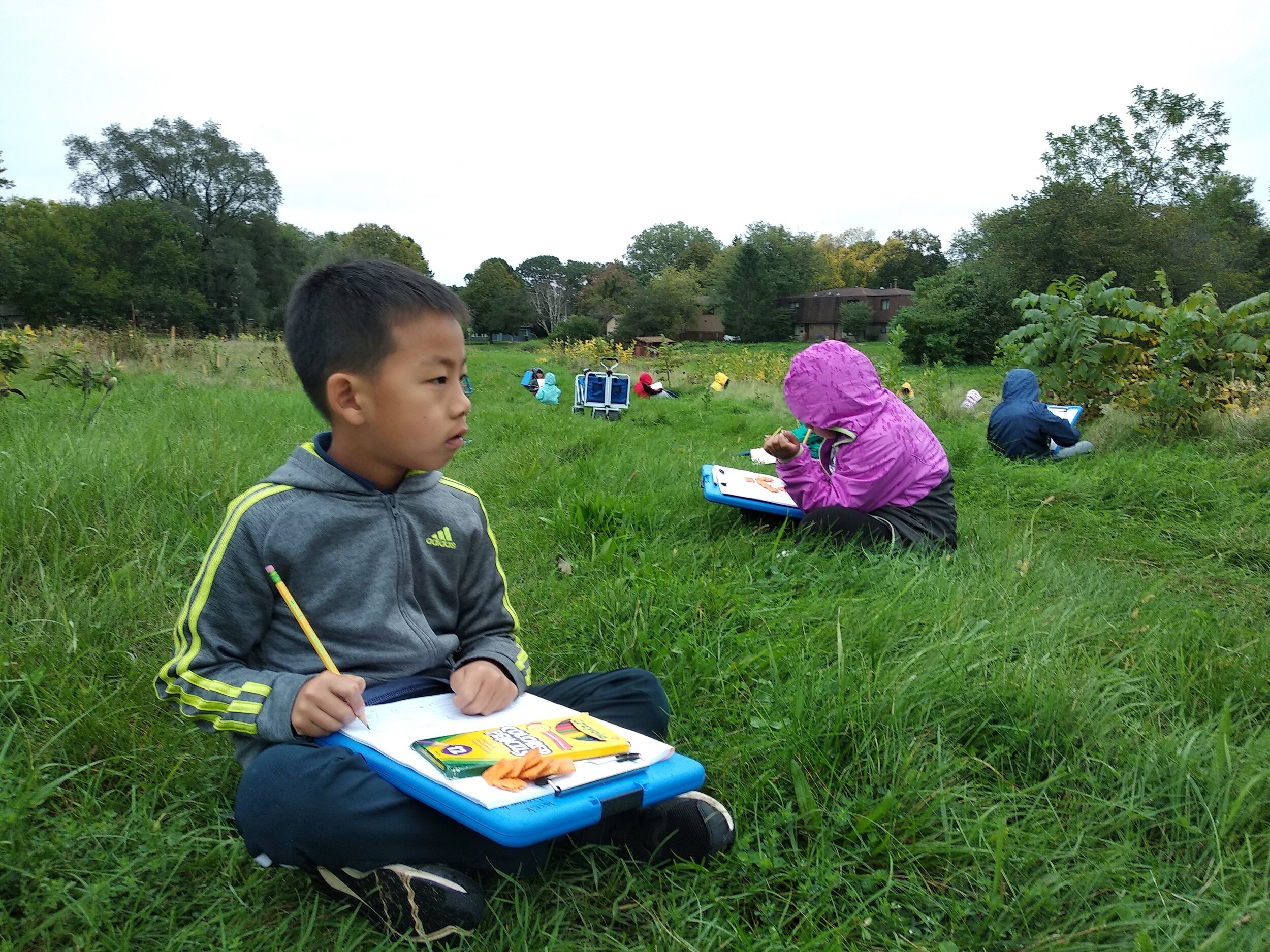
Sit spots are places where students have the opportunity to individually observe the world. Students return to the same sit spot multiple times in order to connect with their own little space. This activity can be done in any amount of time depending on the age of your students, the time of year, and the plan for the rest of the lesson. It provides ample opportunity for students to really get to know one place. They will see their place change over the course a year in small snippets. As an educator, you can lead a guided sensory inventory (going through what students see, hear, smell, touch, etc), or let students structure the time in their own way. Sit spots can pair with nature journaling if you want students to document what they are noticing about their little space.
Circles
Gathering in a circle as a class can be a great way to start or end a lesson as it brings the group together and gives each student a place to be. Here are a couple of ideas for circle activities that can be used in many different formats.
In a weather check-in circle, students will observe what the weather is doing on a particular day (ie. what the sky looks like, what the clouds are doing, how windy it is, what the temperature is). This is a space to introduce vocabulary and practice concepts that you might be learning about. Take this circle check-in and expand it to fit your lessons; maybe you will have a circle check-in about the science, literacy, or math concepts that you have been working on in a particular lesson.
Gratitude circles are another kind of circle activity. Each student has the opportunity to share something meaningful. These circles can help students draw on prior knowledge they may have about a lesson, or show what they have learned. Some groups like to have everyone sitting, others standing. Some hold hands, or did, pre-Covid. You could have kids go around the circle as they share, or raise their hands to volunteer. Some teachers ask kids to share something specifically about nature or outdoor learning that they’re grateful for, others don’t place restrictions on the gratitude.
8 Minute Notes
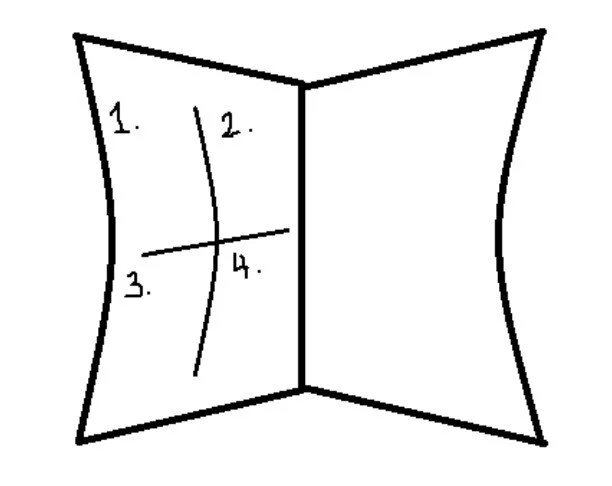
8-minute notes is a way to guide observation and journaling. Have students divide a nature journal or notebook page into four parts with a large plus sign. See the example on the right.
Students will have two minutes to work in each quadrant. You can personalize what you would like students to work on for those two minutes. Examples include writing what they observed, drawing a picture, analyzing a change, or spending time documenting what they are feeling with four different senses.

No comments:
Post a Comment