Outside magazine - you want to live longer; you'd better move (all day long)
The goal of self-measurement is to scrutinize which factors truly predict longevity, so that you can try to change them before it’s too late. A new study from biostatisticians at the University of Colorado, Johns Hopkins University, and several other institutions crunched data from the long-running National Health and Nutrition Examination Survey (NHANES), comparing the predictive power of 15 potential longevity markers. The winner—a better predictor than having diabetes or heart disease, receiving a cancer diagnosis, or even how old you are—was the amount of physical activity you perform in a typical day, as measured by a wrist tracker. Forget pee speed. The message to remember is: move or die.
The study zeroed in on 3,600 subjects between the ages of 50 and 80, and tracked them to see who died in the years following their baseline measurements. In addition to physical activity, the subjects were assessed for 14 of the best-known traditional risk factors for mortality: basic demographic information (age, gender, body mass index, race or ethnicity, educational level), lifestyle habits (alcohol consumption, smoking), preexisting medical conditions (diabetes, heart disease, congestive heart failure, stroke, cancer, mobility problems), and self-reported overall health. The best predictors for how to live longer? Physical activity, followed by age, mobility problems, self-assessed health, diabetes, and smoking. Take a moment to let that sink in: how much and how vigorously you move are more important than how old you are as a predictor of the years you’ve got left.
in related article that's linked:
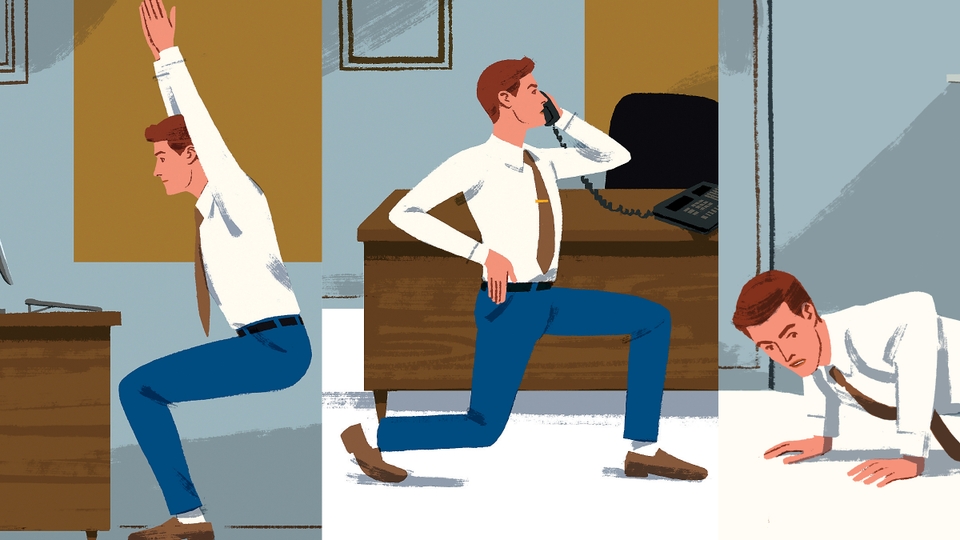
The solution to sitting isn’t to stand, though it helps. In fact, according to the findings of a 2015 consensus panel on the topic, we need to be on our feet two to four hours while at work. But the real solution is to move. All day. The stillness is what’s killing us. We should be pacing the hallways and climbing stairs and squatting and lunging and stretching.
Now that requires a radical change, one exponentially more difficult than putting your desk on stilts. But aiming for more movement might also be the most important habit you adopt from an issue of Outside packed with 72 pages of fitness advice. This is especially true if, like me, you exercise vigorously each day and therefore consider yourself healthy. Researchers have shattered that idea. I might run for an hour every weekday morning, but studies show that if I then go to work and sit at my desk for epic stretches, which I do, I am no more immune to the side effects of sedentary living than the prototypical couch potato.

No comments:
Post a Comment