 |
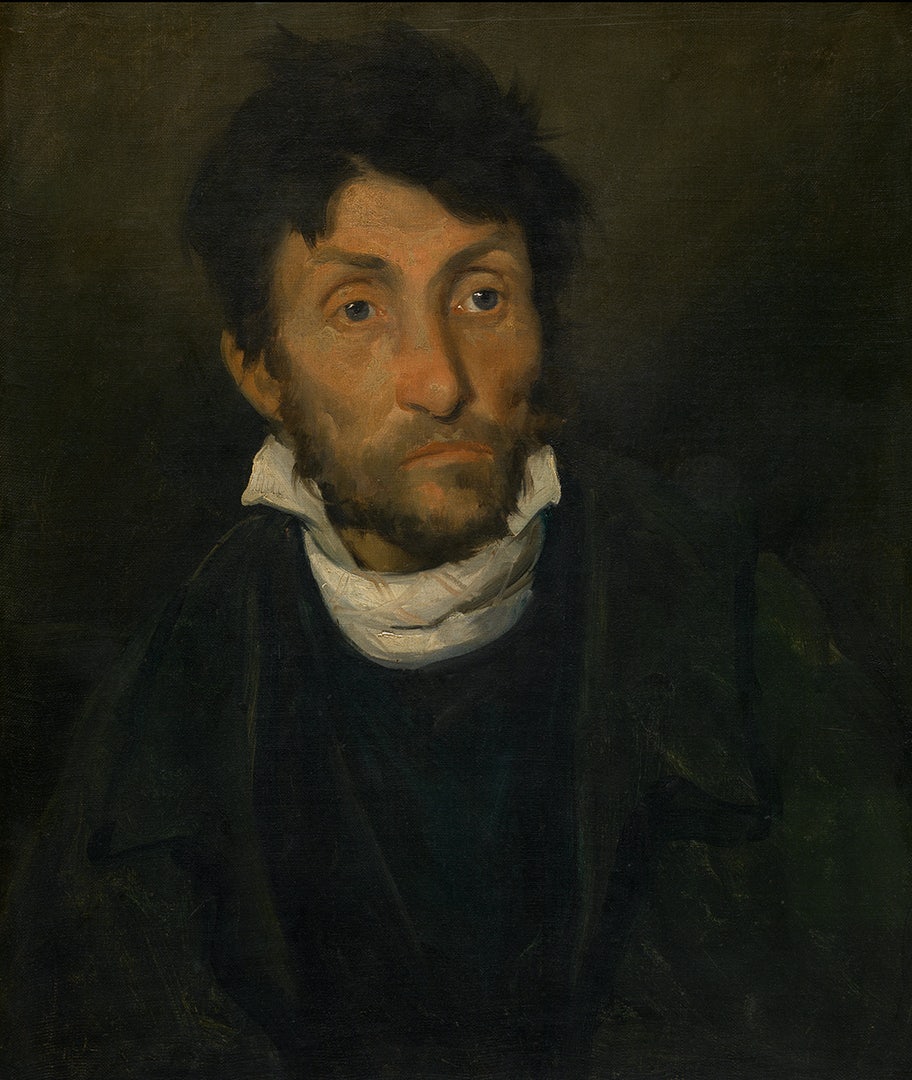
| Théodore Géricault, Portrait of a Kleptomaniac, 1822, oil on canvas, (Museum of Fine Arts, Ghent, Belgium) |
In The Shape of a Pocket, John Berger writes about "madness" in the paintings of a a French artist, Théodore Géricault, who painted portraits from the insane asylum, then connects a form of madness to our current society.
Anyone who has been beside a friend beginning to fall into madness will recognise this sense of being forced to become an audience. What one sees at first on the stage is a man or a woman, alone, and beside them -- like a phantom -- the inadequacy of all given explanations to explain the everyday pain being suffered. Then he or she approaches the phantom and confronts the terrible space existing between spoken words and what they are meant to mean. In fact this space, this vacuum, is the pain. And finally, because like nature it abhors a vacuum, madness rushes in and fills the space...
Then comes this quotation which I saw on Twitter that originally attracted me to the book.
Between the experience of living a normal life at this moment on the planet and the public narratives being offered to give a sense to that life, the empty space, the gap, is enormous. The desolation lies there, not in the facts. This is why a third of the French population are ready to listen to Le Pen. The story he tells -- evil as it is -- seems closer to what is happening in the streets. Differently, this is also why people dream of 'virtual reality' - Anything -- from demagogy to manufactured onanistic dreams -- anything, anything, to close the gap! In such gaps people get lost, and in such gaps people go mad.
Berger is saying, I think, that the public narratives do not account for people today. The fact that the public narratives are so unbelievable make people drift towards demagogs... or escape through computer reality.
I'm fascinated by the phrase "the public narratives" that do not give "a sense to that life." People are adrift, without "a sense" or meaning.
Today the promises [of politics, which provides stories where today's pain is real, but makes sense because "the amount of suffering in the world was being and would be reduced" and where "Any pain witnessed, shared or suffered remained of course pain, but could be partly transcended by being felt as a spur towards making greater efforts for a future where that pain would not exist.") have become barren. To connect this barrenness solely with the defeat of communism is short-sighted. More far-reaching are the ongoing processes by which commodities have replaced the future as a vehicle of hope A hope which inevitably proves barren for its clients, and which, by an inexorable economic logic, excludes the global majority.
Where once, "during these two tragic centuries, even tragedy was thought of as carrying a promise," there is now emptiness.

No comments:
Post a Comment