 |
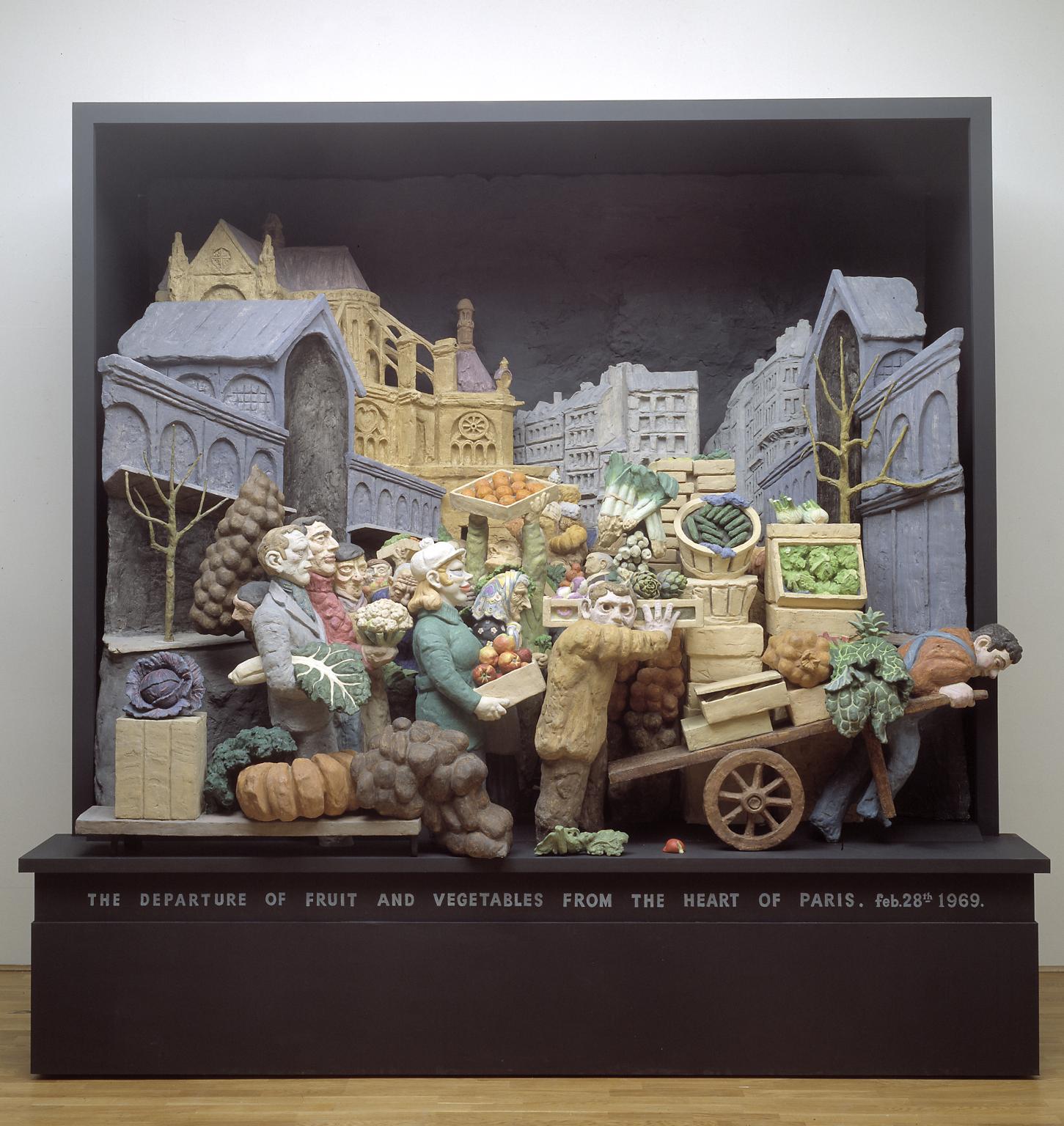
| Raymond Mason, The Departure of Fruits and Vegetables from the Heart of Paris. (Tate) |
John Berger, in The Shape of a Pocket, writes about British/French sculptor Raymond Mason.
To be faithful as a sculptor to the proletariat is not as simple as it may sound, and not as simple as certain idiots and bigots once insisted. First, observation and love are necessary. Oddly, love is the best guarantee against idealisation. Then observation and observation, drawing upon drawing. One has to become familiar with every physical characteristic -- the way bodies develop, the different ways clothes are worn, the whole vocabulary of gestures.
At the end of the piece, Berger writes that the sculpture, which in an altarpiece at St. Eustace in Paris, valorizes the working people:
here they have a chapel to themselves and have been made sacred!.... Made sacred not by the company of the surrounding saints, nor by the buried generals in their sarcophagi, but by the tenderness of an artist who remembered them with love, and re-created them indefatigably.
Art, for Berger, is an act of love, cherishing, memorializing, and close and tireless observation.
--
The Tate Galleries says this about the work:
The Departure of Fruit and Vegetables from the Heart of Paris, 28 February 1969 is a large layered narrative sculpture that resembles an altarpiece. It depicts a procession of trades people leaving Les Halles for the last time. The highly individualised figures verge on caricature. They carry a luxuriant abundance of fruit and vegetables, as if they were religious offerings. The scene has the air of a colourful, chaotic pageant, but also suggests a funeral cortège, with mourners being led out of the tableau and into the gallery space by a man pulling a cart laden with produce. The scene takes place at night under the bright glare of electric light and is witnessed by the towering form of St. Eustace, the church in whose shadow the market had been held for hundreds of years.
Mason worked on the sculpture between 1969 and 1971. He rented a studio in the area and started by making numerous pen and ink drawings and watercolour studies of the market.

No comments:
Post a Comment