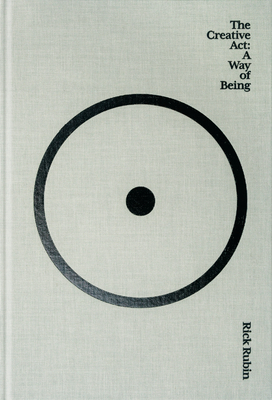
The Creative Act: A Way of Being by Rick Rubin
31. By conventional definition, the purpose of art is to create physical and digital artifacts. To fill shelves with pottery, books, and records. Though artists generally aren't aware of it, that end work is a by-product of a greater desire. We aren't creating to produce or sell material products. The act of creation is an attempt to enter a mysteirous realm. A longing to transcend.
37 Look for Clues. Material for our work surrounds us at every turn. It's woven into convesation, nature, chance encounters, and existing works of art. ... We receive these types of messages all the time, if we remain open to them. We might read a booka nd find a quote leapig off the page, or watch a movie and notice a line that moves us to pause and rewind. ... The transmissions are subtle: they are ever-present, but they're easy to miss. If we aren't looking for clues, they'll pas by without us ever knowing. Notice connections and consider where they lead. ... When something out of the ordinary happens, ask yourself why. What's the message? What could be the greater meaning?
37 You might imagine that the outside world is a conveyor belt with a stream of small packages on it, always going by. The first step is notice the conveyor belt is there. And then, any time you want, you can pick up one of those packages, unwrap it, and see what's inside.
41 Look for what you notice/but no one else sees.
47 Living life as an artist is a practice. You are either engaging in the practice/ or you're not//It makes no sense to say you're not good at it./It's like saying, "I'm no good at being a monk."/You are either living as a monk or you're not.//We tend to think of the artist's work as the output.//The real work of the artist/is a way of being in the world.
49 Submerge (The Great Works). Broadening our practice of awareness is a choice we can make at any moment. It is not a search, though it is stoked by a curiosity or hunger. A hunger to see beautiful things, hear beautiful sounds, feel deeper sensations. To learn, and to be fascinated and surprised on a continual basis. In service of this robust instinct, consider submerging yourself in the canon of great works. Read the finest literature...
50 If you make the choice of reading classic literature every day for a year, rather than reading the news, by the end of that time period you'll have a more honed sensitivity for recognizing greatness from the books than from the media.
This applies to every choice we make. Not just with art, but with the friends we choose, the conversations we have, even the thoughs we reflect on. All of these aspects affect our ability to distinguish good from very good, very good from great. They help us determine what's worthy of our time and attention.
Because there's an endless amount of data available to us and we have a limited bandwidth to conserve, we might consider carefully curating the quality of what we allow in....
The objective is not to learn to mimic greatness, but to calibrate our internal meter for greatness. So we can better make the housands of choices that might ultimately lead to our own great work.
77 Make it up. (overcoming self-doubt). We tend to think that what we're making is the most important thing in our lives adn that it's going to define us for all eternity. Consider moving forward with the more accurate point of view that it's a small work, a beginning. The mission is to complete the project so you can move on to the next. The next one is a stepping-stone to the following work. And os it continues i productive rhythm for the entirely of your creative life. All art is a work in progress. It's helpful to see the piece we're working on as an experiment. One in whcih we cn'at predict the outcome. Whatever the result, we weill receive useful information that will benefit the next experiment.
98 Rules direct us to average behavior. If we're aiming to create works that are exceptional, most rules don't apply. Average is nothing to aspire to The goal is not to fit in. If anything, it's to amplify the differences, what doesn't fit, the special characteristics unique to how you see the work... The reason to make art is to innovate and self-express, show somehting new, share what's inside, and communicate your singular perspective.
111 (Listening) Communication moves in two directions, even when one person speaks and anotehr listens silently. When the listener is totally present, the spekaer often communicates differently. Most people aren't sued to being fully heard, and it can be jarring for them. Sometimes we block the flow of information being offered and compromise true listening. Our critical mind may kick in, takin note of what we agree with and what we don't, or what we like and dislike. We may look for reason to distrust the speaker or make them wrong. Formulating an opinion is not listening. Neither is preparing a response, or defending our position or attacking another's. To listen impatiently is to hear nothing at all. Listening is suspending disbelief. We are openly receiving. Paying attention with no preconceived ideas. The only goal is to fully and clearly understand what is being transmitted, remaining totally present with what's being expressed -- and allowing it to be what it is. Anything less is not only a disservice to the speaker, but also to yourself. While creating and defending a story in your own head, you miss information that might alter or evolve your current thoughts. Listening without prejudice is how we grow and learn as people. More often than not, there are no right answers, just differet perspectives. The more perspectives we can learn to see, the greater our understanding becomes. Our filter can begin to more accurately approach what truly is, rather than a narrow sliver interpreted through our bias.
113 Patience. We often take shortcuts without knowing it. When listening, we tend to skip forward and generalize the speaker's overall message. We miss the subtleties of the point, if not the entire premise. In addition to the assumption that we are saving time, this shortcut also avoids the discomfort of challenging our prevailing stories. And our worldview continues to shrink.
The artist actively works to experience life slowly, and then to re-expereince the same thing anew. To read slowly, and to read and read again. ... Re-reading even a well-understood paragraph or page can be revelatory. New meanings, deeper understandings, inspirations, and nuances arise and come into focus.
Reading, in addition to listening, eating, and most physical activities, can be experienced like driving: we can participate either on autopilot or with focused intention. So often we sleepwalk through our lives. Consider how different your experience of the world might be if you engaged in every activity with the attention you might give to landing a plane.
There are those who approach the opportunities of each day like crossing items off a to-do list instead of truly engaging and participating with all of themselves. Our continued quest for efficiency discourages looking too deeply. The pressure to deliver doesn't grant us time to consider all possibilities. Yet it's through deliberate action and repetition that we gain deeper insight.
130 (Inspiration) These are special moments and are to be treated with the utmost devotion. Our schedules are set aside when these fleeting moments of illumination come. Summon your strength and commit yourself on behalf o fthis offering, even when it arises at an inopportune time. This is the serious artist's obligation. John Lennon once advised that if you start a song, write tit through to the end in that sitting. The inital inspiration has a vitality in it that can carry you through th ewhole piece. Don't be concerned if some of the parts are not yet all they can be. Get through a rough draft. A full, imperfect version is generally more helpful than a seemingly perfect fragment. When an idea forms, or a hook is written, we may feel that we've cracked the code and the rest will take care of itself. If we step away and let that inital spark fade, we may return to find it's not so easy to rekindle. Think of inspiration as a force not immune to the laws of entropy.
135. Good habits create good art. The way we do anything is the way we do everything. Treat each chocie yo make, each action you take, each word you speak with skillful care. ... Managing your schedule and daily habits well is a necessary compoentnet to free up the practical and creative capacity to make great art.
149. Experimentation. We have collected a handful of seeds -- of starting points and potentialities. We now enter the second stage, the Experimentation phase. Fueled by the initial hit of excitement at discovering a starting point, we play with different combinations and possibilities to see if any of them reveal how the see wants to develop. Think of this as a search for life. We're looking to see if we can get the seeds to take root and sprout a stem.
195. Releasing a work into the world become seasier when we remember that each piece can never be a total reflection of us, only a reflection of who were are in this moment. If we wait, it's no onger today's reflection. In a year, we may be guided to create a piece that looks nothing like it. There is a timeliness to the work. The passing of seasons could dissipate the value the work holds for us. Hanging on to your work is like spending years writing the same entry in a diary. Moments and opportunities are lost. The next works are robbed of being brought to life. How many pages will be left empty because your process was dampened by doubt and deliberation? Keep this question in the front of your mind. It might allow you to move forward more freely. In an environment where nothing is permanent, we produce static artifacts. Mementos of spirit. We hope they'll live foreer, holding resonance through each passing decade. Some might, many won't. It's impossible to know. We can only keep building. Each new project is another opportunity to communicate what's coming through you. It's another chance at bat. Anotehr opportunity to connect. Another page filled in the diary of your inner life.
206 Experimenters might benefit from taking an aspect of the work through to completion. It might be a drawing, a song or the chapter of a book. Even making one foundational decision from whihc to build can help. Take the example of an album. If you're a musician struggling with ten songs, narrow your focus to two. When we make the task more manageable, and focused, a change occurs. And completing even a small segment builds confidence... Complete as many elements of the project as you can without getting hung up. It's much easier to circle back once the workload is reduced. Often the knowledge we gain from finishing the other pieces becomes a key to overcoming earlier obstacles.
209 Director Lars von Trier - set of rules - Dogme 95 The Vow of Chastity.... keyboardist Money Mark made similar set of rules to reord one of his most highly regarded albums...
255 - (work to free yourself from inner voices of criticism) If any distractions come along during that period, don't ignore them or focus on them. Don't give them any energy at all. Let them pass, like clouds parting around a mountain. Regularly engagin in this practice builds the muscle of focused intention, which you can use in everything you do. Eventually, tuning out the undermining voices and losing yourself in the work will not be an effort of will, but an earned ability.
257 Self-Awareness. The system is not here for our benefit. It holds us back as individuals to support its own continued existence. This is particulalry undermining to independent thinking and free expression. As artists, our ission is not to fit in or conform to popular thinking. Our purpose is to value and develop our understanding of ourselves and the world around us. To be self-aware is to have the ability to tune in to what we think, how we feel, and how much we feel it without interference. To notice how we notice the outside world. ... Self-awareness allows us to listent o what's goin on in the body, and notice the energetic changes that either pull us forward or push us away. Sometimes they are subtle, other times intense. ... We are seeking not to define ourselve, but to espand ourselves, to to in to our limitlessness nature and connection to all that is.
261 It's helpful to work as if the project you're engaged in is bigger than you.
265 What if the source of creativity is alway there, knocking patiently on the doors of our perception, waiting for us to unbolt the locks?
271 Sometimes words (of inspiration) seem to arise from the outside, and other times, the inside. Whatever route the information arrives through, we allow it to come by grace, not effort. The whisper cannot be wrestled into existence, only welcomed with an open state of mind.
278 You work not as an evangelist, expecting miracles, but as a scientist, testing and adjusting and testing again. Experimenting and building on the results. Faith is rewarded, perhaps even more than talent or ability.
279 In the process of experimentation, we allow ourselves to make mistakes, to go too far, to go even further, to be inept. There is no failure, as eery step we take is necessary to reah our destination, including the missteps. Each experiment is valuable in its own way if we learn something from it. Even if we can't comprehend its worth, we are still practicing our craft, moving ever so much closer to mastery.
293 Do what you can with what you have. Nothing more is needed.
296 [Staying in it] Staying in it means a commitment to remain open to what's around you. Paying attention and listning. Looking for connections and relationships in the outside world. Searching for beauty. Seeking stories. Noticing what you find interesing, what makes you lean forward. And knowing all of this is available to use next time you sit down to work, weher the raw data gets put into form. There is no telling where that next great story, painting, recipe, or business idea is going to come from. Just as a surfer can't control the waves, artists are at the mercy of the creative rhythms of nature. This is why it's of such great importance to remain aware and present at all times. Watching and waiting.
297 Maybe the best idea is the one you're going to come up with this evening.

No comments:
Post a Comment