 |
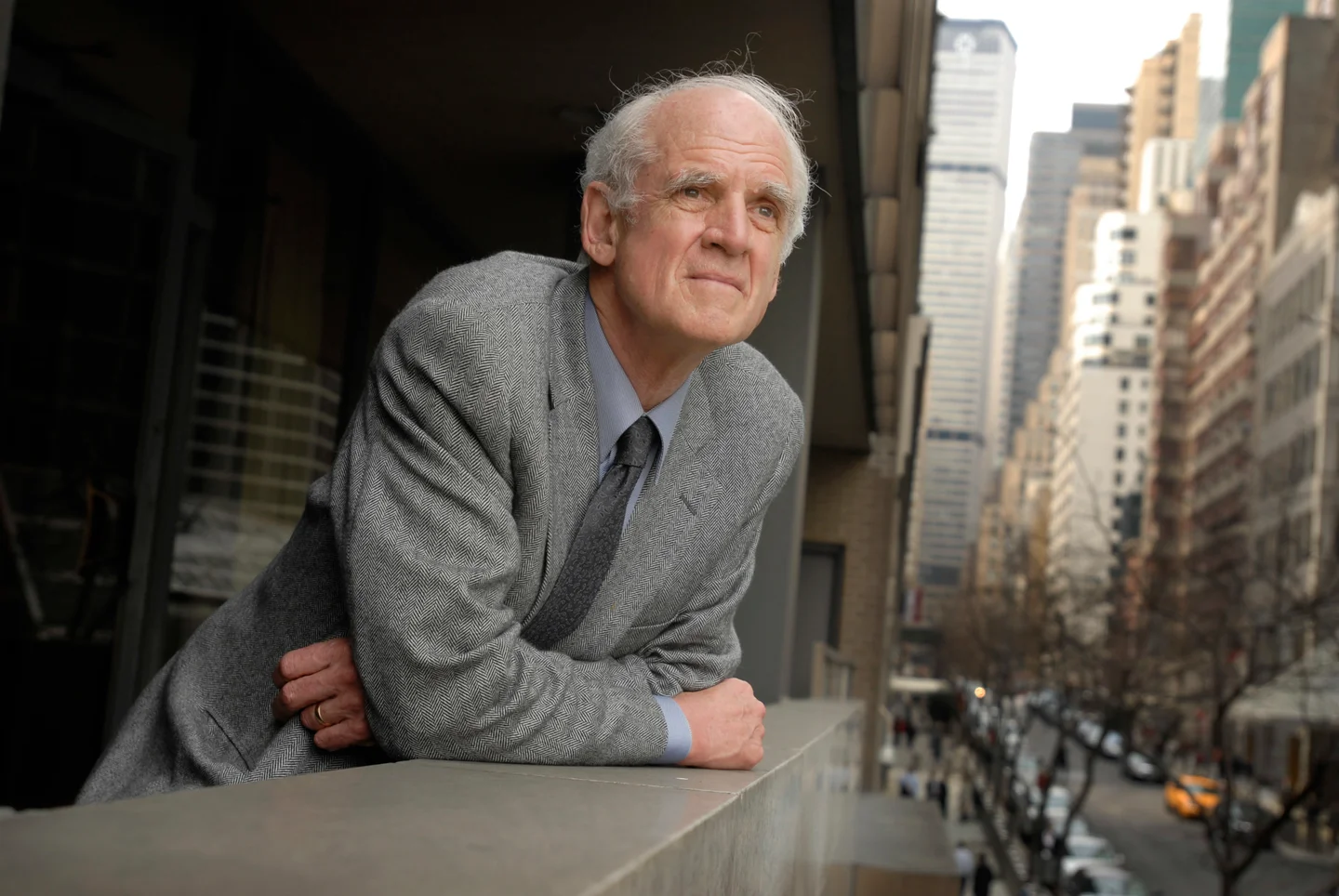
| credit: Neville Elder |
From NYer "How the Philosopher Charles Taylor Would Heal the Ills of Modernity"
In Adam Gopnik's review of the book, “Cosmic Connections: Poetry in the Age of Disenchantment” (Belknap)
As a social and political theorist, Taylor emphasized the primacy of shared experience—the idea that identity resides within communities rather than inside brains—without succumbing to nostalgia for some lost organic society. What matters most in life to actual people, he has argued, is not the standard liberal question “Who am I?” but the richer humanist question “Where am I going?” In expansive volumes such as “Sources of the Self” and “A Secular Age
,” he has stalked, like a soft-footed cat, a “naturalist” view of humanity which assimilates our minds and morals to a purely materialist and empirical program of study. We are not atoms in a mindless universe, he argues, but agents in a metaphysically alert one, embodied and embedded in meanings we jointly create. Art is not an accessory to pleasure but the means of our connection to the cosmos.
--
We once lived in an “enchanted” universe of agreed-upon meaning and common purpose, where we looked at the night sky and felt that each object was shaped with significance by a God-given order. Now we live in the modern world the Enlightenment produced—one of fragmented belief and broken purposes, where no God superintends the cosmos, common agreement on meaning is no longer possible, and all you can do with the moon is measure it. “I admire the moon as a moon, just a moon,” Lorenz Hart sighed, with memorable modernity, adding, significantly, “Nobody’s heart belongs to me today.” Enlightened, we are alone.
---
Romantic poetry—the poetry of Shelley and Keats, in English, of Novalis and Hölderlin, in German—first diagnosed this fracture (the argument goes) and offered a way to heal it. Where neoclassical poets like Alexander Pope appealed to an ordered world, with clear meanings and a hierarchy of kinds, the Romantics recognized that this was no longer credible. The enchanted world had been replaced by the modern world. We could hardly go back toward ignorance—Goethe
, one of Taylor’s heroes, participated in the modern world as a scientist—but we had to find a way to reënchant it. The best way to heal the wound is through poetry and music, of the sort that doesn’t offer propositions but casts spells and enacts rituals. The arts are not subsidiary places of secondary sensations but the primary place where we go to recall feelings of wholeness, of harmony not just with “Nature”—the craggy peaks the Romantics loved and the Italian lakes they lingered by—but with existence itself. Poetry and music do this by escaping the constraints of intellect, by going at things atmospherically rather than argumentatively. They convey a sublime atmosphere of sound, ineffable intimations of immortality, and so the apprehension of a “cosmic connection.”
-
Taylor reproduces lines from Wordsworth’s “Tintern Abbey” (“And the round ocean and the living air, / And the blue sky, and in the mind of man; / A motion and a spirit, that impels / All thinking things, all objects of thought”) and tells us, “To let oneself be carried by this passage is to experience a strong sense of connection, far from clearly defined . . . but deeply felt; a connection not static, but which flows through us and our world.” Keats’s “Ode to a Nightingale” is similarly effervescent in diction, similarly ethereal in effect. The lines “O for a beaker full of the warm South, / Full of the true, the blushful Hippocrene, / With beaded bubbles winking at the brim, / And purple-stained mouth” cast a spell as much as they describe a feeling. Taylor writes, “The rhythmic flow between the features as recounted in the poem somehow encounters, meets, connects up with the flow between the features as we live it.” Classical art, he argues, moves us by convincing us; Romantic art convinces us by moving us.
-
Art isn’t absolute, but it isn’t at all arbitrary. Taylor escapes from the divide between subjectivity and objectivity through a concept he calls the “interspace”—not the inner space where I perceive and enjoy but some resonant atmosphere that exists between me and the world. The sound of the cello in a Schubert trio isn’t entirely in the cello, where the sound begins, or entirely between my listening ears, where the experience of structured sound as music happens, but somewhere between the two, where the creation of meaning takes place. The interspace is the phenomenal field of the arts. When we listen to sublime music, then, our experience is not of pleasure but of an overwhelming feeling of encountering and exploring some truth. The music sculpts us, we sculpt the music, and to reduce this to mood misses the cosmic connection that the experience proposes and, quite often, provides.

No comments:
Post a Comment