 |
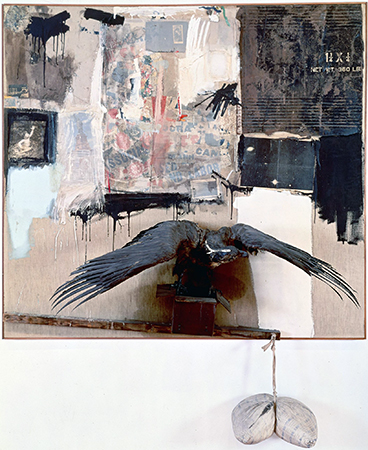
| Robert Rauschenberg, Canyon, 1959, oil, pencil, paper, metal, photograph, fabric, wood, canvas, buttons, mirror, taxidermied eagle, cardboard, pillow, paint tube and other materials, 207.6 x 177.8 x 61 cm (The Museum of Modern Art) © 2014 Robert Rauschenberg Foundation |
From Rob Walker
nb.... Rauschenberg called these collage sculptures: combines
a point or two about Robert Rauschenberg.
For a time, relatively early in his career, Rauschenberg made a practice of walking a square block around his studio, collecting stuff other people had thrown out, then making a collage/sculpture out of whatever he’d gathered. This depended on an ability to spot a kind of value that others had overlooked — to see that value, as he once put it, in “something so obvious that you didn’t think about it.”
In other words, creative attention (perhaps paradoxically) can involve not just noticing the strange and obscure, but really noticing what’s right in front of you, and seemingly familiar.
I say something like this to my students every year as I try to get them to trust their own point of view about what’s important, and not. And I was reminded of this when reading this recent Hilton Als essay on Rauschenberg:
“To really see what Rauschenberg was doing, one should take a page from the legendary historian Robert Farris Thompson’s books. In his 1983 study, Flash of the Spirit, he describes how, in Yoruba culture, people made art with whatever material was at hand; it was their hands—and their hearts—that imbued their creations with spirit. Thompson saw that spirit in Black American art as well. For Rauschenberg, who once carved a Roman palace in a bar of Ivory soap, it was life that was always at hand.”

No comments:
Post a Comment