Blake Gopnik piece in the NYT on a new Marcel Duchamp show at Moma.
I THINK DUCHAMP GOT AT SOMETHING vital about Western culture over the previous 400 years: that an object didn’t count as “art” because of its beauty, its subject matter or its greatness, but because of how it asked us to use it. When functioning as art, an object asks its viewers to “look harder, look longer, ask questions, interrogate, try to make something of it,” in the words of Alva Noë, a philosopher at the University of California, Berkeley.
And thanks to Duchamp, that was the model that ruled at the alphabetical Independent. The one thing that unites its mess of creations grouped under “C” — images of two nymphs gamboling, by a certain Blendon Campbell; of a proud Blackfoot man by Elizabeth Curtis; of Duchamp’s profile, traced in wire, by Jean Crotti — is that, as art, all of them make us wonder, then re-wonder, just what we ought to do with them.
Duchamp helps us understand that “art” shouldn’t be thought of as a noun that picks out certain kinds of objects, but as a verb: We “art” absolutely any object at all by using it to trigger thoughts and conversation.
* * *
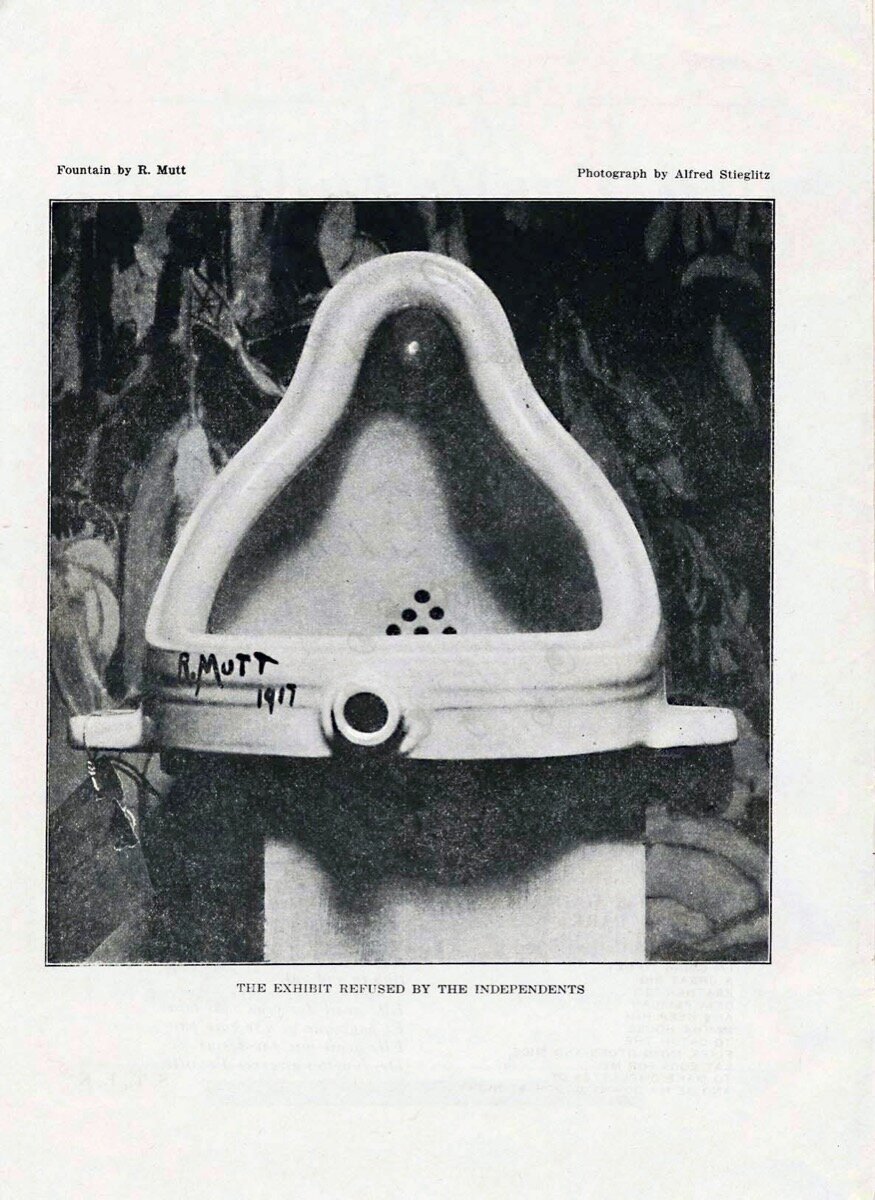
In recordings published for the first time with the MoMA show, Duchamp said he had never wanted “Fountain” to read as some kind of “revolutionary gesture.” I’d say that “Fountain,” as the capstone to Duchamp’s entire installation of the Independent, celebrates a centuries-old tradition that has got us using anything at all — a marital portrait, a prayerful “Saint Francis,” even in the end a urinal — to spark art’s signature conversations.

No comments:
Post a Comment