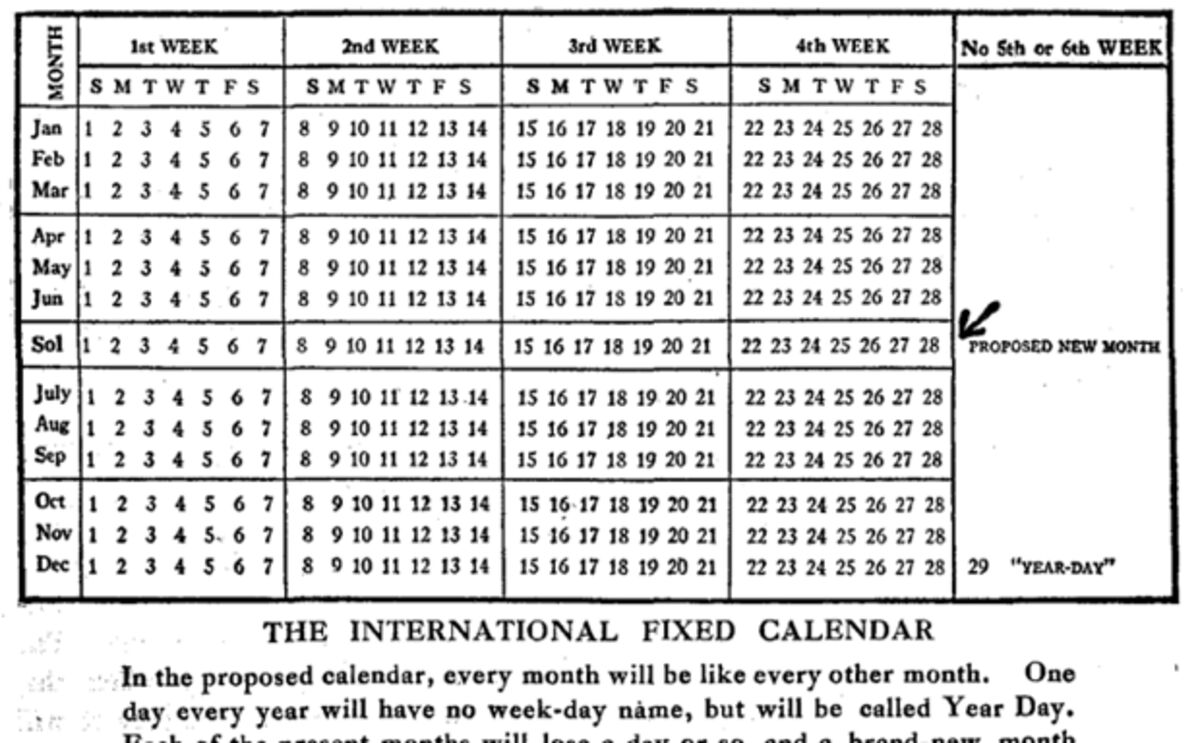
In the fall, after reading Waiting for the Weekend, I posted several things about different ways to think about seasons and calendars. I have been recording "Middle Seasons" of nature since. Bloomberg posted this article about the "International Fixed Calendar."
Momentum behind the International Fixed Calendar, a 13-month calendar with 28 days in each month and a leftover day at the end of each year (it also followed the Gregorian rules with regards to Leap Years), was never stronger than in the late 1920s. Similar to Auguste Comte's positivist calendar (created in 1849), this particular 13-month invention came from the mind of Moses Cotsworth, a North Eastern Railway advisor bothered by inexplicably varying monthly earnings over the traditional 12-month period. Cotsworth's plan quickly gained popularity among businessmen, especially in transportation and logistics. His biggest ally however, was photography pioneer and Kodak founder, George Eastman.
I was surprised to read that the League of Nations had taken on the goal of creating a new international calendar.
By 1929, after Eastman had taken the torch for the calendar, a League of Nations special committee had narrowed down a field of 156 calendar proposals down to two, including Eastman's. With a decision still not made upon Eastman's suicide, the IFCL soon folded. The issue of developing a new calendar became less important as political tensions in Europe grew and eventually led to World War II. The League of Nations folded in 1946.Add image of the "current" calendar from the article here.

No comments:
Post a Comment