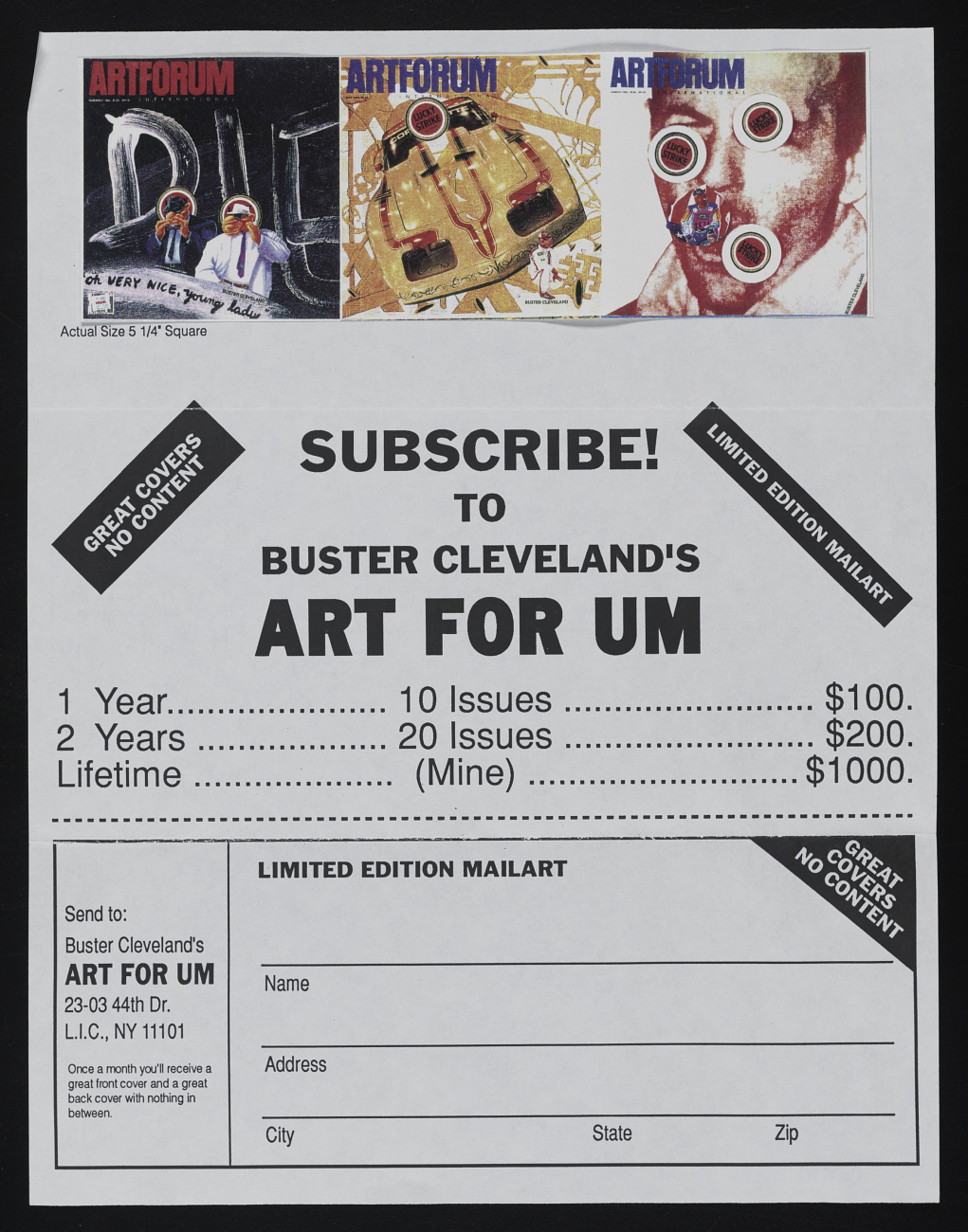
The Smithsonian has an exhibition "Pushing the Envelope" about "Mail Art," a genre that emerged in the 1960s as a challenge to convention art objects and hidebound institutions.
Beginning in the 1960s, artists from around the world looked to the postal system as an alternative means of producing, distributing, and receiving art. Mail art (alternatively called “correspondence art” or “postal art”) emerged as a form of artistic practice in which an international network of participants use the mail to make art and share it with others. With letters, postcards, and packages—as well as material that tested the limits of what could be posted—mail artists circumvent traditional elite modes of display and distribution (such as museums and commercial galleries) in favor of the more accessible space of the modern post.
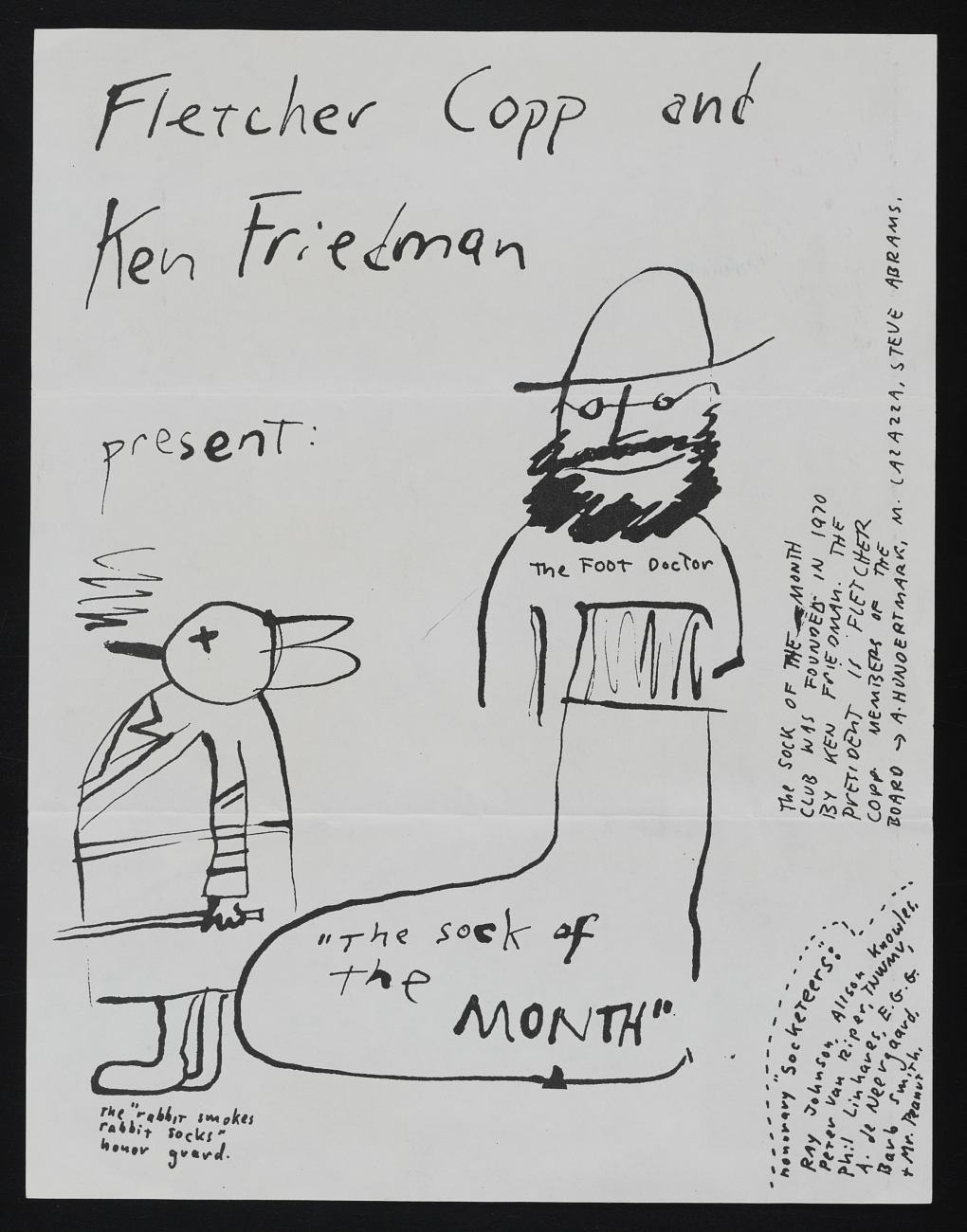
On the flyer at the top (which was sent in the mail along with a dirty painted single sock...)
Ken Friedman and Fletcher Copp were active members of the international experimental art movement Fluxus, which sought to engage its audiences in the production of art and de-instrumentalize everyday life. Through Fluxus, Friedman and Copp became part of the mail art network. As Friedman stated: “Fluxus approached mail art as an opportunity to experimentation, to communication and to interaction.” With mail art projects like Sock of the Month Club, he and Copp parody product subscription clubs like “cheese of the month” clubs that capitalize on the desire to cultivate one’s taste and belong to an elite group of consumers. Sending a dirty painted sock, they disrupt the prestige on which subscription clubs depend, while sensitizing the recipient to the materiality of everyday objects.

No comments:
Post a Comment